Ahead of World Children’s Day, UNICEF and Ministry of Information bring Lebanon’s media together at national conference to strengthen the safeguarding of children and amplify their voices
- English
- العربية
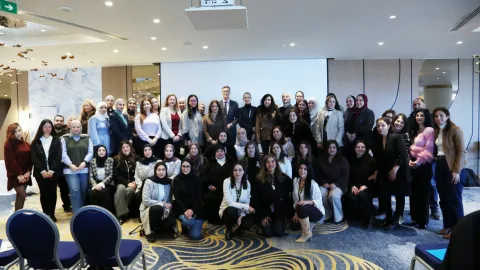
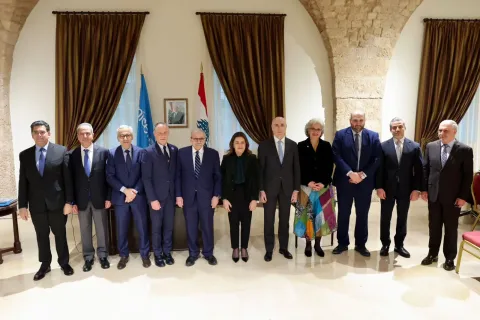
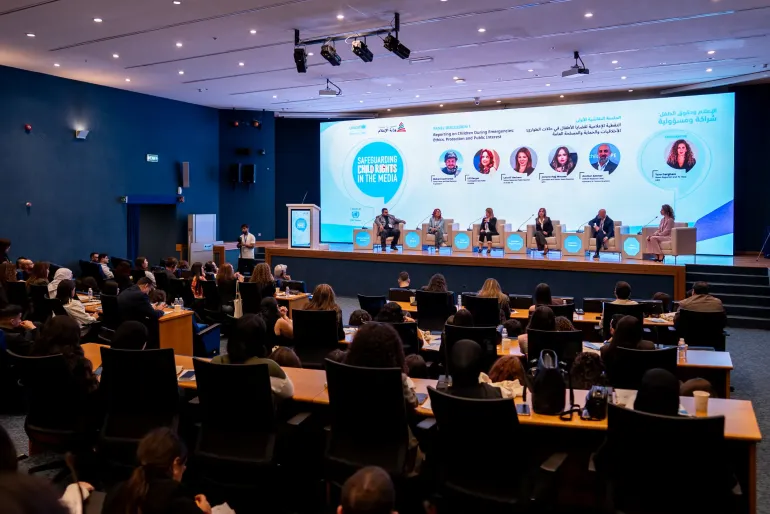
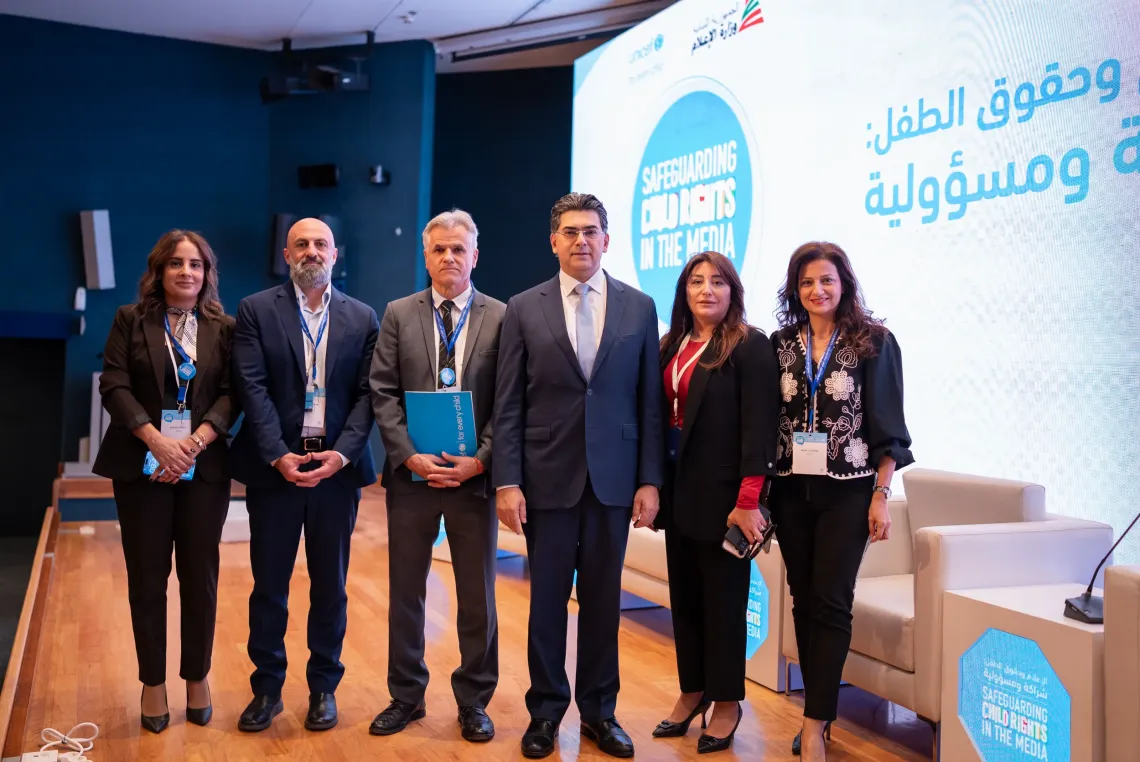
BEIRUT, 13 November 2026 – Ahead of World Children’s Day, UNICEF and the Ministry of Information brought together leading media professionals, university students and content producers, in collaboration with UNIC Beirut, for the national conference “Safeguarding Child Rights in the Media”, to advance ethical and child-sensitive reporting and strengthen the media’s role in protecting children’s rights, amplifying their voices and safeguarding their best interests.
Traditional, digital and social media have enormous power to shape how children are seen and understood. Yet reporting can also expose children to unintentional harm when their identities are unnecessarily revealed, traumatic experiences are sensationalized, stereotypes are reinforced, or their voices are included without adequate safeguards.
“Media can be one of the strongest allies for children’s rights. The way a child is portrayed, interviewed or identified can shape public perceptions, but it can also have lasting consequences for that child,” said Christophe Boulierac, UNICEF Chief of Advocacy & Communication. “Protecting children does not mean silencing their stories. It means telling those stories responsibly, preserving their dignity and creating safe and meaningful opportunities for children and young people to be heard.”
The conference placed particular emphasis on the responsibility of media when reporting on children during conflicts and humanitarian emergencies, when the need to document and inform must be balanced with the child’s right to privacy, dignity and protection. It also explored the media’s broader role in promoting children’s rights, reporting responsibly on abuse and neglect, challenging harmful stereotypes, and creating safe and meaningful opportunities for children and adolescents to participate and express their views.
“Protecting children in the media is a shared responsibility. Journalism has the power not only to inform, but also to shape attitudes and influence how society sees and treats children. Strengthening ethical standards and safeguarding practices across the media sector is therefore an investment in both responsible journalism and the rights of every child,” said Paul Morcos, Minister of Information.
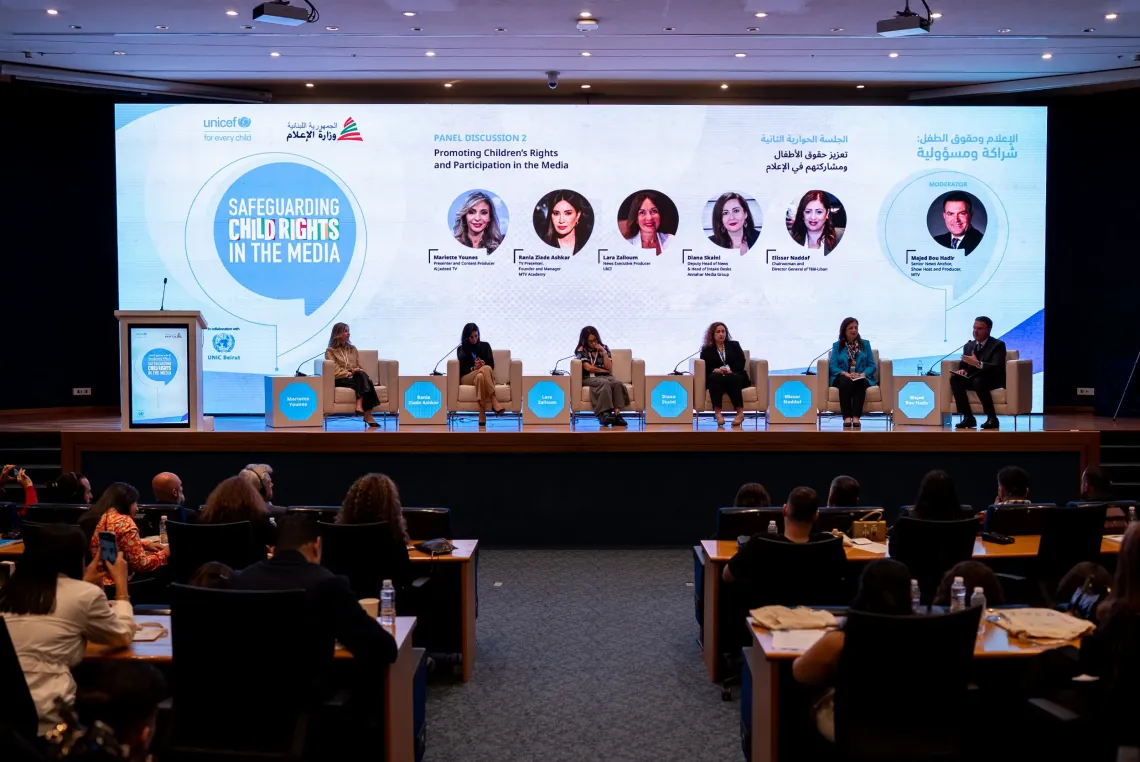
The two panel discussions, led by prominent media professionals, explored the media's responsibility in protecting children's rights while ensuring their experiences and voices are meaningfully represented. The first, “Reporting on Children During Emergencies: Ethics, Protection and Public Interest,” examined the challenges of balancing public interest with children's privacy, dignity and safety, drawing on lessons from reporting on conflicts and humanitarian emergencies. The second, “Promoting Children's Rights and Participation in the Media,” highlighted the media's role in raising awareness of children's rights, providing safe platforms for children's participation, and strengthening safeguarding practices within media institutions.
The conference builds on ongoing collaboration between UNICEF and the Ministry of Information that began with a national dialogue in 2023, when media organizations and journalists committed to safeguarding children’s best interests in media coverage. Looking ahead, UNICEF and the Ministry of Information also announced the 2027 “Child Rights Media Champions” initiative, which will provide a platform for continued engagement with media professionals and institutions around responsible, ethical and child-rights-based reporting.
Participants were also provided with practical resources on safeguarding children in the media, including guidance on children’s participation, protection and ethical reporting.
“Our conference is about turning principles into everyday media practice,” Boulierac added. “Every newsroom, journalist and content creator has a role to play in creating a media environment where children’s stories are told with care, their voices have a place and their rights are respected.”
As Lebanon prepares to mark World Children’s Day on 20 November, UNICEF calls on media institutions and professionals to continue using their platforms and influence to advance children’s rights, challenge harmful narratives and ensure that children are represented with the dignity, protection and respect to which every child is entitled.
About UNICEF
UNICEF works in some of the world’s toughest places, to reach the world’s most disadvantaged children. Across 190 countries and territories, we work for every child, everywhere, to build a better world for everyone. For more information about UNICEF and its work for children visit www.unicef.org/lebanon/.
Follow UNICEF Lebanon on Facebook, X, Instagram, LinkedIn, YouTube and TikTok.