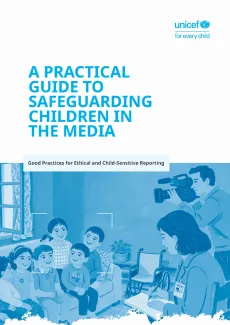
A Practical Guide to Safeguarding Children in the Media
Good Practices for Ethical and Child-Sensitive Reporting

- English
- العربية
About
Media coverage can give children a voice and draw attention to the issues affecting them. But it can also expose them to stigma, harm, breaches of confidentiality and privacy, or even retaliation.
UNICEF developed this guide to support media coverage of children and young people and to help journalists adopt approaches that respect children’s privacy and are appropriate to their age and evolving capacities. Its purpose is to support reporting that serves the best interests of the child while upholding their rights. Every story involving a child should begin with one simple question: Does this coverage serve the child’s best interests and protect their rights? Before publishing any story, image or interview, put the child’s safety, dignity and best interests first.
If there is any doubt about whether a particular form of media coverage could expose a child to additional risk, report on the broader situation of children rather than focusing on an individual child, regardless of the news value of the story.