

Health
UNICEF’s Health programme aims to improve access to quality healthcare and immunization services to ensure optimal health, development and well-being for newborns, children, adolescents and women in Lebanon
- English
- العربية
Challenge
Lebanon’s health sector is struggling to recover from years of socio-economic crisis and a months-long war that had devastating impacts, particularly for children.
The overlapping crises have led to a severe worsening of health outcomes, including life expectancy, maternal and under-five mortality, and childhood vaccinations.
The ongoing economic downturn has pushed the health system to the breaking point amid shortages of skilled personnel, medicines and supplies. This has severely affected Lebanon’s ability to address the needs of its increasingly vulnerable population.
The crisis was compounded by border hostilities that escalated into a deadly conflict in September 2024. Attacks on health and water facilities and services left children even more vulnerable to health issues. Major population displacements increased the demand for healthcare services, further straining the system.
The weakening of the healthcare system poses a major threat to public health. Gaps in immunization coverage, for example, put hundreds of thousands of children at risk of potentially deadly diseases such as measles, diphtheria and pneumonia a in the number of newborns dying after delivery that the country hasn’t seen throughout the last 20 years.
Emotional shocks further jeopardize children’s health and development.
Solution
The Lebanon National Health Strategy: Vision 2030 provides a framework for the recovery of the health system. It aims to improve access to healthcare, strengthen public health functions and build resilience. UNICEF provides strong support to the Ministry of Public Health (Ministry of Public Health) in seeking to achieve these goals.
Lebanon has committed to achieving universal healthcare by 2030, despite budget constraints that have increased significantly since the economic crisis began in 2019. The strategy emphasizes the need to reorient health spending toward more cost-effective alternatives, including health promotion and prevention, as well as primary healthcare. The extensive network of primary healthcare centres (PHCCs) provides an ideal point of entry.
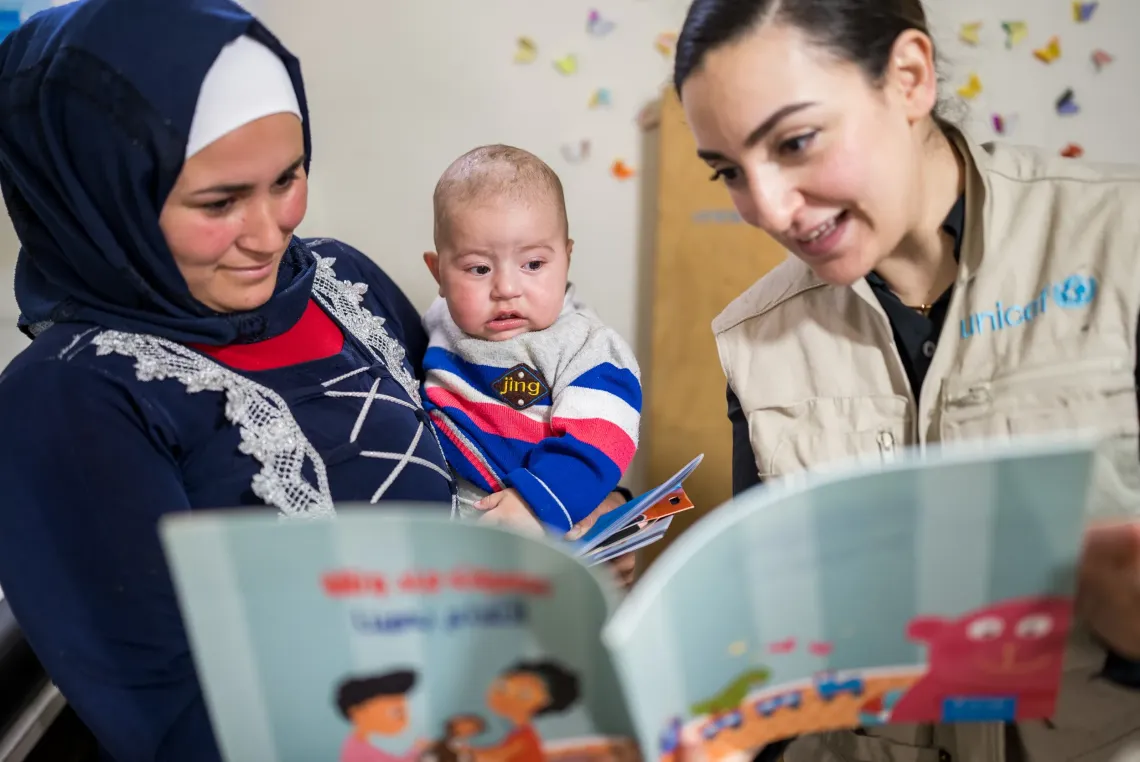
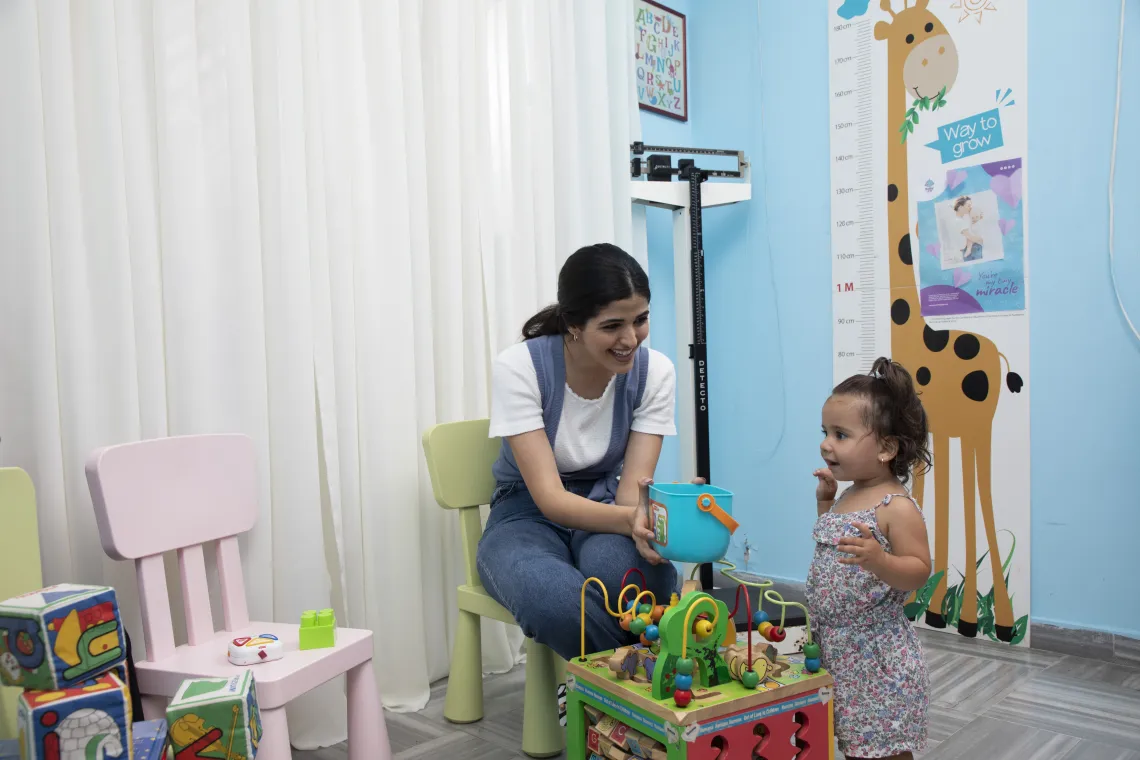
One important step was the launch in 2024 of the AaSalameh initiative, which takes a life-cycle approach to healthcare, from pregnancy through early childhood and into the adolescent years. Integrated, people-centred and community-linked public healthcare is key to overcoming economic and practical challenges in accessing care.
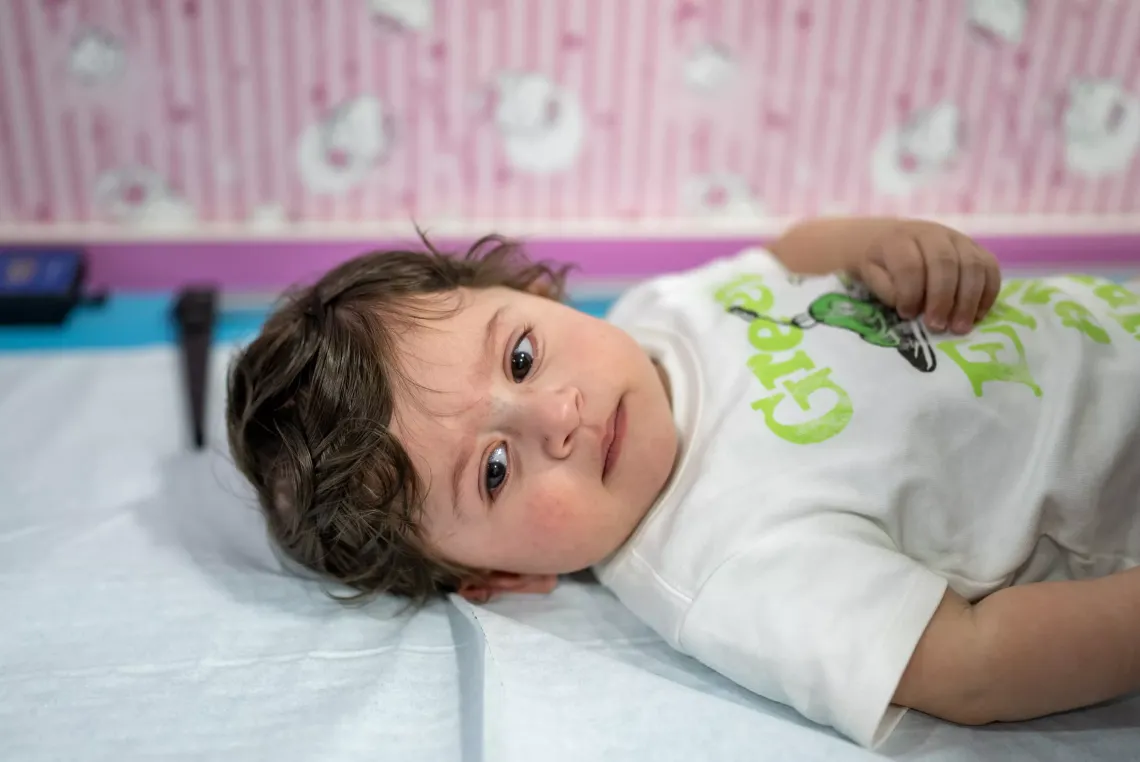
And aiming for the children in Lebanon to have the best possible start in life UNICEF launched with the Ministry of Public Health the “HAYAT” initiative. "HAYAT” is a comprehensive approach emphasizing tailored interventions to enhance the survival and health outcomes of small and sick newborns building on the strong foundation of essential newborn care. It emphasizes the importance of collaboration between healthcare providers, policymakers, and stakeholders to improve access to and quality of neonatal intensive care services.
The Ministry, UNICEF and other partners are supporting children who suffered physical injuries and psychological trauma in the 2024 conflict. The Assistance and Care for War-Wounded and Affected Children (ACWA) programme, a specialized, multi-sectoral intervention, provides comprehensive medical, psychosocial and rehabilitative support to severely affected children.
The use of primary healthcare satellite units (PSU) – mobile or temporary facilities that extend healthcare access to vulnerable populations – has proved critical during the conflict and in its aftermath.
The Vision 2030 strategy also identifies digital health transformation as an essential element of healthcare improvement. The Ministry of Public Health has conducted several e-health initiatives, including a COVID-19 vaccination website.
OUR KEY ACHIEVEMENTS
In 2024, UNICEF supported the delivery of essential health services and strengthened the public health system across Lebanon, with a focus on children, women, and vulnerable communities.
Our Key Achievements
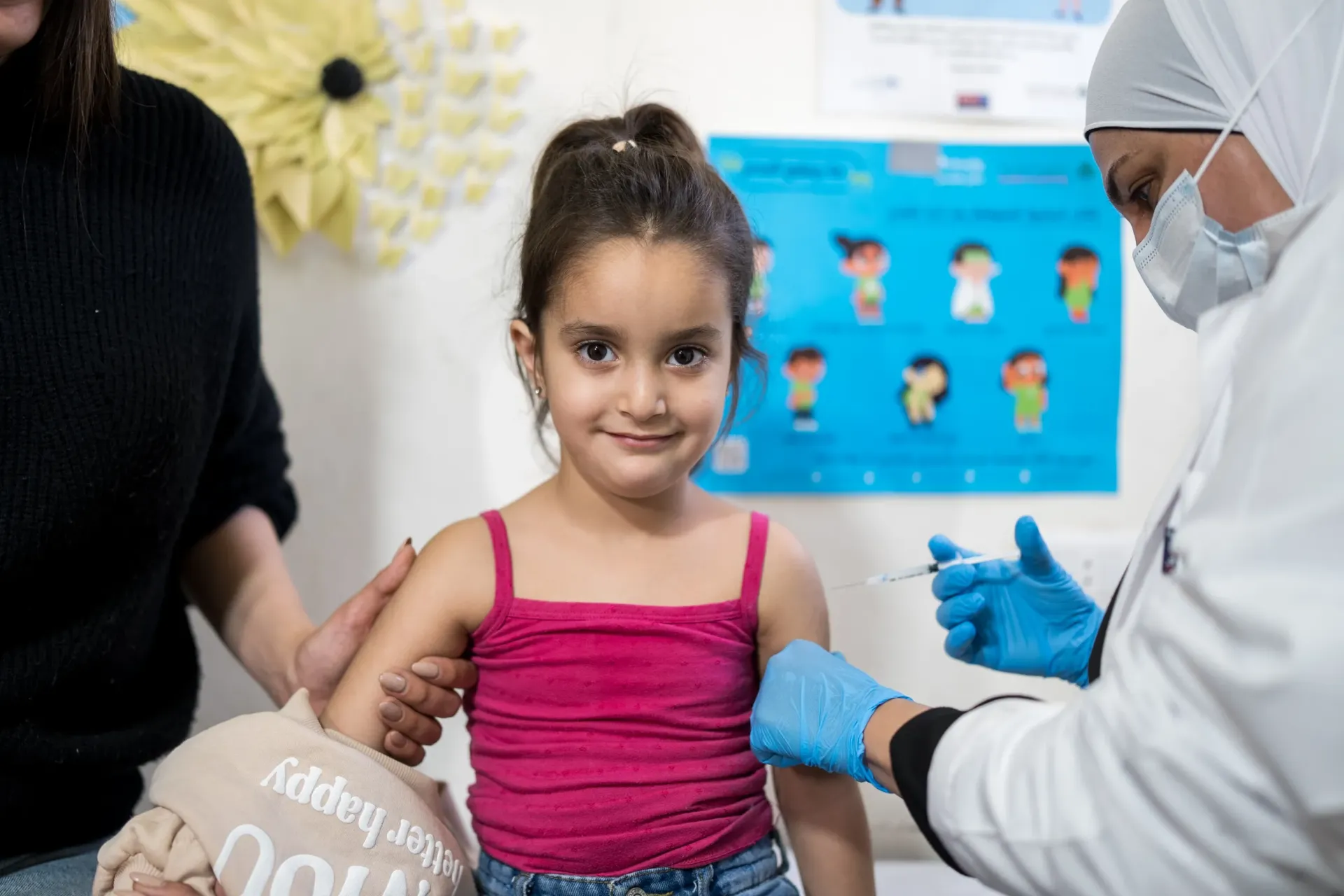
- Supported the Ministry of Public Health in providing essential routine vaccines to 581,000 children and adolescents in primary health care facilities.
- Provided vaccinations to children in the most vulnerable communities through mobile vaccination units.
- Procured more than 1,000 solar refrigerators to ensure safe vaccine storage using clean energy.
- Ensured the collection and treatment of vaccine waste from more than 600 public vaccination facilities and dispensaries.
- Screened 71,432 children to support early detection and management of health issues.
- Conducted 948 antenatal care visits and 18,872 postnatal care visits.
- Fully vaccinated 18,126 children.
- Reinitiated school-based health screening, reaching 255,940 children in public schools.
- Provided coverage for more than 1,000 newborns admitted to Neonatal Intensive Care Units (NICUs).
- Improved the quality of care in neonatal and paediatric intensive care units in 11 public hospitals.
- Provided essential equipment, consumables, and supplies to strengthen NICU services in public hospitals.
- Ensured optimal post-discharge care for newborns by supporting more than 1,000 parents with HAYAT Newborn Kits.
- Provided capacity-building training for healthcare workers across community, PHCC, and hospital levels
- Delivered healthcare services to 208,365 displaced and conflict-affected people in 452 shelters through 64 Primary Support Units (PSUs) and 100 AaSalameh PHCCs.
- Ensured the employment of more than 180 midwives in selected PHCCs and PSUs, reaching over 17,300 pregnant and lactating women.
- Supported emergency response efforts during the war through the procurement of medications and medical supplies.
- Covered hospitalization costs for 578 deliveries and 560 paediatric patients.
- Supported the establishment of a donation-sorting warehouse and distribution operations.
- Invested in the optimization of digital health solutions and initiated the development of a National Digital Transformation Roadmap.
- Provided technical and financial support to optimize the public-sector health supply chain.