Keeping the Water Flowing
The people behind clean water in Houaphanh Province

At a health centre in Houaphan, the first thing families are asked to do was to fetch water themselves.
Patients’ family members were asked to carry water in from outside so that staff at their health centre could treat their families. The facility, which is not supported by the UNICEF project, was sturdy and well equipped. But the village water supply system does not have the capacity to meet the needs of all its users, and there is no reliable water connection to the facility. Without enough water, toilets cannot be flushed and hands cannot be washed. There is no WASH committee and no local action plan, so no one has a clear way to resolve the problem or keep services running.
It is a pattern that is easy to miss: the infrastructure exists, yet the services do not hold. A pipe can be laid in a season, but keeping water flowing takes people who know the risks, a plan for managing them and someone responsible for acting when something goes wrong.
That is the gap UNICEF’s work in villages in Sop Bao District, Houaphan province.
How a village runs its own water system
In Haosene village, once faced a similar situation. The water supply used to drop off every rainy season, and no one could work out why.
Today, the seven members of the village WASH committee know what to look for. Trained in water safety planning, they spot problems such as clogged filters and fix them before the taps run dry.
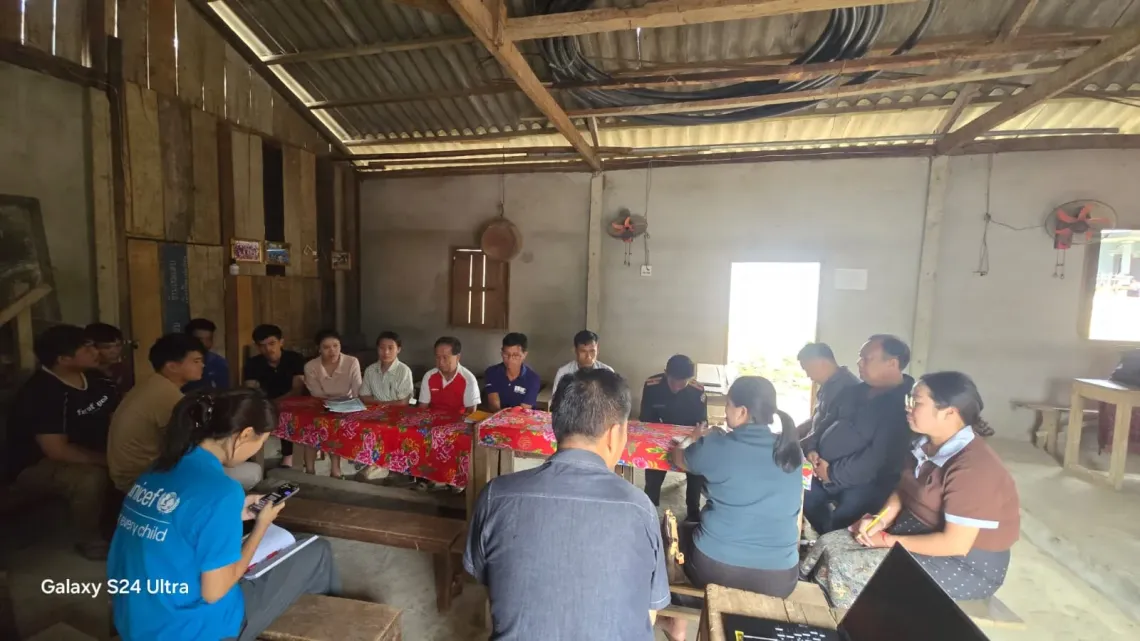
“Through the water safety plan training, we now know the risks affecting our water source and how to maintain the system together,” says Donechanh, Head of Haosene Village. “The training has been very beneficial to our community.”
Haosene’s experience shows that building a water supply system is only the first step. What keeps water flowing, toilets working and health facilities hygienic are the people who take ownership of these services every day. In Sop Bao District, communities, local government and health workers, supported by UNICEF with funding from the Australian Government, are showing how local action can make water, sanitation and hygiene (WASH) services last.
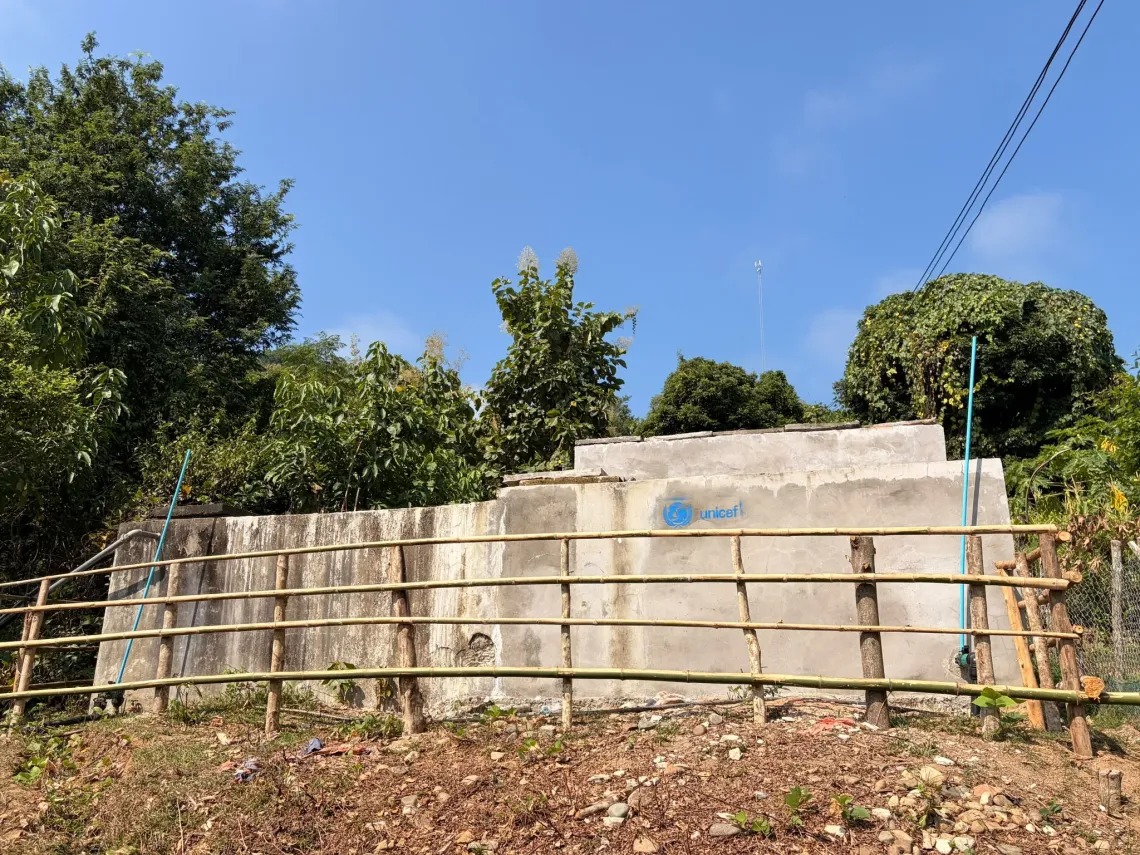
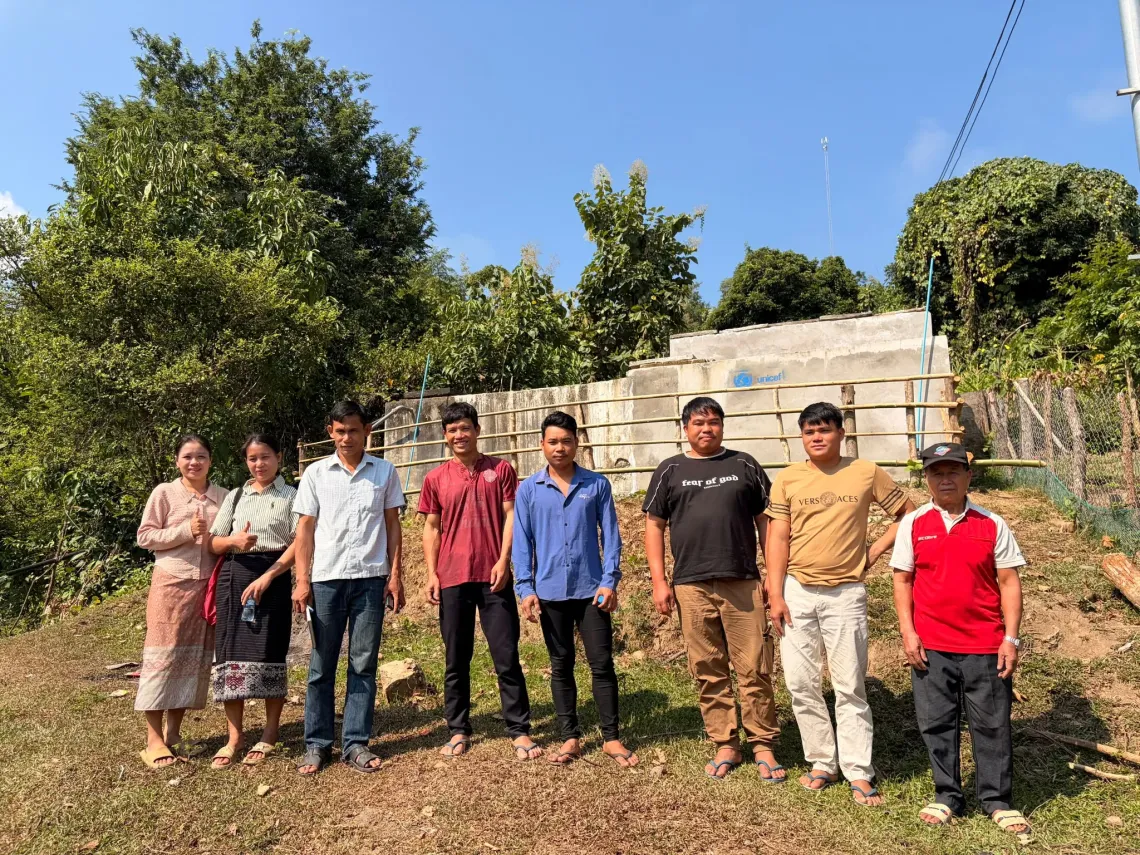
Haosene’s small gravity-fed water supply system now provides clean water to the community. Keeping it running is the job of a well-organized WASH committee, whose members share responsibility for bookkeeping, technical maintenance and environmental management. They also collect water-user fees to cover operation and maintenance costs.
The training covered practical measures to protect the water intake from contamination caused by animals and human activities. Committee members can now identify and address problems before these affect the water supply. The introduction of metered water fees has also improved system management. Households now pay according to how much water they use, which generates funds for maintenance and helps to reduce water shortages.
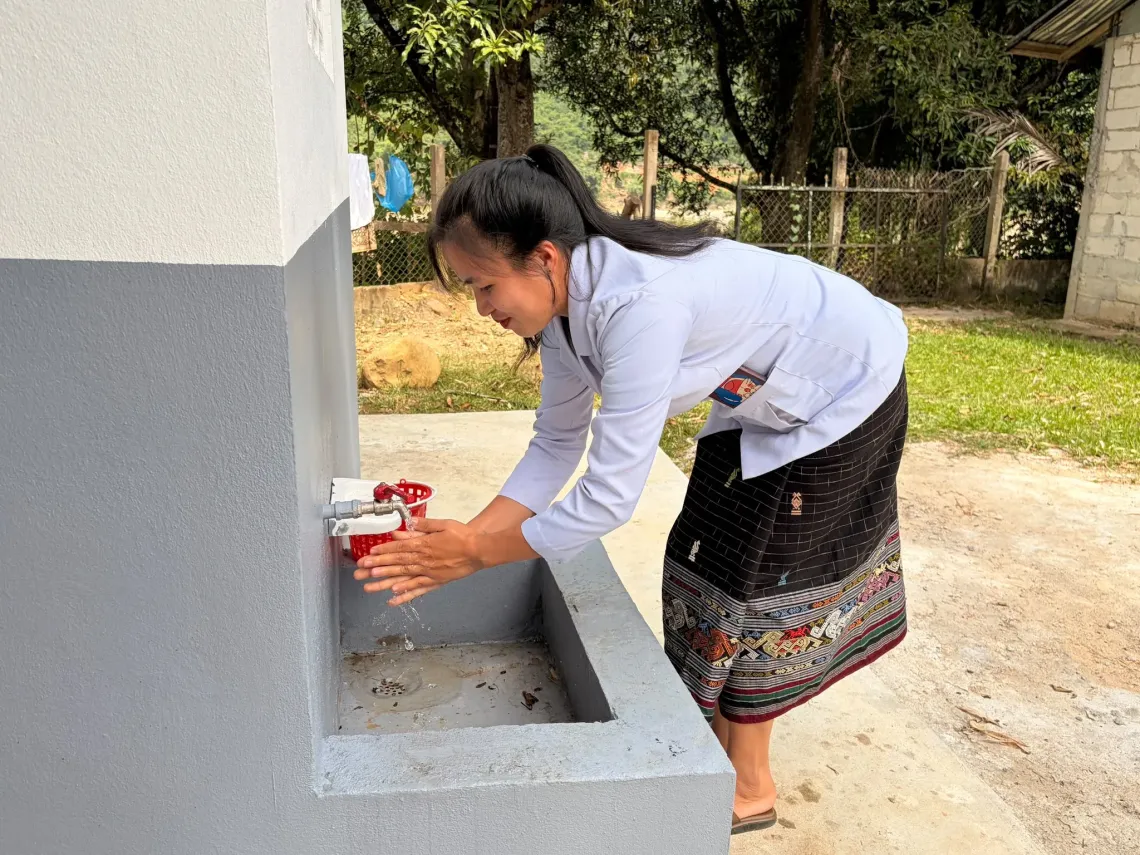
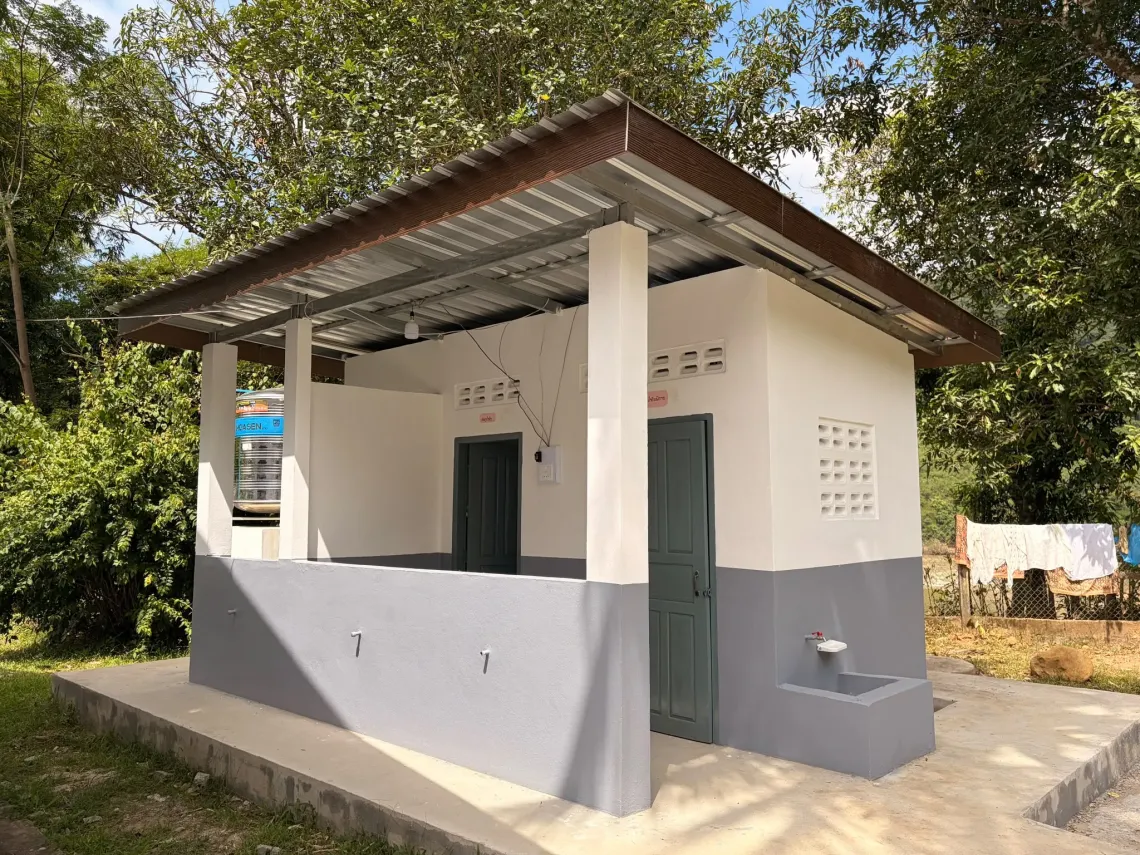
As a community based approach, three target health centres in Sop Bao District have introduced WASH FIT, the Water and Sanitation for Health Facility Improvement Tool, with support from UNICEF. Health staff received training to assess WASH-related risks, identify gaps and develop action plans to improve services. Communities also help to keep the areas surrounding the health centres clean.
Whatever the programme, success depends not on one-off investments but on the people who use, manage and care for the facilities and services. It relies on village committees that meet regularly to discuss local challenges and identify solutions, and on district officials who travel to remote communities to provide continued support.
From village plans to district systems
These results rest on tools that UNICEF has helped the Government of Lao PDR develop. Working with the Ministry of Health and other development partners, UNICEF supported the update of the Water Safety Planning Plus (WSP+) Programme Guide, which gives community water managers like Haosene’s committee a systematic way to assess risks and prevent problems before they interrupt service.
Village-level plans are then brought together in District WASH Plans, developed so far in four target districts. They give local authorities a full picture of needs across every water system in the district and a clear basis for prioritizing support. That is how what works in Haosene can be repeated, village by village.
Since 2022, nearly 25,000 people have gained access to basic WASH services through UNICEF-supported work
Sustaining access to clean water protects children's rights
Ultimately, this work is about children’s right to clean water. Safe water, sanitation and hygiene are essential to children’s health, learning and survival, and that right is protected only when services keep working. According to Lao PDR’s census, household access to improved drinking water rose from 61.0 per cent in 2015 to 79.2 per cent in 2025, and access to improved sanitation from 73.2 per cent to 91.8 per cent. Sustaining this progress, through trained village committees, stronger health facilities and district plans that outlast any single project, is how UNICEF and its partners are working to keep the right to clean water real for every child, today and for years to come.