Water for Equality
How One Tap Changes Life for Women and Girls

This World Water Day, 22 March 2026, UNICEF Lao PDR shares the story of women and girls in rural communities where access to safe water is quietly transforming lives, and what still needs to change.
"When we got water at home, everything changed"
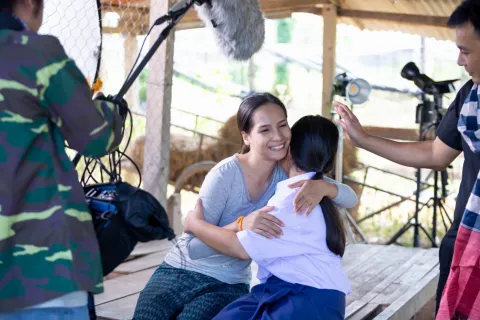
When 48-year-old Ms. Lamphong, a mother of four, got a water tap inside her home for the first time, she did not need long to notice the difference.
"After getting clean water, my daughters are healthier. Before, they had diarrhoea many times. Even bathing in the river made our skin itchy. Now the water is clean." Unsafe water is one of the leading causes of diarrhoeal disease for children.
Life in Ms. Lamphong’s village, Laos was not always like this. Before 2023, two rivers ran near the village, one used for bathing, the other much farther away for drinking. Women carried water over long distances while balancing childcare, cooking, cleaning, and caring for livestock. Managing menstrual hygiene added to their daily burden, requiring long walks to find somewhere private enough.
"We knew the closer river wasn't clean," Lamphong recalls. "But sometimes we had no choice."
In 2023, UNICEF, under DFAT funding, helped the village to install an improved water supply system, providing a tap and water meter for every household. For the women in the village, the change was immediate and deeply personal.
"I feel comfortable," says Lamphong. "Now I can drink, clean, and relax. I have more time to garden, or visit my friends. In the past, there was no social life. Life was very hard."
Saving time, restoring dignity
Lamphong's experience is not unique. A study conducted by UNICEF with the Gender Development Association (GDA) found that after the installation of household taps and toilets, women estimated saving up to 2–3 hours per day previously spent collecting water and washing clothes at the river.
This finding is consistent with national data. According to the Lao Social Indicator Survey, almost one third of the population spends more than 30 minutes each day collecting water, time that could be spent in school, at work, or simply at rest. Now many women in the village reported engaging in farming, livestock rearing, weaving, basket-making, and fishing, work that had previously been crowded out by the demands of water collection.
The inequalities extend beyond water collection. Improved facilities also brought a change that is harder to measure but no less significant such as dignity in menstrual health and hygiene. Previously, women needed to walk long distances — sometimes 30 minutes into the forest or to the river, up to 3–6 times per day — to wash and change in privacy, with no proper means of disposing sanitary products. This challenge remains widespread. In Lao PDR, over 800,000 people still share sanitation facilities or practice open defecation, and 16% of women and girls lack adequate facilities and materials for menstrual health and hygiene.
However after the installation of taps in the village, women in the study unanimously agreed that access to improved facilities has made menstrual hygiene management safer, more private, and more dignified.

Where Water Flows, Equality Grows
This World Water Day, under the theme "Where Water Flows, Equality Grows," we are reminded that safe water is not just a development goal — it is the foundation on which equality is built. Access to water changes daily life, but it does not automatically change the conditions that created inequality in the first place.
Ms. Lamphong’s story shows what becomes possible when water finally flows to the home. Yet across communities in the study, women and girls remain primarily responsible for WASH-related tasks even after improved services arrive. While women report greater flexibility in how they allocate their time, their choices continue to be shaped by deeply embedded gender norms. They play vital roles in managing water at the household level yet remain underrepresented in community leadership and decision-making.
Critical service gaps, must be addressed alongside inclusive participation in WASH planning and governance, ensuring that women are not just beneficiaries, but decision-makers. Water equality is gender equality. Like what happened to Ms. Lamphong.
When every woman and girl has safe water at home, the effects reach every corner of society, from health and education to economic opportunity and dignity. Hers is one of thousands of stories waiting to be told across Lao PDR.