Change Starts with Me
How a Lao youth is helping champion efforts to break the cycle of child marriage.

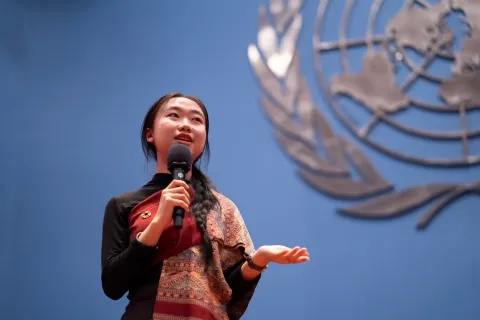
Payia Yangsaoye, 21, was born in northern Laos in a small rural town along the river and comes from the Hmong ethnic group, the largest ethno-linguistic group in the country. The community she grew up in was a close-knit one but her family later moved to Xiengkhouang province of Laos to start a new business forcing her to leave her childhood community behind. However, it was in Xiengkhouang where Payia’s lifelong hope would be cultivated – to see children living free from all forms of abuse.
It began when Payia joined a rugby club in Xiengkhouang as a coach when she was only 16 years old. At the time, rugby was a new sport in her community, especially for girls. “I could feel that most parents didn’t allow their daughters to join the sports club. It was somehow different for boys because they were allowed to explore new things and be themselves more,” she reflected.

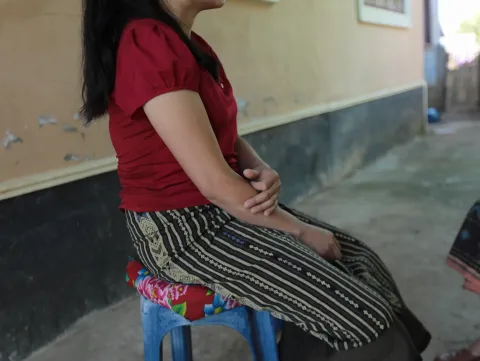
As she spent more time with the club, she would often see some of her club friends stop playing rugby, opting instead to leave and go start a family. In Payia’s community, girls are expected to marry early and are often seen as less valuable than boys. Traditionally, after marriage girls leave their homes behind to become part of their husband’s household.
“My sister also got married at thirteen. I asked her why she wanted to get married and she said girls and women are raised to be wives to their husbands and mothers to their babies,” said Payia.
Likewise, Payia was often asked why she isn’t married yet by those around her, a question that opened her eyes to the pressures young girls like her face and one that sparked her desire to re-write her community’s views on child marriage.
After finishing secondary school, Payia set out for the capital of Vientiane to pursue a university degree in social work. During her studies, Payia realised that the struggle with child marriage is not a family one but systemic built on norms, driven by limited access to education and parental expectations.
I did my university thesis on child marriage and the results shocked me. Child marriage isn’t just about finances as I had thought — it’s about belief. The belief that marrying young gives you more time to complete tasks in your life early, like ticking a to-do box in life.
Since then, Payia has made it her mission to change this norm. In 2022, she found a platform to raise her concerns through the Lao Youth Talks, a joint initiative by UNICEF, the Ministry of Information, Culture and Tourism, Lao Youth Union, National University of Laos, ChildFund and Global Shapers that gathered passionate youth to voice their perspectives on the most pressing youth issues in Laos.

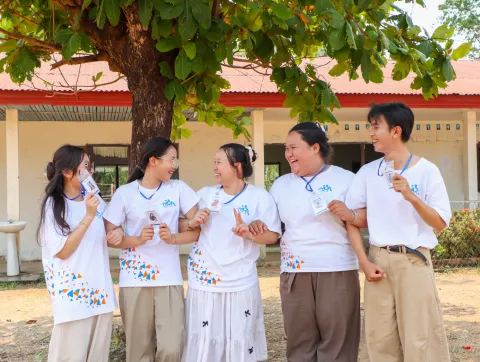
She later participated in the Youth Champions initiative led by UNICEF and the Lao Youth Union. Through this initiative, Payia received training on advocacy skills needed to bring about change on youth issues, from how to communicate that issue to different groups, networking, and managing one’s own community project, coupled with financial support to bring that project to life. With this support, Payia went back to her own community to implement her project “Class of Hope” where she delivered workshops on youth advocacy and the harms of child marriage to her peers, encouraging them to think deeply about the issue.
Being a youth advocate has given me the opportunity to support young people as a peer and help them feel seen and heard.

Currently, Payia is continuing to pursue further studies on social work abroad, still driven by her hope to return to work with girls in her village to break the cycle of child marriage and abuse and provide them with opportunities to grow and dream beyond the confines of tradition.
Payia’s story reminds us that real change begins when one person decides to challenge harmful norms and has the courage to act for the benefit of their community. Change starts with one voice, but it grows when others choose to listen, believe and invest in that voice.