What water carried
How one village in Xieng Khouang responded when a drainage canal put children at risk
In Ngoy village, in Pek district, Xieng Khouang province, the pace of change has been hard to ignore. New trade routes, new construction, new faces arriving to work. Most of it has been welcome. Some of it has brought risks that are harder to see.
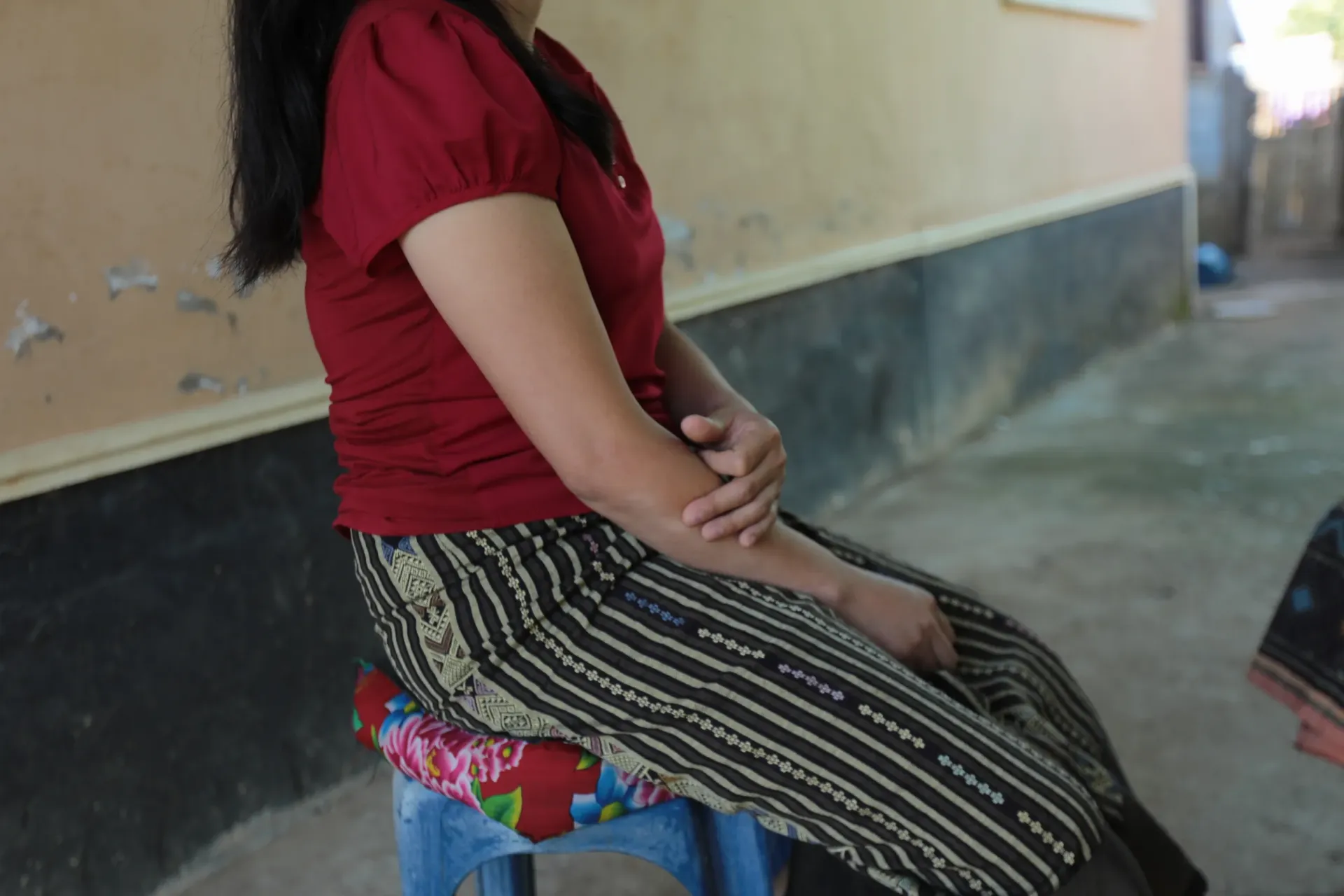
With support from UNICEF Lao PDR, the village has established a Coordination and Legal Aid Office — a community-based mechanism built to protect children and families. In early 2025, Ms. Phone, 37, walked through its door.
She had three sons, and something was bothering her she could not quite name. Foreign tenants had rented a house nearby, working through the night and sleeping through the day. No one in the village knew what they were doing.
Then came heavy rain.
After the downpour, the drainage canal that runs through the village filled up. For Kham, Phone’s 15-year-old son, and his brothers, aged 13 and 9, it was an invitation. They went in to swim.
Two days later, Kham was ill — high fever, painful blisters on his skin. When Phone pressed him on where he had been, he told her. She went to the canal.
What she found stayed with her. Dead chickens in the water. Holes were drilled through the walls of the rented houses, with pipes running down into the drain. She suspected the water was contaminated — that it had reached her son and the animals both.
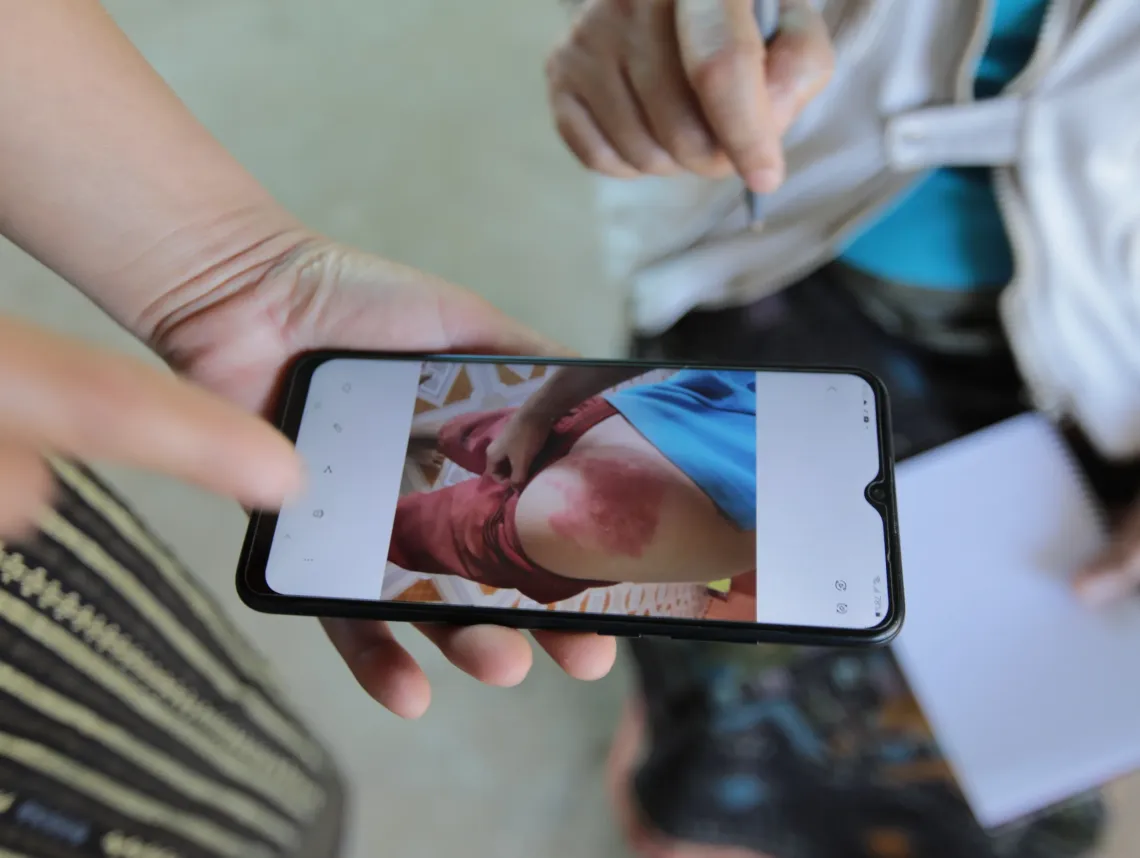
The coordinator listened carefully, recorded everything she said, and advised her to get Kham to a doctor immediately. She was also told, clearly, that the broader issue would be followed up.
For Mr. Khamseng Thammavong, the 67-year-old deputy village head and the office's legal aid coordinator, there was no question about the seriousness of what he was hearing.
“This was not just one family’s problem. It could affect the entire village,” Mr. Khamseng Thammavong.
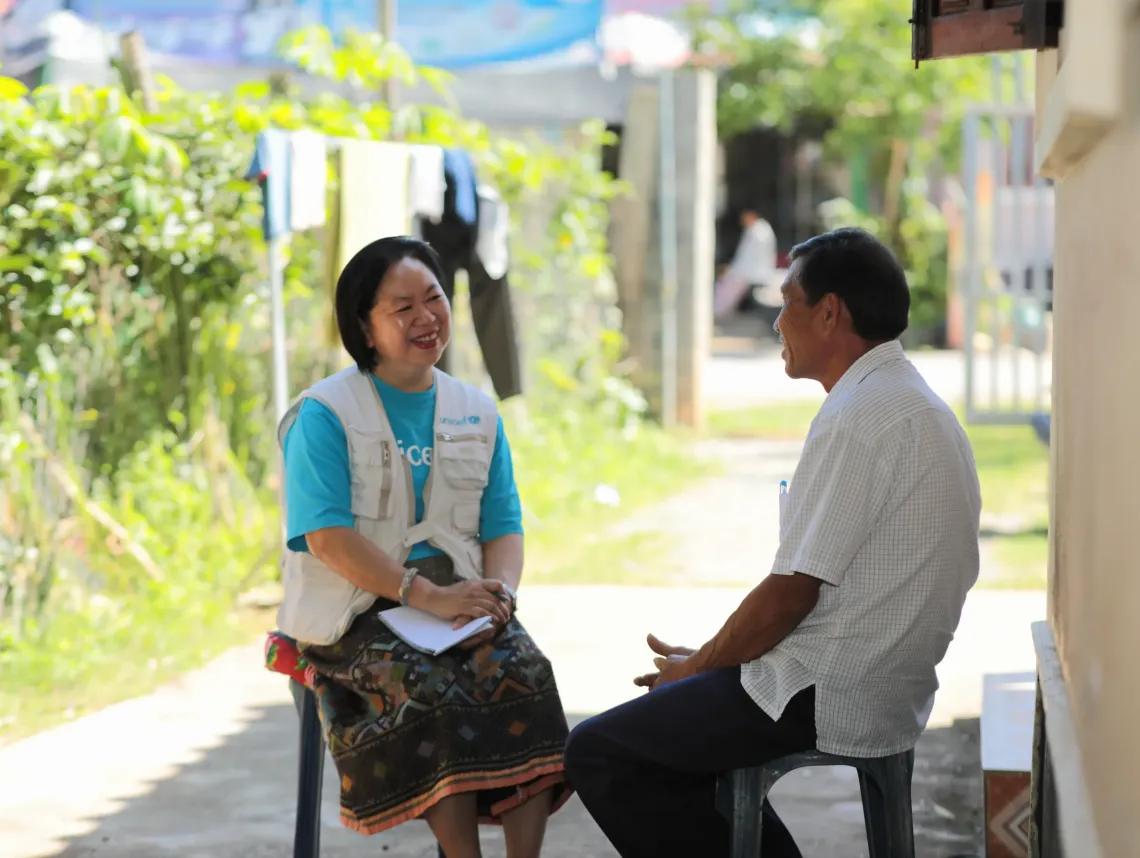
Evidence was gathered, and the district environmental office was contacted. Within days, a joint inspection team — environmental authorities, police, district and provincial officials — arrived in Ngoy. They tested the water and the animals, interviewed residents, and inspected the rented property. The operation was shut down. The foreign occupants left the village not long after.
Mr. Khamseng believes the speed of the response came down to preparation.
“It gave us the confidence to act. We now understand the laws, how to report cases, and how to protect children and families in our community.”
For Phone, the resolution has not entirely closed the chapter. Kham has recovered, but his health has not been quite the same since — recurring fevers, missed school. “I don’t want this to happen to any other child,” she said. “It affects them deeply.”
She is also grateful — not in an uncomplicated way, but genuinely. Without the village office, she says, she would have faced a choice between doing nothing and navigating a bureaucracy she had never used, in offices at a district or provincial level that felt far away and formal. The village office made seeking help feel possible.
“In our village, we feel comfortable speaking up. We know someone will listen.”
A mother noticed something wrong. A community had the tools to respond. In Ngoy, that turned out to matter.
What happened in Ngoy village shows what becomes possible when communities are equipped with the knowledge, trust and mechanisms to act. Legal empowerment is not abstract - it is what allowed one mother to turn concern into action, and for authorities to respond before more children were harmed. But this cannot remain limited to one village. Building on this experience UNICEF is scaling up legal empowerment for children and youth so they can claim their rights to a safe, clean and healthy environment, access remedies, and hold duty bearers accountable.
UNICEF is already laying this foundation, working across 40+ countries to strengthen access to justice, support child-friendly legal systems, and amplify children’s voices in climate decision-making. Continued investment, partnerships and political commitment are now critical to expand this work, move from pilots to systems, and ensure that every child - not just in Ngoy, but globally - has the means to seek justice and protection when their environment and their rights are at risk.
With support from the Australian Government and UNICEF Australia, UNICEF Lao PDR is piloting a child protection system model in Xiengkhouang province under the project Child Protection System Strengthening through Piloting of an Incentive-based Approach (Phase I: 2021–2024; Phase II: 2025–2027). The Ministry of Justice and the provincial Justice Department are supported to strengthen legal aid for women and children at the community level.
The names of the mother and her son have been changed to protect their identity.