

How to Stay Safe During and After Floods
When faced with severe flooding, it’s crucial to follow safety advice to protect yourself and your family.
- English
- ລາວ
When faced with severe flooding, it’s crucial to follow safety advice to protect yourself and your family. Floods can lead to serious health risks, including waterborne diseases, food contamination, injuries, and hazardous conditions.
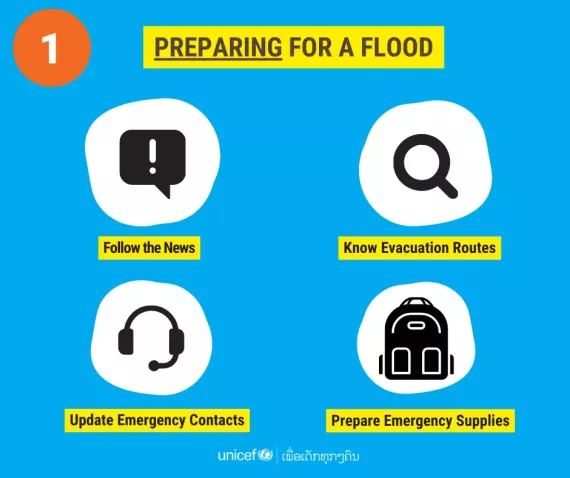


Preparing for a Flood
- Follow the News: Remain alert and monitor the situation through local news, radio and mobile messages for the latest news and updates on the weather and flood warnings.
- Know Evacuation Routes: Be informed on the location of designated shelters and safe zones on higher grounds that are nearby.
- Emergency Contacts: Update contacts of family, friends and local emergency services. Ensure mobile phones and other communication devices are fully charged to stay connected during emergencies.
- Prepare an Emergency Kit: Pack essential items, including food, water, medicines, identification, a flashlight, and hygiene supplies in a waterproof bag. Be prepared to leave as soon as evacuation orders are given.
What to Do During a Flood
- Listen to Local Authorities: Stay informed through local news or radio for weather updates and evacuation advice. If evacuation orders are given, leave immediately and take your emergency kit and ID papers.
- Secure Your Home: If it’s safe, unplug appliances and turn off electricity, gas, and water before evacuating.
- Move to Higher Ground: Avoid standing or moving water. Never try to walk, swim, or drive through floodwaters. If trapped in a vehicle or building, move to the highest level.
- Protect Children: Keep children far away from floodwaters, as these can carry debris and contaminants.
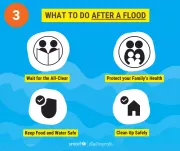
What to Do After a Flood
- Wait for the All-Clear: Return home only when authorities declare it safe.
- Protect Your Family’s Health: Floodwaters can carry diseases like cholera and typhoid. Ensure children avoid floodwaters and wash hands regularly. If exposed, bathe them as soon as possible.
- Keep Food and Water Safe: Boil all water for at least three minutes before drinking or cooking, and discard food that’s been in contact with floodwater.
- Clean Up Safely: Dry affected areas within 24-48 hours and throw away items contaminated by floodwaters.
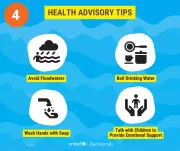
Health Advisory
⚠️ Flooding can increase the risk of diseases like dengue, malaria, cholera, and typhoid. Follow these key tips:
- Keep hygiene practices: Wash hands frequently with soap and clean water.
- Avoid floodwaters: They may be contaminated.
- Boil water before drinking: Ensure all drinking water is boiled for at least three minutes.
Emotional Support for Children
Floods can be distressing, especially for children. Create a space where they feel safe to talk about their feelings. Offer reassurance, maintain routines where possible, and watch for signs of emotional distress.
For more information, click here.
Stay safe, follow official advice, and prioritize the health of your family. Share this information with those in affected areas to help keep everyone safe.