Urgent appeal for children and families affected by Hurricanes Eta and Iota
in Central America

Highlights
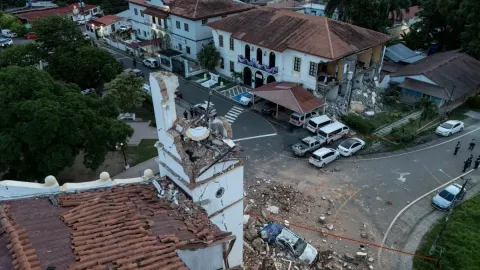
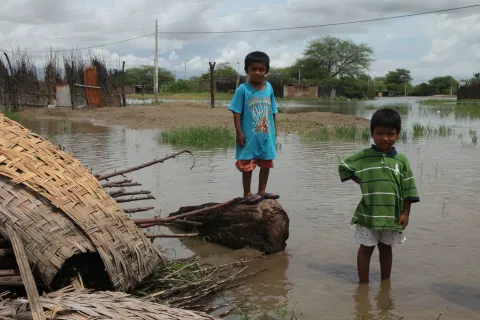
Hurricane Eta made landfall on 3 November on the northern Caribbean coast of Nicaragua, with 240 km/h winds. The storm continued moving slowly inland and left a trail of destruction across Central American countries. Heavy rainfalls led to catastrophic, lifethreatening flash flooding and river flooding, along with landslides in areas of higher terrain in Central America, with a devastating effect on waterlogged lands already heavily impacted by the intense rainy season.
Two weeks after impacting the sub-region, countries are still facing the widespread direct and indirect impacts left by Eta.
The extent of damages and humanitarian needs are still being assessed with access to some of the affected areas remaining challenging. Available data indicates that nearly 4.6 million people have been affected in Belize, Costa Rica, El Salvador, Guatemala, Honduras and Nicaragua, among them around 1.8 million children. Thousands of families have lost their homes and livelihoods, many of them had already been impacted by the COVID-19 crisis. Furthermore, some 125,000 people have been evacuated to shelters (including approx. 49,000 children), where many will have to remain for a longer period as their houses and communities are not safe.
According to initial estimations by UNICEF, among those affected by Eta, at least 3.4 million people need urgent support, including 1.3 million children in the most affected communities in Belize, Guatemala, Honduras and Nicaragua. UNICEF is focusing its appeal on the most affected countries that are also likely to receive the impact from Hurricane Iota in the coming few days; thus needs are anticipated to increase further in these countries. This appeal will be revised depending on Hurricane Iota’s impact.