Jairibel arrived in La Guaira with her husband and their children, Mateo, 5, and Belén, 18 months, dreaming of a new chapter for their family. They wanted to be closer to relatives and had decided to build a new life here.
But just three days after they arrived, two earthquakes struck Venezuela. It was 24 June, and the 7.2 and 7.5 magnitude earthquakes changed their plans.
“We were at my mother-in-law’s house when we saw the house across the street collapse,” she recalls.
The emergency not only destroyed the house where they had planned to live. The family also suffered irreparable losses: Jairibel’s husband lost relatives in the disaster. Jairibel thinks about all the families in La Guaira who have gone through the same thing.
“There is so much pain. We are living through grief, the loss of our homes, the loss of family members, economic losses and the loss of our jobs”.
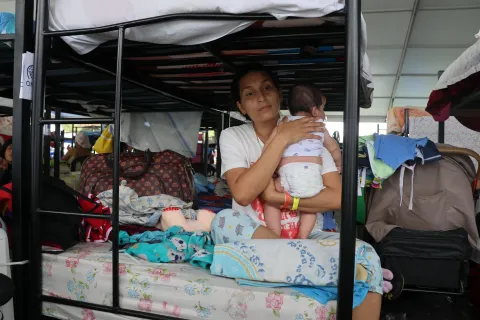
After the earthquakes, Jairibel, her husband and their children moved to one of the temporary camps with their extended family.
“An ally”
In the immediate aftermath of the disaster, for Jairibel, breastfeeding became a lifeline for her daughter Belén.
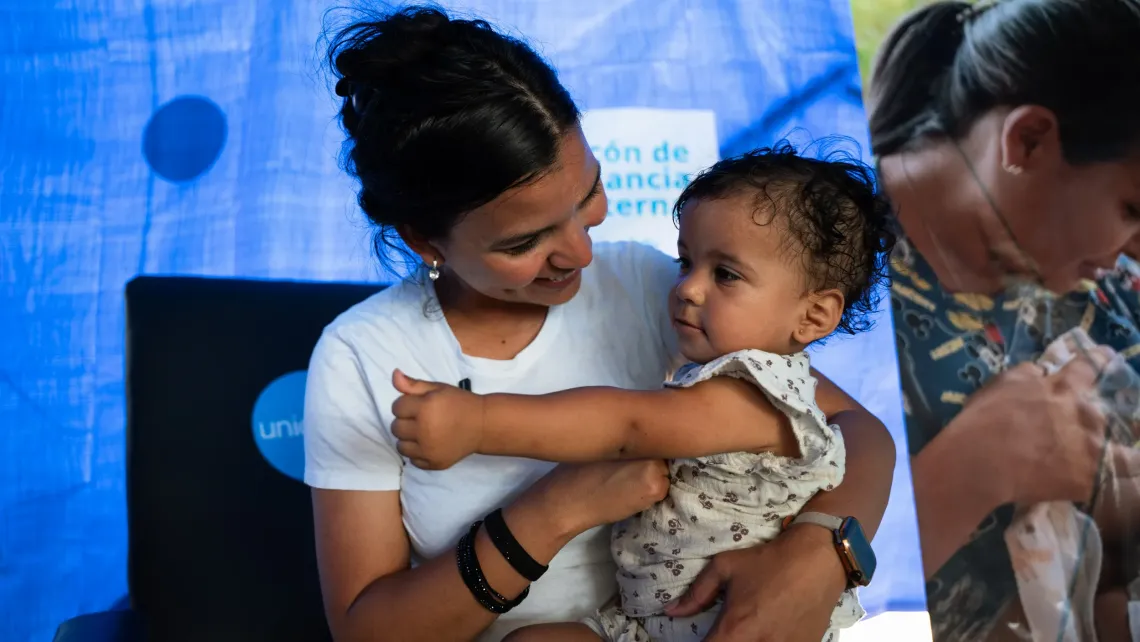
“Breastfeeding helped me a lot because it was what I had to give her. I had a tangerine and a mango, and I also had breast milk,” she recalls, holding little Belén close. She had breastfed her older son, Mateo, as well: “That way, they don’t get sick. They stay healthy.”
Amid the uncertainty following the earthquakes, breast milk allowed her to continue feeding her daughter safely and adequately. But its importance went beyond nutrition.
“Even though we didn’t have a bed, she could sleep. Breastfeeding was a great help during that time. An ally.”
Food and security
The earthquakes left an emotional mark on the whole family. Before the earthquakes, Belén was a sociable child. Now she only wants to be with Jairibel and her husband. “I notice she’s a little more anxious. She doesn’t want to be with anyone else – just me or her dad.”
Breastfeeding has become a source of calm and security for her daughter.
“It helped me reassure her,” Jairibel says.
“During an emergency, the physical contact, closeness and emotional bond that breastfeeding provides can help young children feel safe and protected, especially when they are coping with stress and sudden changes in their environment,” Elizabete Catarino, UNICEF Nutrition Specialist in Venezuela.


Support for affected families
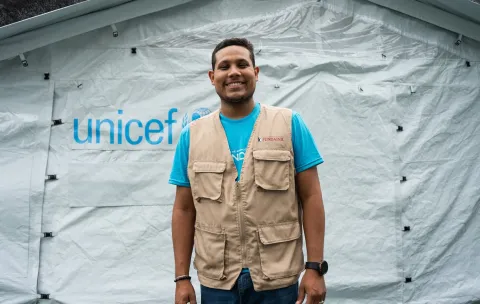
Since the first day after the earthquake, UNICEF has worked together with authorities, the UN system and partners to provide support to affected families.
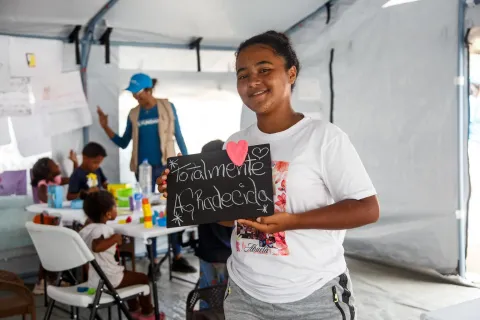
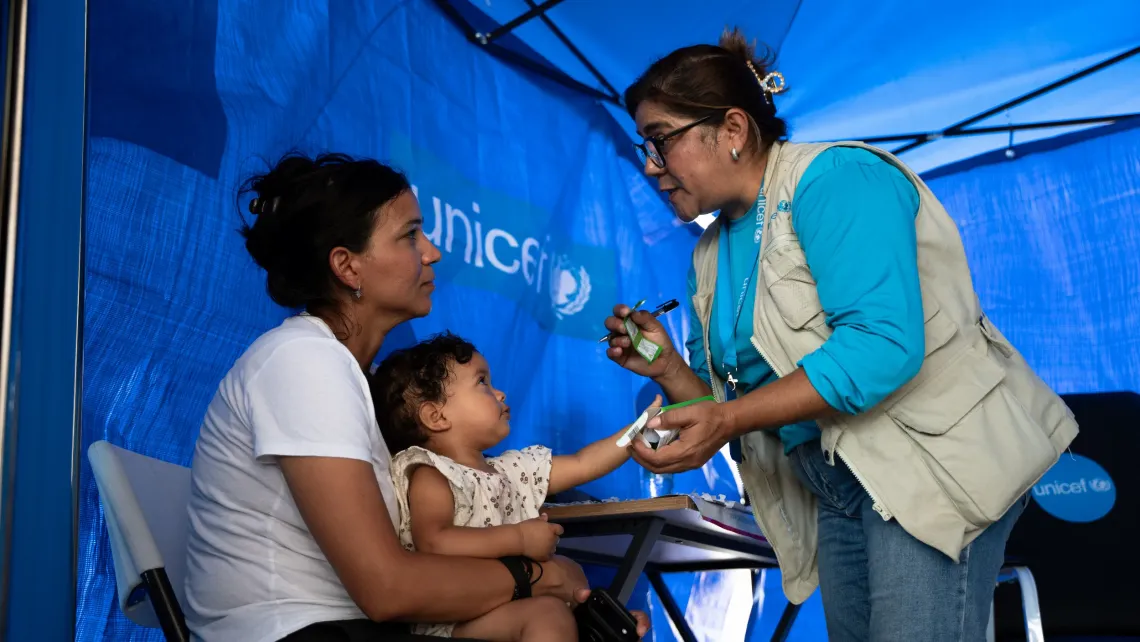
At the temporary camp, Jairibel has received assistance including supplies and hygiene items, medicines and other essentials for family care.
“We haven't lacked anything. Everything we have needed has arrived when we needed it,” she says.
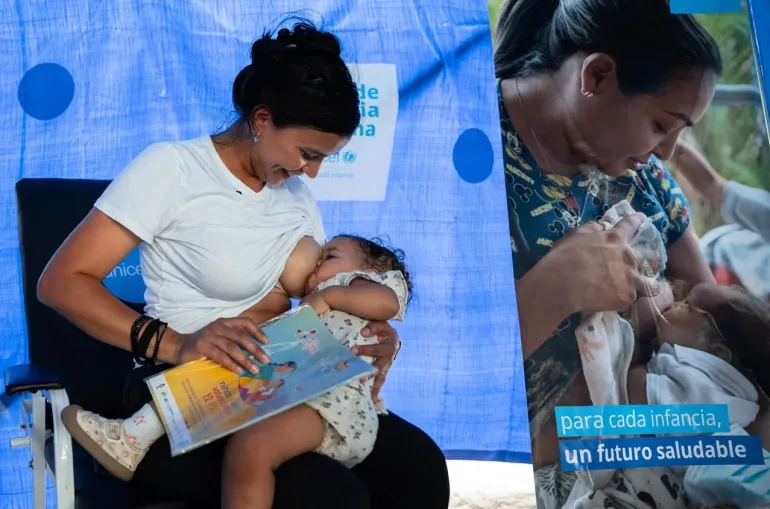
At the camp, UNICEF has also set up the “Breastfeeding Corner”, a space Jairibel visits, where mothers can find privacy, safety and support to continue breastfeeding, which is critical for them and their children. Here, they also receive medical care and nutritional counselling to help keep their children healthy. In an emergency, protecting breastfeeding spaces means strengthening what works to safeguard every baby's health today and in the future.
While Jairibel knows that the road to recovery will be long, she remains hopeful.
“In the first hours, we felt alone. We went from leaving the place where we had been living to sleep on the grass. But then help began to arrive, little by little.”
Staying to support others
Despite the losses the family has suffered, Jairibel and her husband have no plans to leave. They feel that staying is part of helping others move forward.
“During the earthquake, I wondered if I had come here to die.” But that was not the case. “We stayed here with a purpose: to bring comfort to people.”
Holding Belén in her arms at the “Breastfeeding Corner”, Jairibel says that every day she finds reasons to keep going.
“It’s a difficult and painful process, but if we are starting from scratch, we can help others do the same.”
Even when everything seems to have collapsed, love, care and solidarity can become the first step towards recovery.