When Girls Take Action
Inspired by their peers from STEM groups, four schoolgirls are taking steps to transform their community

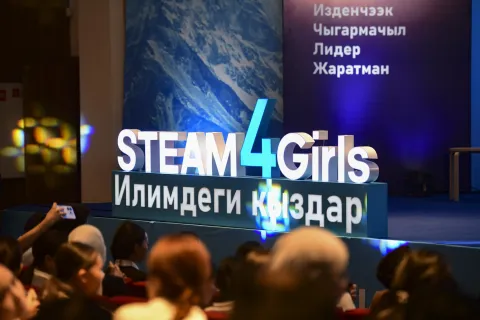
Guliza Akhunzhanova, Nazerke Asilbekova, Saikal Baltabaeva, and Diana Aidarova are four friends and classmates living in Kyzyl-Kiya, a city in southern Kyrgyzstan. A few years ago, they attended a school lecture on the role of science, technology, engineering, and mathematics (STEM) in everyday life, as part of UNICEF’s STEM 4 Girls project. Motivated by what they learned, they decided to join the project themselves.
To be selected, the girls had to create a video demonstrating their understanding of science. They chose to film an experiment inflating a balloon by mixing sodium and vinegar, which impressed the organizers.
In autumn 2023, they participated in their first STEM training event organized by UNICEF.
“At first, it was intimidating,” they admit. "But then we made friends with the other participants. Over time, we became absorbed in the world of science and inventions and started to study various topics on our own.”
Beyond STEM-related topics, the training sessions also covered the development of soft skills like leadership and communication. The core aim was to empower girls to be more active and take initiative.
The girls decided to apply what they had learned by renovating their school's locker room, which was in poor condition. Graffiti covered the walls, and the room was dirty and neglected. Not only did this affect their studies, but it also made them uncomfortable. Having a clean, safe space where they could change their clothes and take part in sports was important to them.

After school, they rallied their classmates to help clean the walls. They even organised a fundraiser among students and teachers to buy paint and refurbish the room. Through this, they realised how STEM skills could be applied to solve everyday problems that others might overlook.
Their physical education teacher, Abdudakhkhat Makhmudov, was so impressed by their efforts that he encouraged the girls by allowing them to play their favourite sport, volleyball, after school, them with even more motivation.
The school locker room was transformed into a clean and welcoming space, and the girls were brimming with new ideas.
Environmental initiatives: Rubbish bins and recycling
Following their first successful project, the girls turned their attention to waste management. They began raising awareness among their classmates about the importance of waste separation and recycling.

“At first, no one paid much attention to us, but we learned how to make our sessions engaging and interesting for everyone,” the girls recall.
Their efforts soon expanded as they started collecting recyclables from schoolchildren across Kyzyl-Kiya and installing rubbish bins. “UNICEF supported us and helped us to highlight the importance of what we were doing,” they say.
Initially, some teachers were sceptical of the girls' ideas. However, once they participated in the training sessions and saw how valuable this knowledge was, both for students and adults, their attitude changed.
Personal motivation
"Kyzyl-Kiya has serious environmental problems, and it’s hard to breathe here. We felt we had to do something," says Saikal. By installing bins and organizing the collection of recyclables, the girls have helped to improve the environmental conditions in their city. Today, seeing the impact of their work, they feel a strong sense of pride.

"It's exciting: we are amazed by what we’ve achieved. Sometimes it’s hard to believe that we, just ordinary Grade Nine students, managed to do all of this," they say with a smile.
Their participation in the project not only allowed them to change their surroundings but also helped them gain a deeper understanding of themselves.
“We’ve realised who we want to be when we grow up and have become more confident in our abilities," shares Saikal, who has now decided to study mathematics and English with support from another UNICEF project.

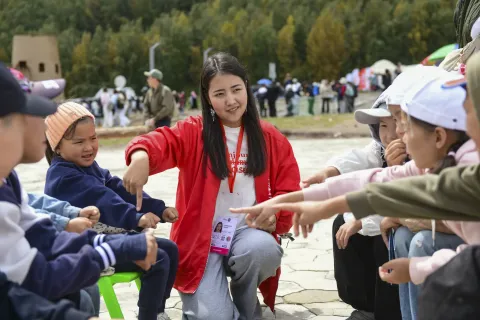
One photo shows a group of Grade Nine students listening attentively as the girls give a lecture. Their energy and knowledge are now inspiring many of their peers to take part in similar projects. The experience helped them understand that STEM skills can be applied to tackle problems that others may not see as important.
Inspiring change
UNICEF’s STEM 4 Girls programme reaches more than 10,000 students in schools across southern Kyrgyzstan. As part of the programme, girls receive training in STEM and gender equality and participate in mentoring with successful women in various fields of science and technology. Thanks to this initiative, over 48,000 peers have benefited from training sessions led by peer educators, and hundreds of girls have decided to pursue further education in STEM fields.
The programme has become a powerful example of how knowledge and support can inspire girls to transform the world around them. It not only helps them become leaders but also instils in them the confidence that their actions can bring about real change.