When Early Diagnosis Saves Lives
How children with developmental delays are being helped in Suzak

Thanks to an initiative of the Ministry of Health of the Kyrgyz Republic, supported by UNICEF, families in Suzak have gained the opportunity to identify developmental and health issues in their children on time. This reduces the risk of disability and gives every child the chance to reach their full potential.
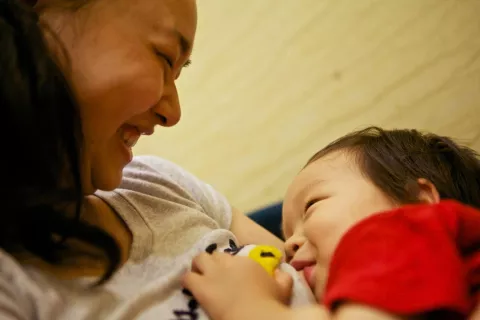
Today, Nuria Ziyadinova’s home is quiet. Her youngest daughter, one-and-a-half-month-old Sofia, is sleeping peacefully in her cradle. For many this is an ordinary scene – but for Nuria, it’s a precious moment of calm after weeks of worry.
Just a couple of weeks ago, during a routine home visit for newborns, a family doctor diagnosed Sofia with prolonged jaundice. Thanks to the introduction of telemedicine at primary health-care level in Suzak, Sofia’s parents didn’t have to travel hundreds of kilometres to the city for a more qualified consultation. Instead, their family doctor arranged a remote consultation with a neonatologist from the capital, who confirmed the diagnosis and adjusted Sofia’s treatment plan, as well as providing guidance on maternal care and nutrition.
The importance of early diagnosis
Sofia’s story is one of many examples of how early diagnosis and intervention are changing the lives of children in Suzak.
Since 2019, the Ministry of Health, with the support of UNICEF, has been implementing a home visit service for young children in several districts, including Suzak. The first six weeks of life are the most critical period for children and their mothers and require support.
These visits are intended for all newborns. During the visit, the family doctor and nurse check the child’s health and development, the mother’s health, the family’s living conditions, and social status. They identify any dangerous signs in the newborns and concerning symptoms in the mother.
The doctor and nurse manage risks, create action plans, and provide advice to parents on childcare, feeding, hygiene, bathing, and preventive check-ups. Timely identification of problems is crucial to ensure the health and safety of both the child and the mother. Consultations help parents properly care for their newborns and monitor their development.

Odinа Matyakubova, the Deputy Director of the Family Medicine Centre in Suzak and a trainer of trainers in early detection of developmental delays in children, actively applies the skills she has acquired in early intervention during home visits to children, and also helps newcomers learn these approaches and implement them during home visits.
“We examine not only the newborns but also the mothers. The examination of mothers is especially important for women who have had a caesarian section, but the doctor also looks at the living conditions of the family, how the baby is fed, and many other aspects. In the past, parents could underestimate the signs of dangerous health conditions, and delay seeking medical assistance. There were cases in which we lost children because of this. Now, however, the family doctor visits the newborn at home during the most critical moments of the baby’s life, examines the child, assesses their condition, and provides important advice to the parents,” explains the doctor.
The nurses in Suzak work in challenging conditions. Each nurse is responsible for 10 to 20 women who have given birth, while one doctor is responsible for approximately 12,000 people in the area. Due to a shortage of staff, they have to see up to 60 patients a day, spending no more than 30 minutes with each.
This is an enormous workload, but the programme is already achieving results, notes the Deputy Director of the Family Medicine Centre.

Telemedicine: assistance at a distance
One of the key steps in ensuring universal access to quality medical care for sick children has been the introduction of telemedicine, which allows for consultations with specialists who are only available in cities. Every doctor working in Suzak is equipped with a tablet that enables them to gather complaints, document the examination, and record the assessment results according to the approved clinical protocol. If there are doubts about the diagnosis or treatment, the doctor can request a consultation with a specialist from a secondary or tertiary health-care facility without the need to travel to larger cities such as Osh or Bishkek.
All the patient information entered by the family doctor on the tablet is accessible to the consulting doctor. It is possible to upload test results and examination data, and record video and audio. A convenient time is chosen, and the family with the child arrives at the Family Medicine Centre for a telemedicine consultation at the agreed time.
This is a lifesaver for many families, especially those who live far from the capital, are limited in resources, or cannot leave other children in the care of relatives or neighbours, says a representative of the Family Medicine Centre.
Telemedicine enables rapid access to qualified consultations, which is crucial for making timely decisions. In cases where an in-person consultation with a specialist is necessary, the family is referred to the city.
Experience and feedback
For Nuriya Ziadinova, the convenience of the programme turned out to be especially valuable.
“When I was informed about the possibility of receiving consultations and diagnosis without having to travel to the city, I immediately agreed,” says Nuriya. “there was no need to go anywhere, which was very convenient, especially with an infant.”
After Sofia’s diagnosis, the necessary therapy was prescribed, and Nuriya received important recommendations for caring for her daughter and feeding. Thanks to the timely intervention, Sofia's condition stabilized, and she is now receiving the necessary care in a comfortable environment for the family.
Odina Matyakubova, the Deputy Head of the Family Medicine Centre, also notes the positive impact of telemedicine: “Using video communication, we can send all the necessary information to specialists in the capital, which allows us to respond quickly to changes in the child’s condition.”
This is especially crucial given the shortage of medical staff, where every minute is precious.

Statistics and impact of the programme
The introduction of the telemedicine programme and home visits in Suzak has become a significant step in ensuring access to quality health care in remote areas. The collaboration between UNICEF, the Ministry of Health of the Kyrgyz Republic, and the family medicine centres in Suzak district has led to substantial results for people's lives. For instance, neonatal mortality in Jalal-Abad region, in which Suzak is the largest and most densely populated district in the area, decreased sixfold from 2018 to 2023, as noted in the UNICEF MICS report for 2023.
During the same period, the coverage of home visits for young children from the poorest families by primary health-care service (PHC) workers across the country has doubled. It is clear that the Ministry of Health’s efforts to improve services at PHC level, along with the active implementation of home visits and telemedicine, have played vital roles in ensuring children’s access to essential medical care.