“Beshbarmak is not infant food”
What families in Kyrgyz villages learned from a child nutrition study
Only 26 per cent of children in Kyrgyzstan aged 6 to 59 months receive nutrition that meets the minimum diversity required for optimal growth and development. This means a diet that includes at least five out of eight different food groups: 1) breast milk; 2) grains, roots and tubers; 3) legumes, nuts and seeds; 4) dairy products; 5) meat products, including meat, fish, poultry, liver or other organs; 6) eggs; 7) fruits and vegetables rich in vitamin A (carrots, dark green leafy vegetables and pumpkin); and 8) other fruits and vegetables. The problem is particularly acute in the Chuy and Jalal-Abad regions.
To understand the reasons and help families change the situation, UNICEF, in collaboration with research company “Empirica,” conducted a behavioral study in the villages of Belek in Chuy region and Suzak in Jalal-Abad region. Specialists visited homes, observed how children were fed, and educated parents, grandparents, and caregivers on early nutrition principles. Changes could be seen within a month.
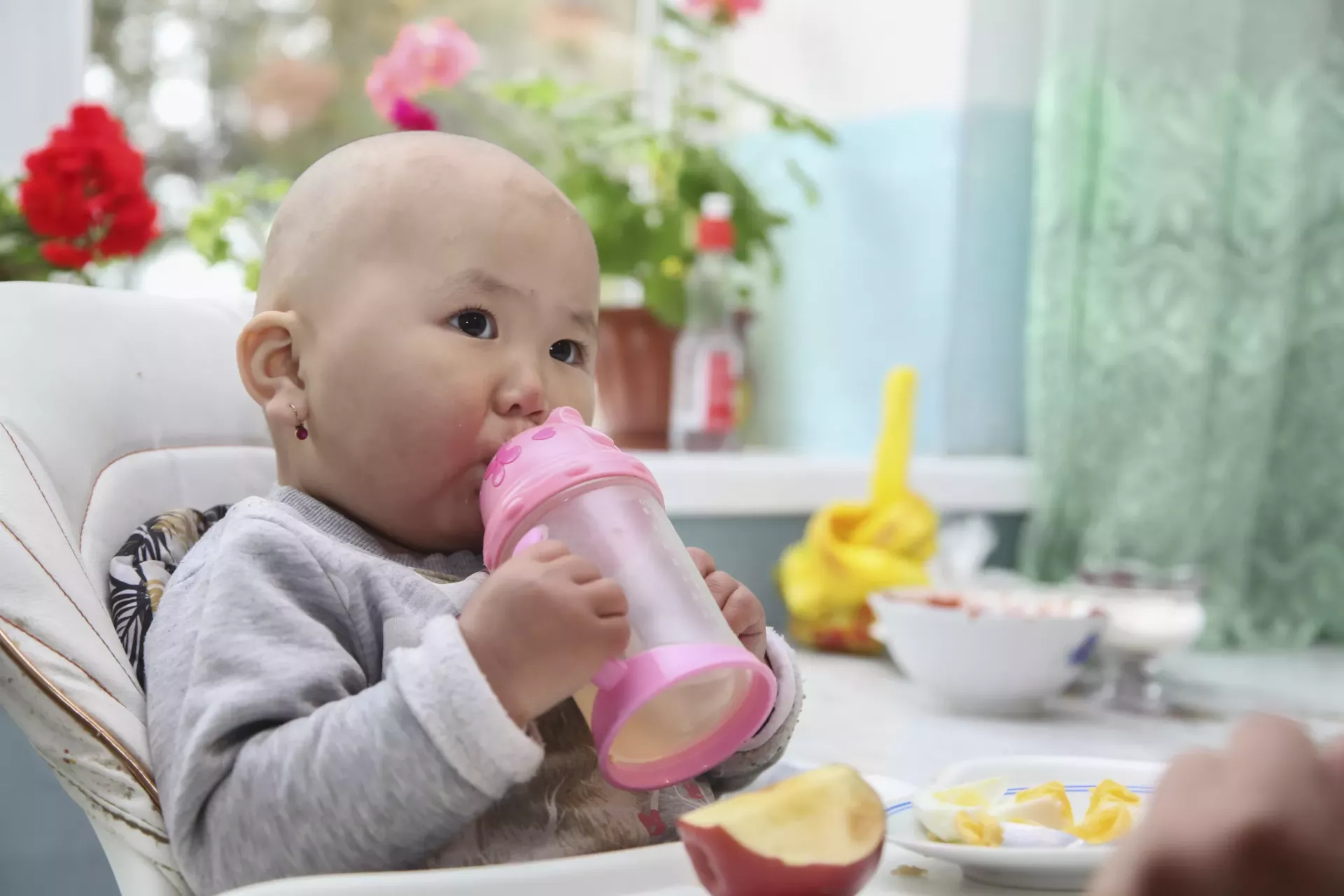
Today, one-and-a-half-year-old Alica is chewing an apple: she is active, reaching for a cup, and smiling. She is now well-fed and calm, and even gets sick less often. But just a few months ago, her diet was very different – dominated by bread, pasta, and sweet tea.
“She didn’t eat dairy, didn’t like vegetables. We didn’t give them to her, to be honest,” admits her mother, Albina Raimkulova. “In our store, everything is the same: noodles, cookies and chocolate. We didn’t think that a child needed something different.”
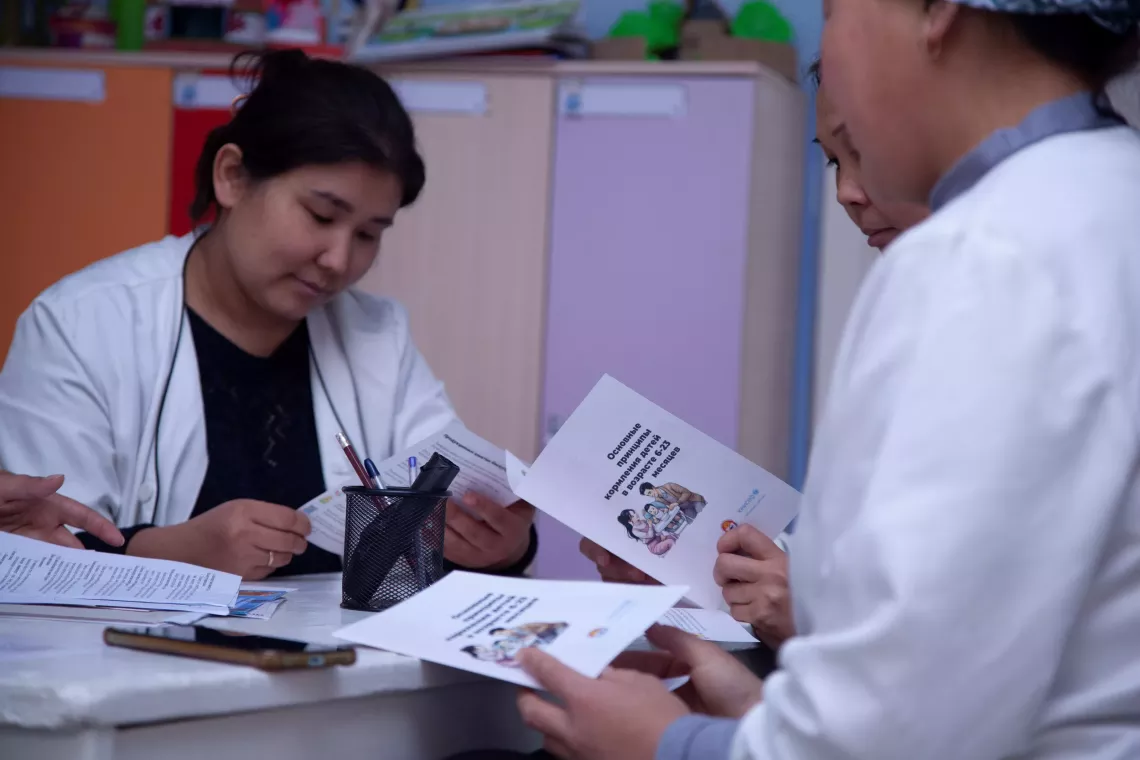
Nurse Gulsat Arakeeva from the local health point conducted educational talks with parents, explaining how a child’s diet should be structured. Albina was given a brochure, invited to a meeting, and shown how to cook and what to offer the child, and how to gradually introduce new foods. UNICEF and WHO recommend continued breastfeeding up to 2 years, introducing complementary foods at 6 months with age-appropriate, nutritious and safe foods, without excess calories, trans fats, sugar and salt. These recommendations helped parents understand the importance of a balanced diet, and how to implement it effectively.
Now Albina’s husband travels to the nearest district centre once a week to buy fresh vegetables and fruits. Alica eats soups, purees and cottage cheese.
“She has a good appetite, sleeps well, and is less fussy. We were surprised that all this is not so expensive: we just needed to understand what proper nutrition is,” says Albina.
There is a gathering of mothers today at a health point in Belek village. At the meeting, participants discussed how nutrition affects a child’s health, how to adapt a diet to ensure children eat suitable foods, and how to diversify the diet.
“Health-care workers are an important link. Mothers respect and listen to them, and they, like us, were given manuals, shown how to work with parents: without scaring them or imposing on them,” says Gulsat Arakeeva, a health-care worker at the health point.
“We used to think that the main thing was for the child to be full. Now we explain that it’s important not only how much, but also what and how they eat,” says one of the mothers.
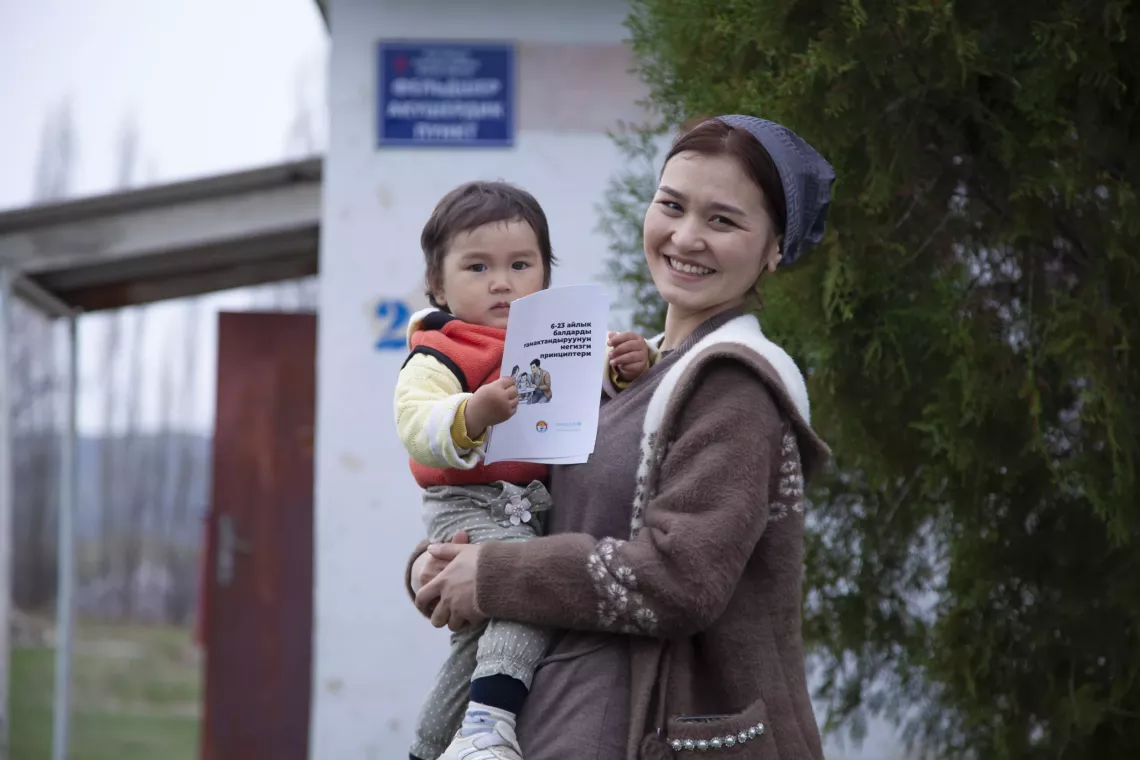
Meerim Kanybek kyzy, with her daughter Erika, first heard about proper nutrition from a health-care worker. After that, she came to a meeting at the health point – to listen to a lecture and ask questions. It was there that she first seriously thought about what she was feeding her child.
“I fed her what we had on the table—boorsoks, tea with sugar, kuurdak and beshbarmak. Then they explained to us that it is difficult for a child to digest meat with dough, that vegetables are needed. And that even if the child doesn’t eat something the first time you need to keep offering it,” recalls Meerim.
After the meeting, she turned to the health-care worker again: it turned out that they had also been trained to structure a menu, and how to explain to parents why children might struggle with unfamiliar foods.
“I started making vegetable patties, soups and porridges. Now Erika eats bananas and apples. Once, out of habit, I fried courgette to make puree and stopped myself” children shouldn’t eat fried food. My daughter’s immunity is now strong. She will soon go to kindergarten, and she is ready,” she says.
The study showed that the main barriers to a varied diet are not poverty or a lack of produce. It is a lack of knowledge, distrust and the belief that ‘healthy’ means expensive, complicated and unfamiliar. There is also a persistent myth that a child will not be full if there is no fried food or meat with dough on the plate.
Many families did not know that a diverse diet means at least five food groups out of eight. And that vegetables, dairy, fruits, legumes and nuts can be gathered from what grows nearby or is sold in the neighbouring town.
To change behaviour, UNICEF and partners conducted a series of home visits, sessions at health points for mothers, open cooking classes, and talks with grandparents.
“Now many parents see the results: children sleep, are active and get sick less; and everything has changed,” says a health point representative. Today, vegetable soups are boiling in pots, purees and compotes are on the tables, and bananas and apples are in tiny hands. The main takeaway is that varied diets are not a luxury. The systemic approach implemented by UNICEF covers everything: families, health-care workers and local communities. The health point becomes the first point of contact, and the home the space for daily practice.
Changes happen where there is information, support and trust. Where parents understand that broccoli does not have to be imported but can be replaced with cabbage, courgette, or beetroot. Where a grandmother learns that meat with dough is not the preferred food for an infant. Where the child’s diet is enriched with vegetables and fruits, not sweet lollipops. Because even in a village, a varied diet is possible. Especially if someone shows where to start.