Disaster risk reduction
Being prepared is the only way to protect our children during and after any disaster

The challenge
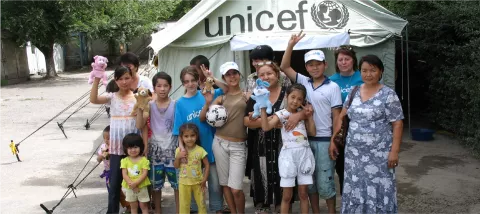
Kyrgyzstan faces several emergency risks, including increasingly frequent mudslides and floods due to climate change. Located in a seismically active area, the country is exposed to frequent earthquakes that can reach more than 9 points on the Richter scale.
In just the past five years, the country has seen several intensive earthquakes, floods and landslides resulting in significant financial and human losses.
This affects children first, who are more vulnerable than adults.
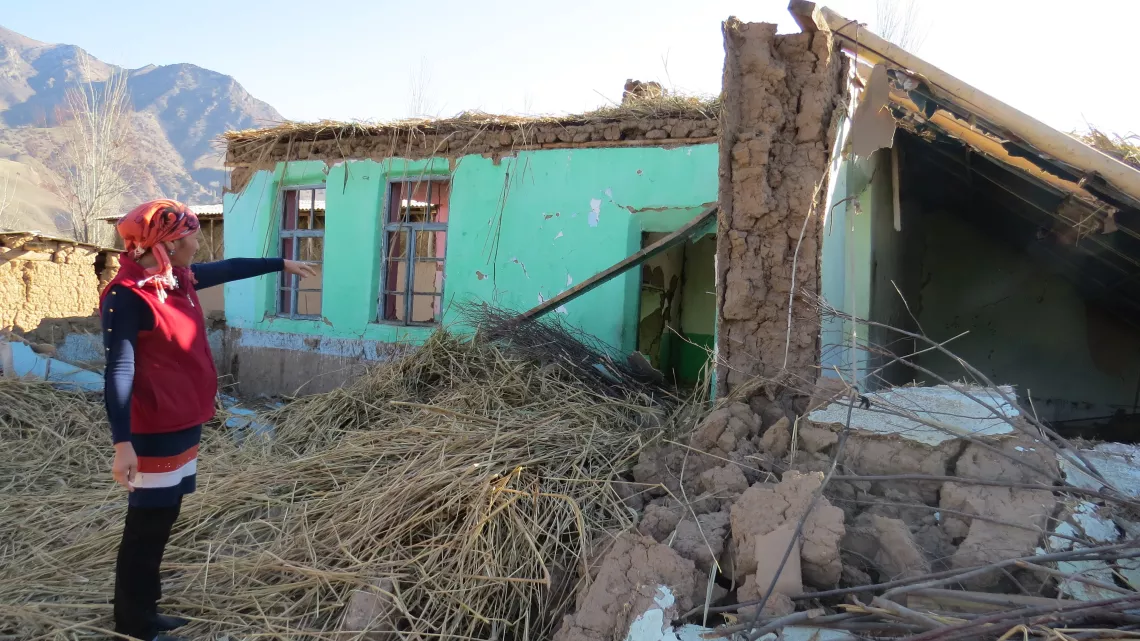
A UNICEF-supported safety assessment for schools and pre-schools (conducted in 2011-2014) found that 85 per cent of education facilities in the Kyrgyz Republic have low safety levels and are exposed to potential disasters.
It indicates that more than one million children are prone to potential disaster risks.
The main issues to address include the deterioration of school infrastructure, lack of preparedness and weak response capacity among government institutions in times of emergency.
While the normative framework exists, there is a lack of mechanisms for its implementation and oversight and limited financial and human resources.
The solution
The safety assessment of schools has prompted the Government of the Kyrgyz Republic to launch a large-scale project on improving safety of schoolchildren entitled Safe Schools and Pre-schools in the Kyrgyz Republic.
The programme was implemented in two phases from 2015 to 2024 with support from UNICEF Kyrgyzstan.
Inspired by best practices from Japan, the programme set out to pioneer new pathways to school safety and resilience and scale up school-based disaster risk reduction (DRR) nationwide. In Phase 2 of the programme, UNICEF leveraged 600 local volunteers from the Red Crescent Society of Kyrgyzstan (RCSK) and UNICEF youth groups to reach some of the most remote schools in the country.
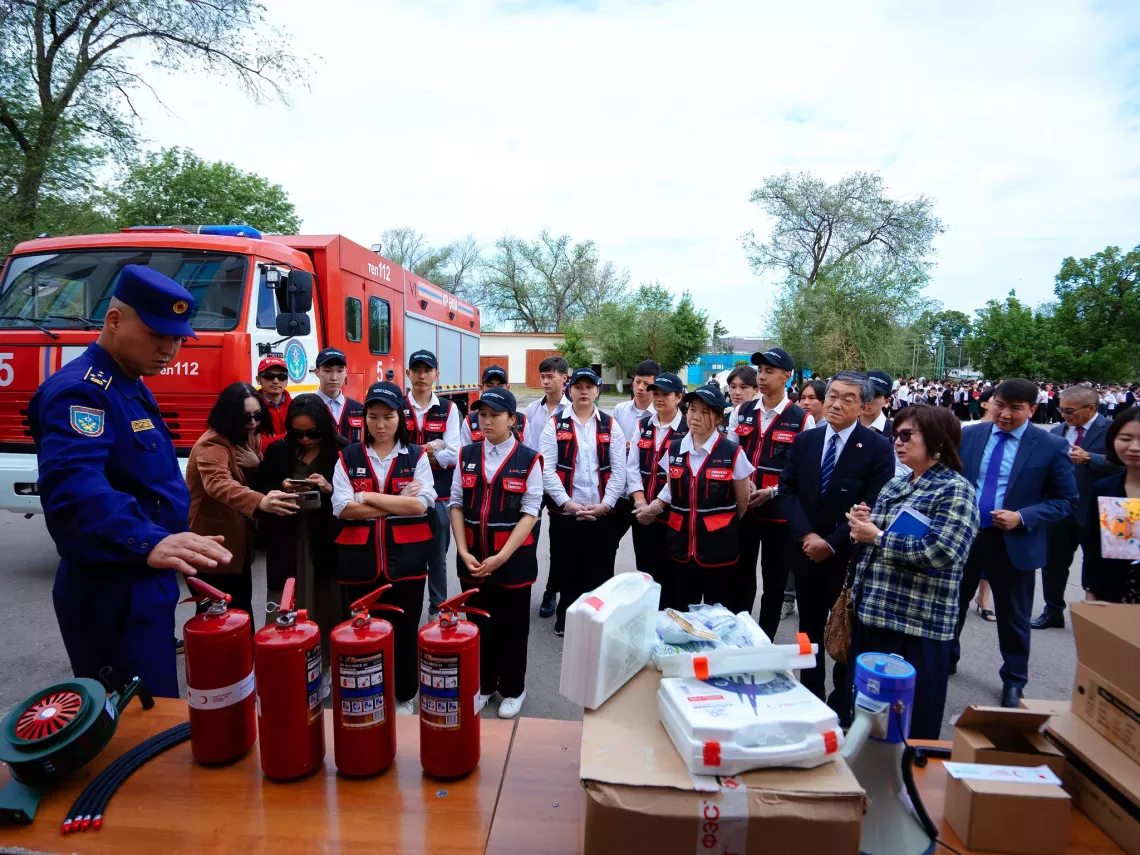
UNICEF undertook both upstream and downstream interventions in a balanced manner. At the upstream level, UNICEF supported the Ministry of Education and Science, the Ministry of Emergency Situations and other government entities to formulate the national Roadmap on Scaling Up DRR in Educational Institutions. This helped the provincial authorities to integrate DRR components into local government development plans.
At downstream level, UNICEF employed a school-based approach to DRR and resilience building in the education system. Schools served as an entry point to knowledge sharing and awareness raising around preparedness for climate and disaster risks. In addition, UNICEF placed children’s participation at the centre of school-based DRR and preparedness for emergencies. As a result, students, teachers and youth volunteers became better acquainted with and prepared for local climate and disaster risks: put differently, they were empowered to act better in the event of local natural disasters.
Thanks to a UNICEF intervention, safety issues have been incorporated into state preschool educational standards and an educational programme on safe behaviour for preschool children during emergencies. DRR has also been incorporated into the Ministry of Education and Science’s Education Strategy for 2012-2020.
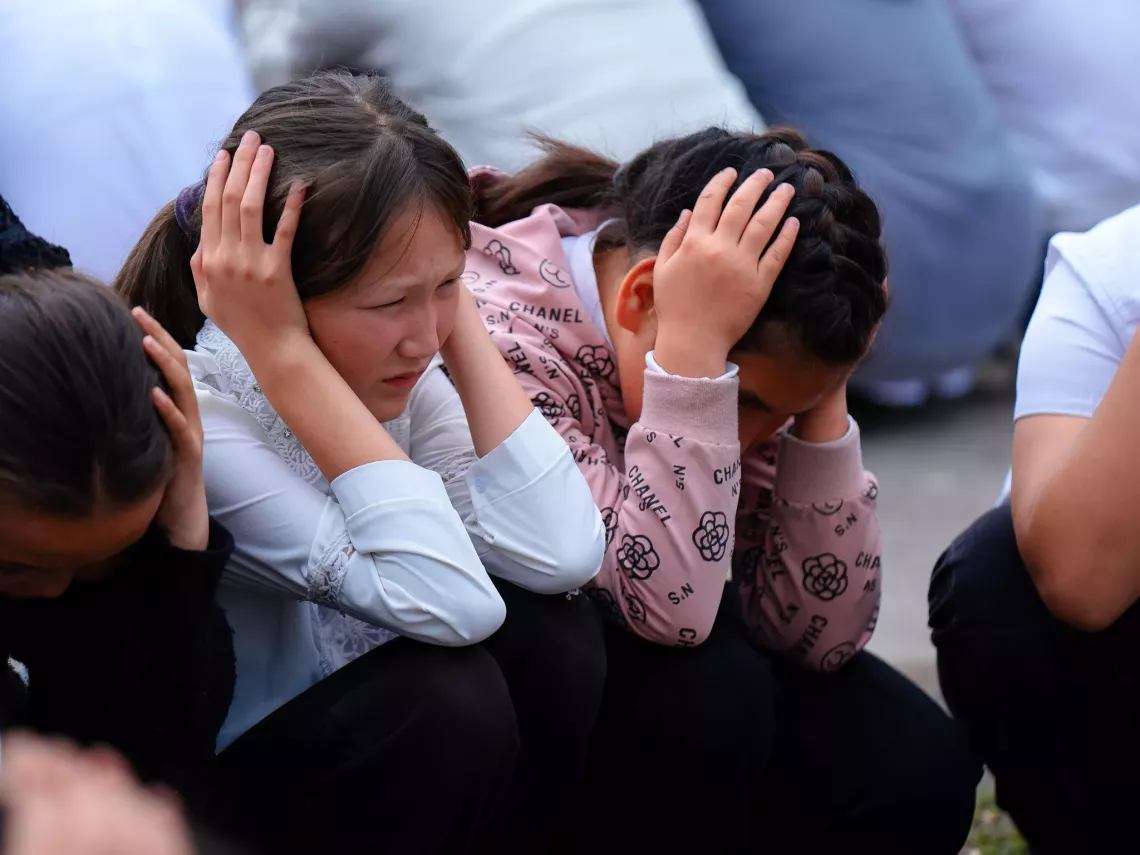
In addition, a “Principles of Everyday Safety” programme has been developed for primary and secondary school pupils along with methodical recommendations and introduced into the national school curriculum.
They developed their capacity to understand and manage disaster risk and be prepared for emergencies through training on these topics. This experience has been consolidated in the School-based DRR Guidebook for school administrations, which was developed with UNICEF technical assistance.
With UNICEF support, more than 3,000 schools and preschools were assessed for risk vulnerability and safety by engineers.
This work was done to support the Government in ensuring safe learning spaces for children and to build a database on school and preschool safety. Based on the assessment results, the Government of the Kyrgyz Republic’s “Safe schools and pre-schools in the Kyrgyz Republic in 2015-2024” Programme was developed, approved and adopted by government decree. The government and development partners are widely using this data to mobilize resources in support of school and pre-school rehabilitation, reinforcement and reconstruction.
In 2016-2017, UNICEF supported the Ministry of Emergency Situations to develop a unified methodology for disaster risk assessment and analysis (DRA), planning, financing and monitoring of activities at local level.
The result of the work is the DRA at Local Level guidance. In addition, support was provided to strengthen the capacity and equip the Training Centres of Civil Protection Specialists under the Ministry of Emergency Situations (in Bishkek and Osh). Both Centres already train municipal specialists on DRA. This methodology helps municipalities to identify potential risks and vulnerabilities in their territory and incorporate prevention measures in local development plans.
Resources
These resources represent a small selection of materials on disaster risk reduction produced by UNICEF and its partners in Kyrgyzstan. The list is regularly updated to include the latest information.