Two steps have become ten
For Ylli, early childhood support is opening new possibilities. That support must continue throughout the year.

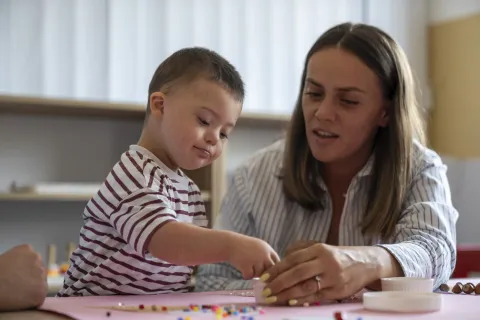
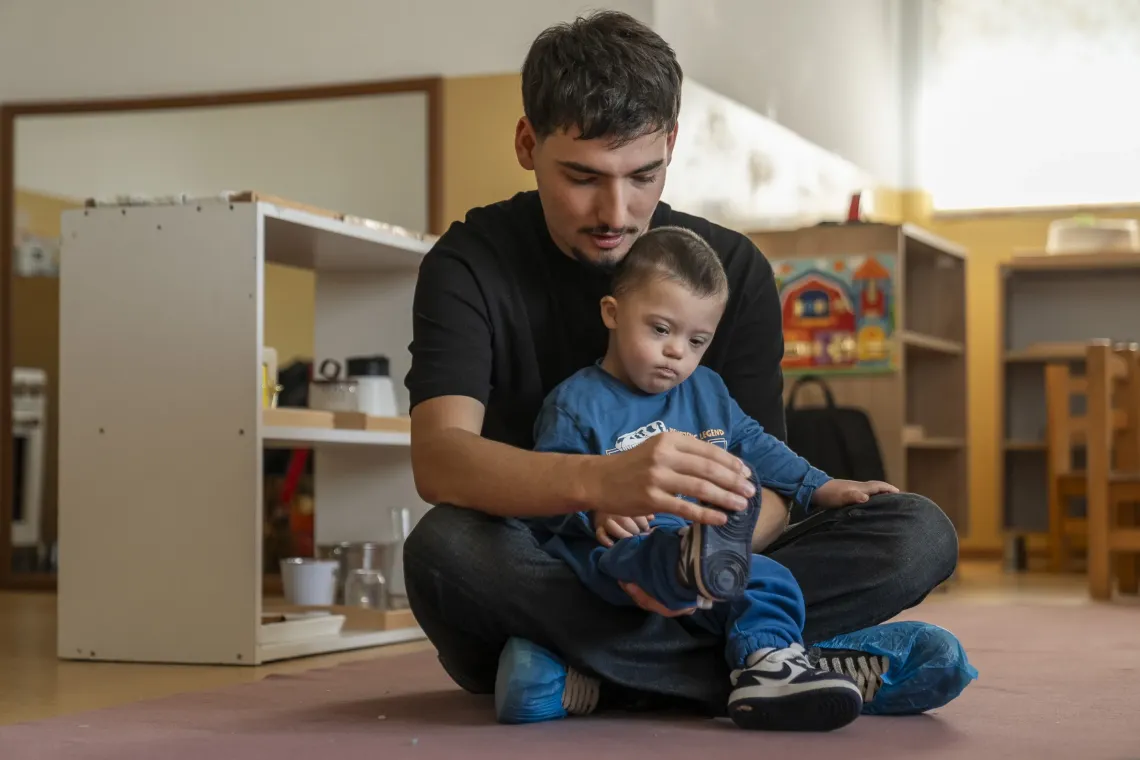
At “Milingonat” preschool in Prishtina, Ylli, who is 3 years old and has Down Syndrome, is learning to walk with support from a physiotherapist who shares his name. “Big Ylli,” from HANDIKOS, works with him to build his movement skills. He is part of a multidisciplinary Early Childhood Intervention (ECI) team that provides services for children with developmental delays and disabilities through a family-centered model, first piloted in Kosovo by UNICEF. “When I see him taking more steps with less support, it makes my work meaningful, I can see how what we practice together is helping him in his everyday life.” – he points out.
Where Ylli once managed two steps, he now takes ten, holding just one hand.
For his mother, Majlinda, each step represents patient practice, professional support, and new possibilities for her son.
Ylli has also received speech therapy to support his communication. Together, these services help him develop skills to participate more fully at home and preschool.
His name means “star” in Albanian. To his family, it fits.
The second of four children, Ylli has already undergone four operations for conditions affecting his heart and digestive system. Through treatment and recovery, his parents have continued to seek the care and opportunities he needs.
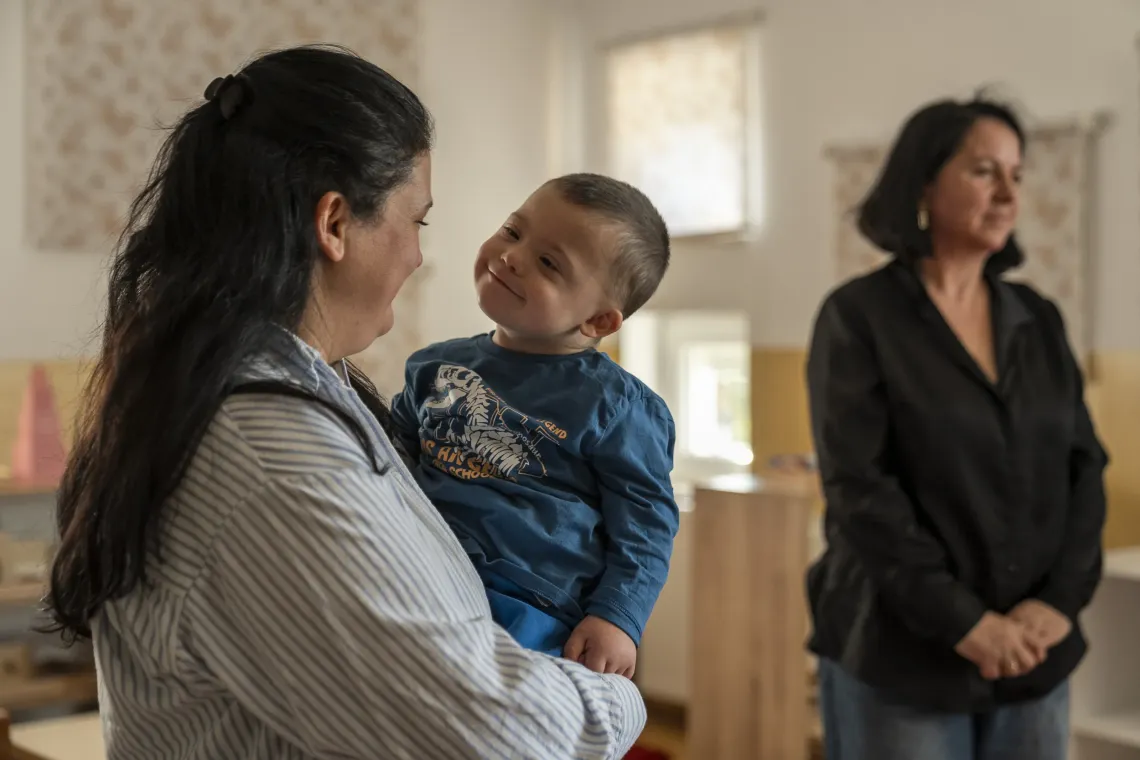
At home, Majlinda makes developmental activities part of his routine, encouraging him even on days when he is less interested in practising. His older sister, Hana, joins in with his exercises, turning practice into time spent playing together. His younger brother, Mali, attends preschool alongside him. The youngest, Zani, is seven months old.
Ylli has his own place in this busy family, as a son, brother and playmate.
Learning together
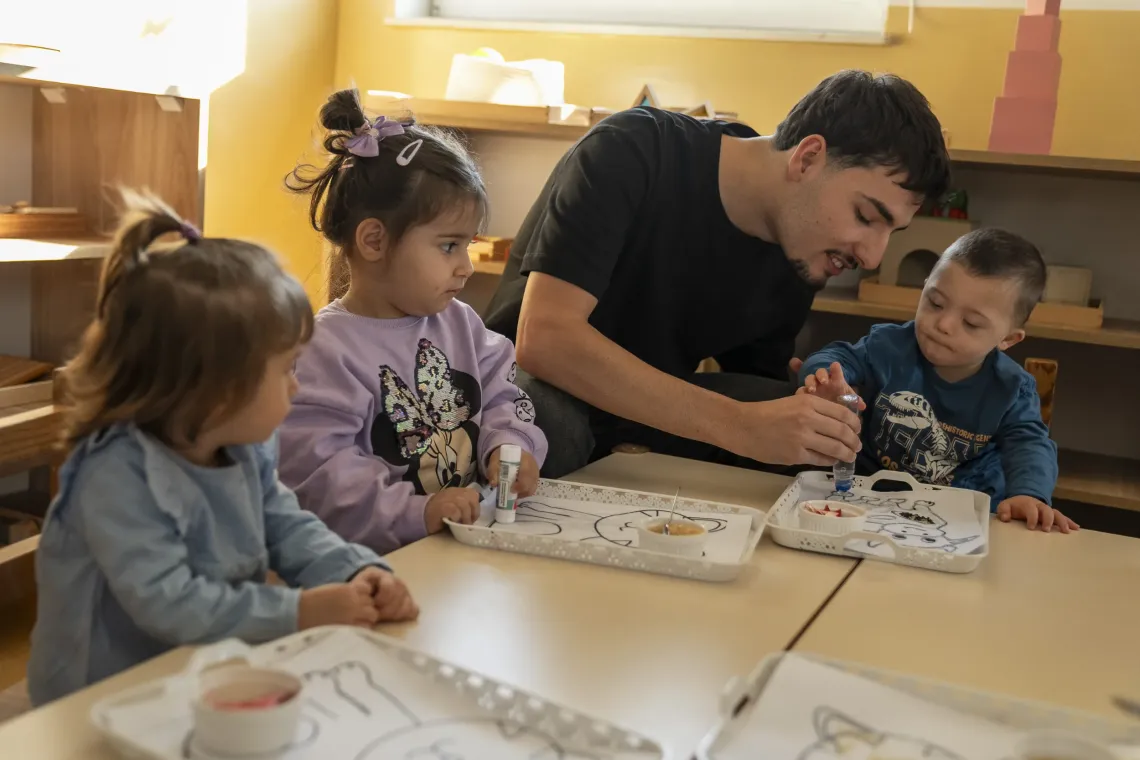
At "Milingonat”, Ylli’s world extends beyond home and therapy. Preschool gives him daily opportunities to communicate, move, play and build friendships.
Learning together is also helping children practise empathy, care and solidarity. Parents’ attitudes towards children with disabilities are changing as they see Ylli participating as part of the group. He belongs there, with his own interests, friendships and contributions.
His teacher helps make those opportunities accessible by adapting activities and giving him time and encouragement to participate. Connecting learning at preschool with support from his family and specialists helps Ylli practise new skills throughout the day.
“My role is to find ways for Ylli to join in, learn and enjoy being with the other children, just as every child should.”
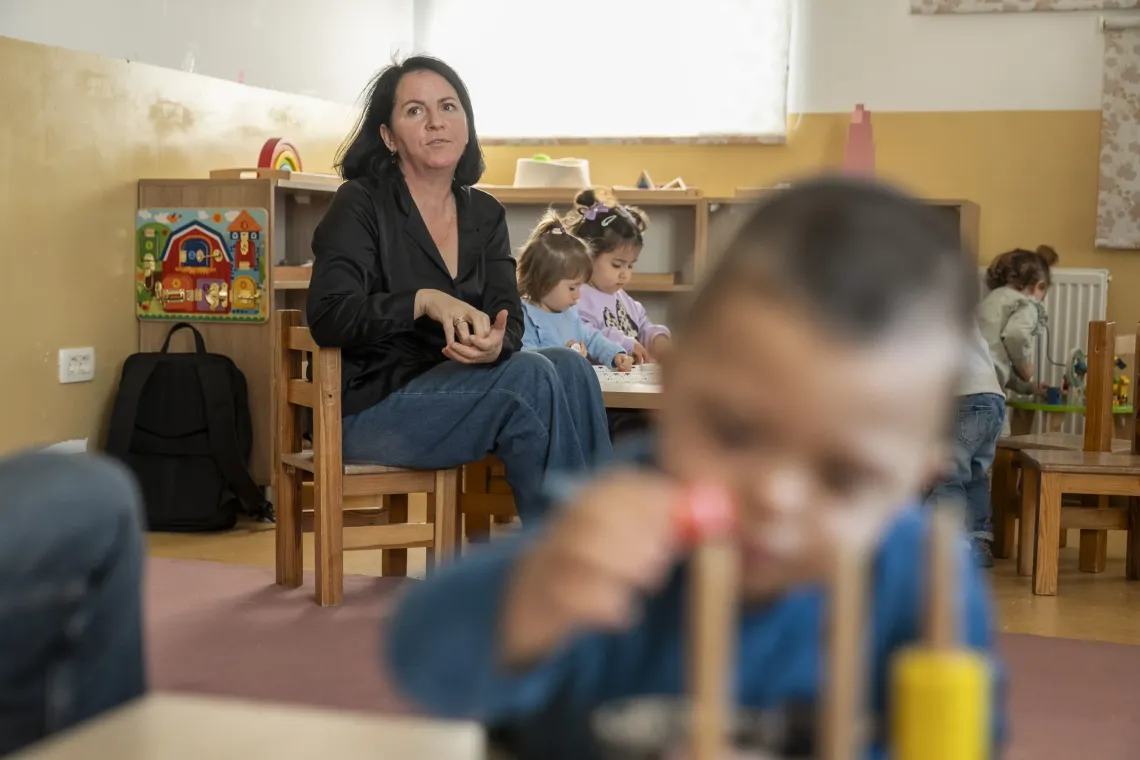
Yet Ylli does not have a teaching assistant. His teacher needs adequate support to respond to his individual needs while caring for the whole group. Inclusion requires trained staff, time and resources, alongside a welcoming classroom.
What early childhood intervention means
ECI is a rights-based system of services and support for children from birth to age six who have, or are at risk of, developmental delays or disabilities. It empowers families and connects health, education and social services, using evidence-based approaches that respect each family’s culture and circumstances.
UNICEF works with the Ministry of Health and partners to strengthen early identification and intervention. The 2023 situation analysis highlights the importance of family-centred support in familiar settings, including homes and preschools, where children can practise skills through everyday activities.
Between 2024 and 2026, UNICEF piloted the ECI model in Kosovo and supported the Ministry of Health in developing the ECI Strategic Document 2025–2030, which sets out a pathway for institutionalizing and scaling up these services within Primary Health Care system. Donors such as UNICEF Austrian NatCom help to support children both through programmes funded for a specific purpose and through flexible contributions known as core resources. These allow UNICEF to respond to overlooked needs, sustain long-term work and strengthen the public systems children depend on. For children like Ylli, the goal is practical: timely support, professionals working together and families who do not have to find their way alone.
Progress should not stop for summer
For Ylli, summer brings a difficult interruption. Majlinda describes how, when services become unavailable, he loses some of the progress he has made.
His family continues to support him at home. But their commitment cannot replace professional care, and access should not depend on whether parents can arrange or afford alternatives.
Children’s developmental needs continue during school holidays. For Ylli, continuity means access to professional guidance and support to maintain and build his skills, including during the summer.
Public institutions need to ensure that these services are reliably funded, coordinated and available throughout the year. To help make this happen, UNICEF is working with the Ministry of Health and other institutions to integrate ECI into routine PHC services, in close coordination with other sectors, to ensure continuous, comprehensive support for children and their families.
Ylli’s family, physiotherapist and preschool have shown what becomes possible when daily encouragement is backed by professional support and opportunities to learn alongside others.
He now takes ten steps, holding one hand.
The next step for the services around him is to make sure that support remains within reach.