From overwhelmed to confident in parenting
Father's involvement transforms parenting into a shared journey
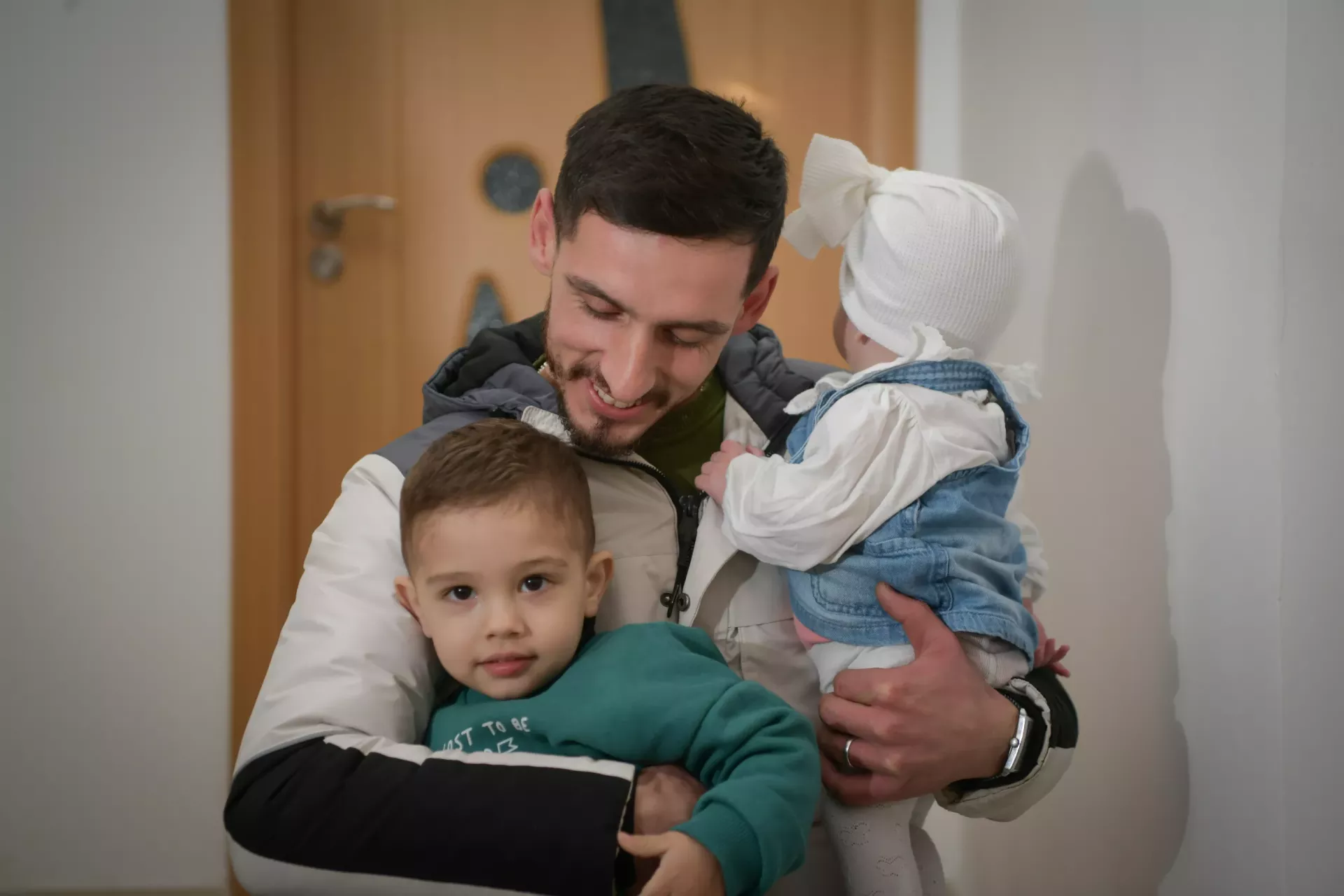
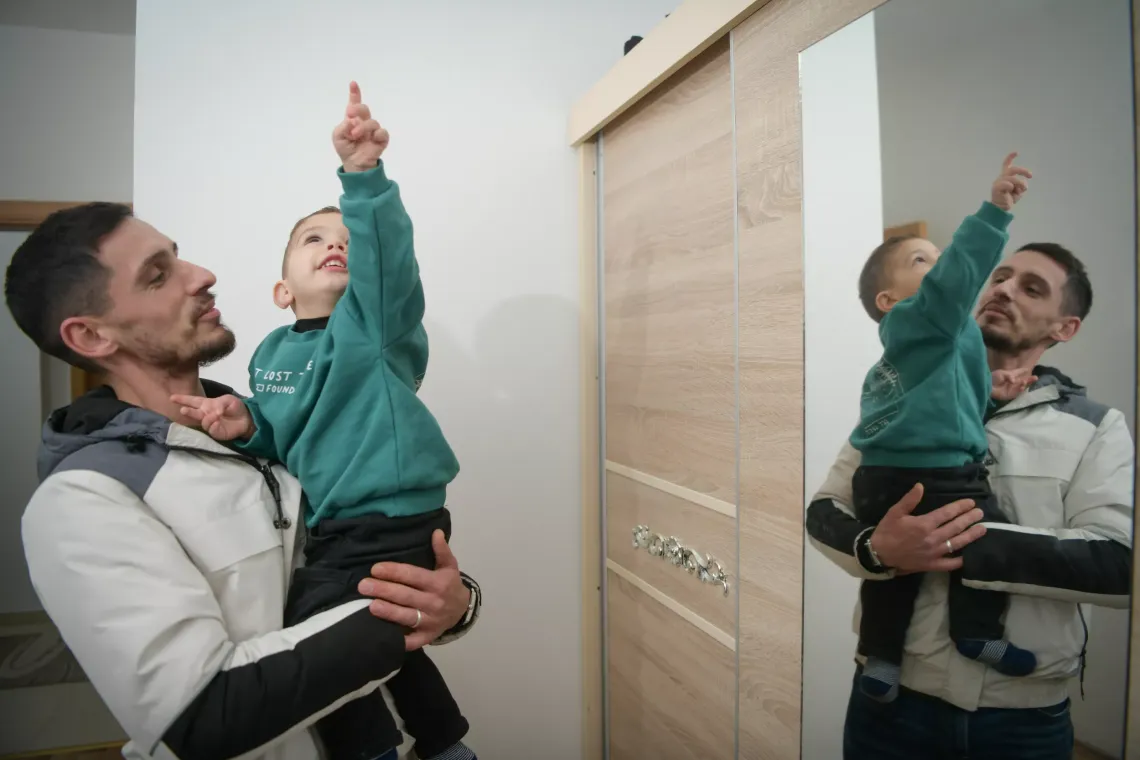
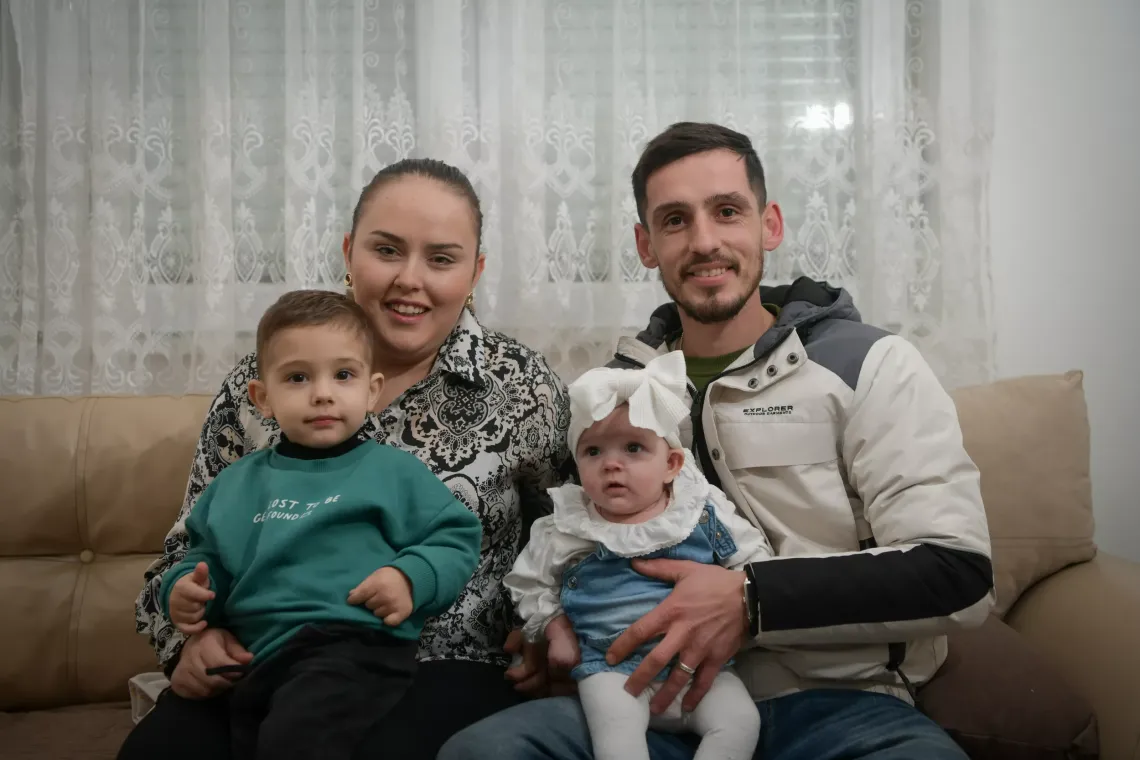
In the village of Magurë, Lipjan, 31-year-old Valmir Berisha balances long hours at his family’s auto repair shop with his most important role—being a father to 20-month-old Ajan and four-month-old Amina. Even after exhausting shifts, he makes time to play outside with Ajan or soothe Amina to sleep.
“Being present matters,” he says. “I want them to grow up knowing their father was there.”
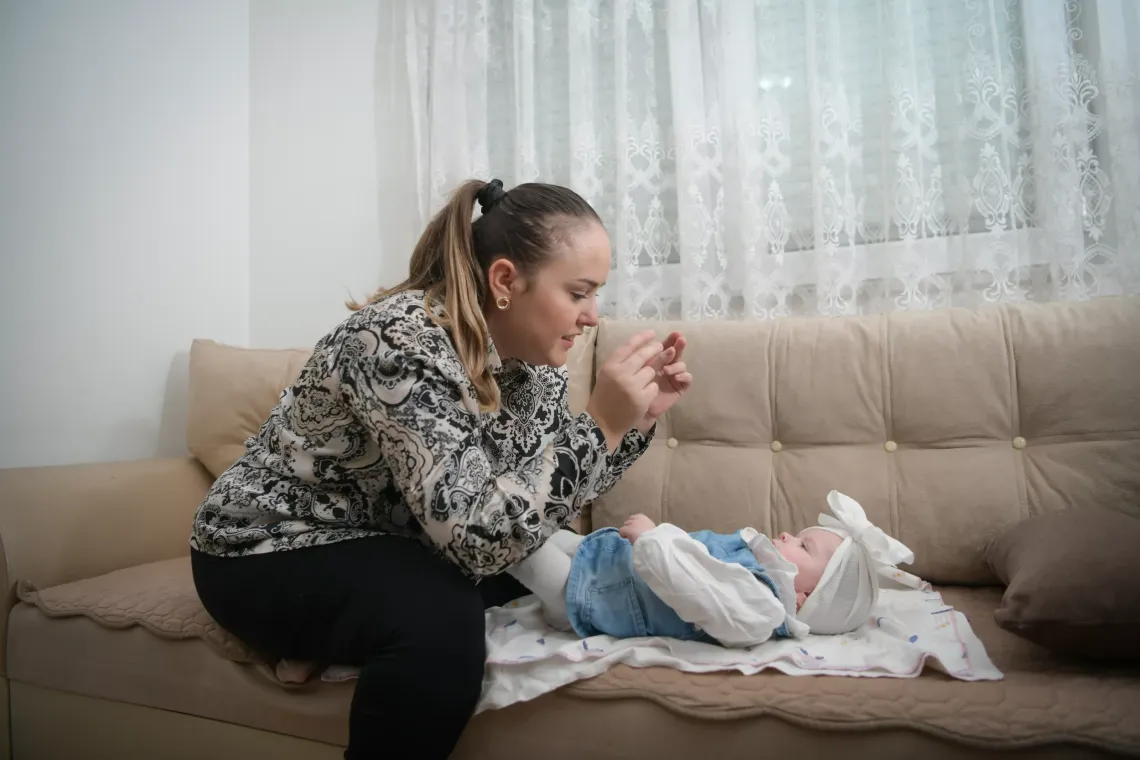
His wife, Çlirimtarja, 24, remembers how overwhelming motherhood felt at first. “After Ajan was born, I worried constantly—was I doing everything right?” she recalls.
But she wasn’t alone. Valmir shared responsibilities, making sure they faced every challenge together. “We talk about everything—the kids, our worries, how to handle things better,” he says.
Support from the Home Visiting Programme, led by the Ministry of Health and supported by UNICEF in partnership with the Grand Duchy of Luxembourg, helped ease their transition into parenthood. Nurse Shemsije Jerzeci guided them through breastfeeding challenges, newborn care, and child development milestones. “She didn’t just check Amina’s weight,” Valmir says. “She taught me how to understand Ajan’s tantrums and support his learning.”
The impact of engaged fathers is clear. Yet, in Kosovo, only 1 in 10 children aged 2-4 are engaged daily in early stimulation activities with their fathers, such as reading, storytelling, or playing with their children—while mothers are four times more likely to do so as per MICS 2010-20. The Home Visiting Programme reached 75% of newborns in 2024 supporting both parents to take an active role in raising their children.
“Before, we used to argue over who was more tired,” Çlirimtarja admits. “Now, we work as a team—if I’m feeding Amina, Valmir is playing with Ajan. It’s made everything easier.”
Still, shifting mindsets isn’t easy. “Some of my friends joke that changing diapers is ‘women’s work”, Valmir says. “But they’re missing out. Nothing compares to seeing your child’s face light up because you’re there.”
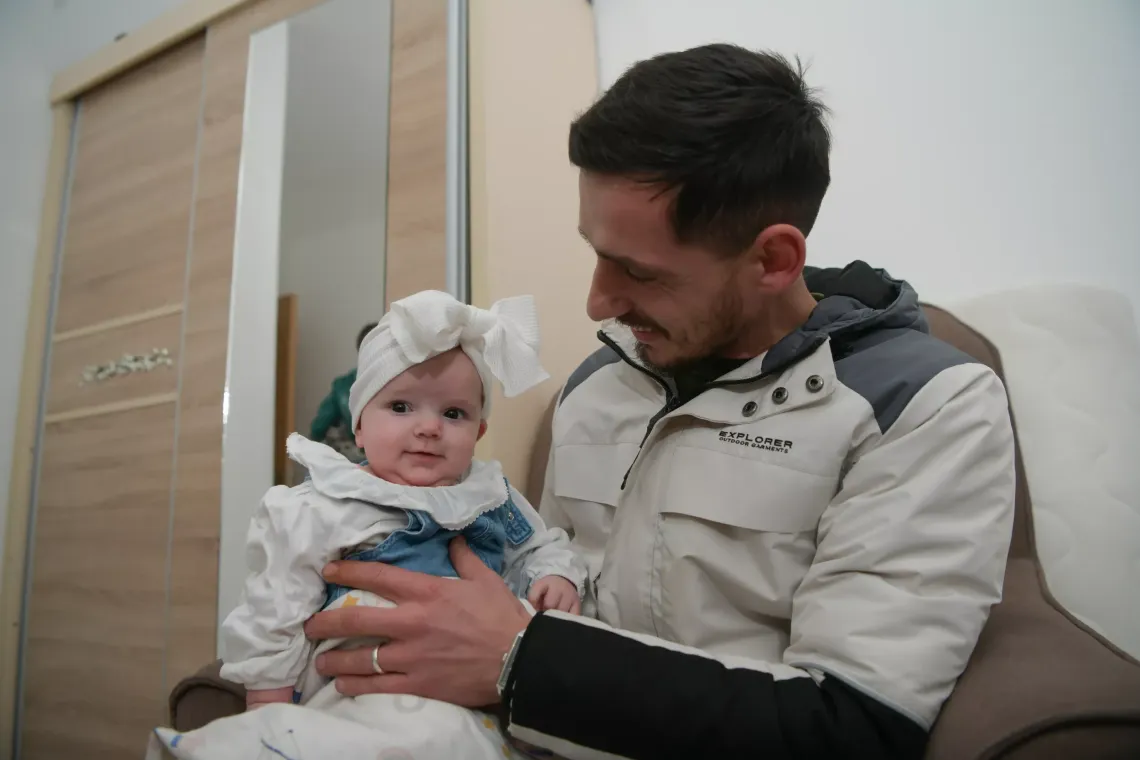
As the sun sets over Magurë, Ajan plays nearby while Amina naps in Valmir’s arms. “This programme gave us more than advice,” he says, watching his family. “It gave us confidence, teamwork, and the joy of raising our children—together.”
Çlirimtarja’s message to new parents? “Talk to each other, share the load, and dads—be involved from day one. The little moments matter more than you think.”
Advances in neuroscience have proven that when children spend their earliest years of life – particularly their first 1,000 days – in a nurturing environment, their brains can develop at optimal speed. These neural connections determine a child’s cognitive ability, their health and happiness, how they learn and think, their ability to deal with stress, and their ability to form relationships. Research suggests that when fathers are able to bond with their babies from the very beginning of life, they are more likely to play a more active role in their children’s development, and will have better psychological health, self-esteem and life-satisfaction in the long-term.