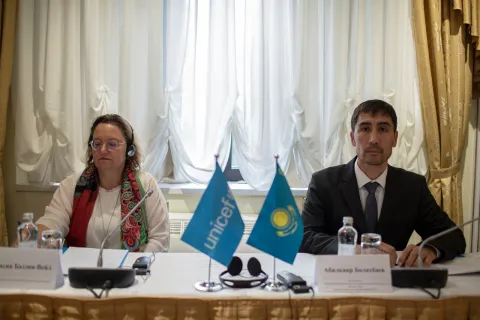
“I want every child with disability to have all the digital skills”
Ilyas Fatkulin, head of the "Zhan" Asian Society for the Rights of Persons with Disabilities, about teaching important skills for visually impaired children and people with disability

Ilyas Fatkulin cannot imagine his life without a smartphone. He wakes up with his phone's alarm clock, reads the news, pays for any purchases through banking apps, works using his computer programs and chats in messengers. All his activities are connected through gadgets.
Ilyas lost his sight at the age of 16, after retinal surgery. Now he teaches visually impaired people digital technologies.
Ilyas started teaching visually impaired people back in 2014, when he worked at the "Zhanar" rehabilitation center.
“I taught space orientation there, after 2 months I was hired as a computer teacher. In addition to teaching at the rehabilitation center, sometimes I taught at home,”
In the rehabilitation center, Ilyas trained visually impaired people aged 14 to 60. It was then that Ilyas felt for the first time that teaching digital skills is a complex process that requires a lot of energy and strength.
“Digital skills are essential for disabled people,” Ilyas says. “Thanks to my knowledge of computers and telephones, I do not consider myself disabled, because I can do everything.”
The activist went on to teaching children, realizing how important it is.
“I studied at a special boarding school named after Ostrovsky in Almaty. Unfortunately, no one taught us these things,”
Ilyas and his classmates found programs themselves and tried to work with computers. Perhaps it was not always successful, Ilyas admits. Over time, he learned everything on his own and gradually began to work on the Internet. At that time, Ilyas could still see, and until 2010 he used both his own eyes and the help of a screen reader.
“I really want every child with disability to have digital skills that make our life much easier, even if you can't look at the screen or the sidewalk you're walking on,” Ilyas says.
In 2017, Ilyas began his social activities and work in a public association of people with disabilities, and in 2019 he started managing it.
With the team, he launched several small projects for disabled people: language courses, guitar courses, blind aid training (editor's note: aids that help to perceive visual information by ear) and other initiatives.
Later, Ilyas moved to the "Zhan" Asian Society for the Rights of Persons with Disabilities, and in 2020 he became its head. Now the organization employs 120 disabled people.
“We participated in the Accessible Kazakhstan Project,” says Ilyas.
The main goal of the Accessible Kazakhstan Project is to protect and ensure the rights of disabled people to free and safe movement, equal access to facilities and services in Kazakhstan in accordance with international standards. Accessible Kazakhstan monitors the availability of social infrastructure facilities throughout Kazakhstan with the participation of disabled people and NGOs, including with the help of the "Zhan" Asian Society for the Rights of Persons with Disabilities. The Project was supported by the United Nations Children's Fund (UNICEF) and received the status of Digital Public Goods*.
“We monitor facilities and prepare instructions to help these facilities become more accessible with the Medeu District Akimat in Almaty”, Ilyas clarifies.
This year, the "Zhan" Asian Society for the Rights of Persons with Disabilities, together with UNICEF, launched a new project - the course “Developing Digital Skills for Visually Impaired Adolescents”.
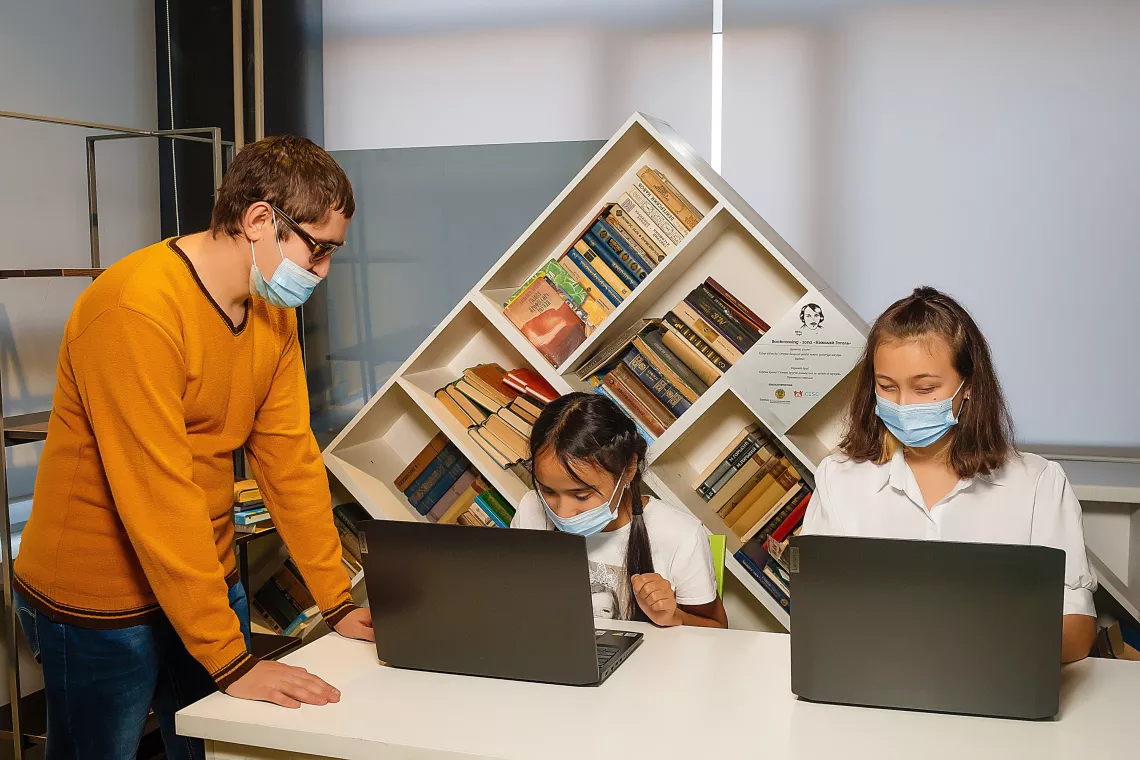
The Project was launched to form digital skills, skills for employment, and social and business entrepreneurship among visually impaired adolescents aged 10 to 19 and is supported by EPAM Kazakhstan and the State Fund for the Development of Youth Policy in Almaty.
During the course, adolescents are trained to work with digital technologies and gain independence through working with programs and devices.
With new skills, they will be able to download books, correspond in messengers, use the navigator, voice assistant and call a taxi in the application.
“We have trainings via three platforms: Windows, Android and iOS. On average, it takes about 2 months,” Ilyas says. “We teach working with screen access programs, text files, audio files, special navigators and other programs”.
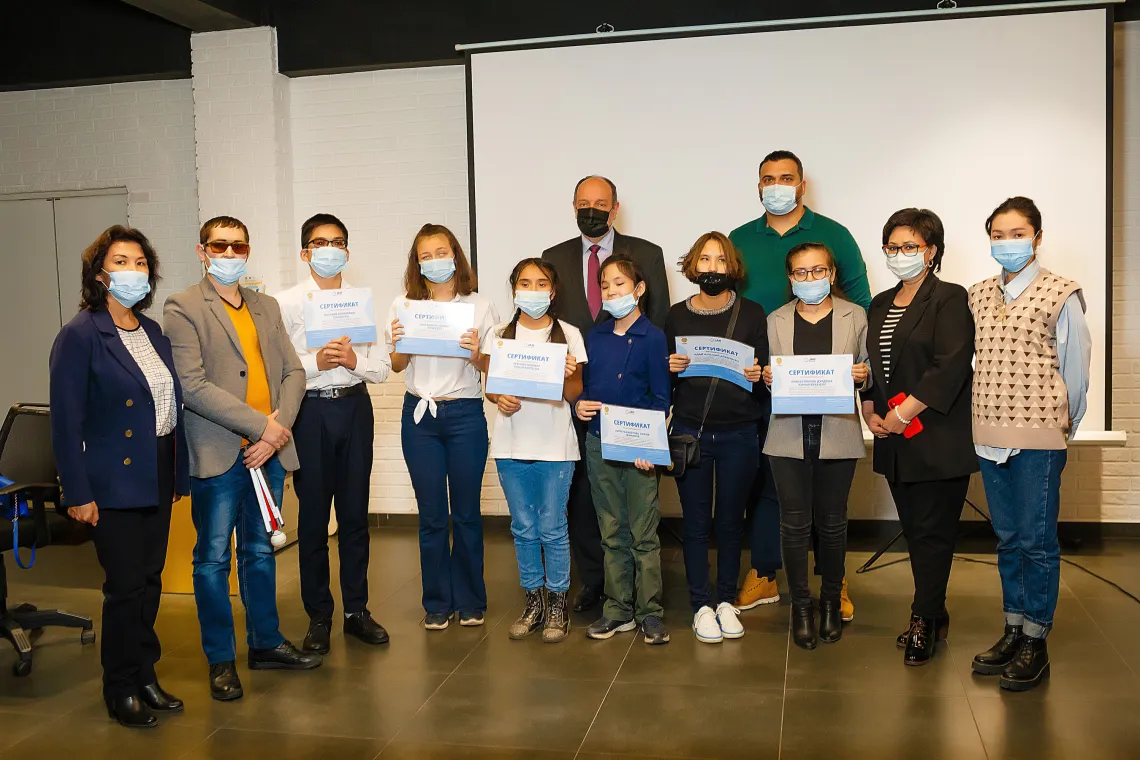
Trainers also work with children - former students of Ilyas, who have already worked in this direction and have achieved success in training.
”This is really energy-intensive work," Ilyas shares. “Every child needs their own approach. It is very difficult, but it gives results”.
According to Ilyas, people with disabilities often have to make 2-3 times more effort to "learn something and prove something."
”But it tempers us," Ilyas says. "Therefore, I think that not a few of these children will become famous and successful, but dozens. This makes me very happy”.