Digital skills essential for youth to learn and earn
Helping young people fulfill and grow their potential.
- English
- العربية
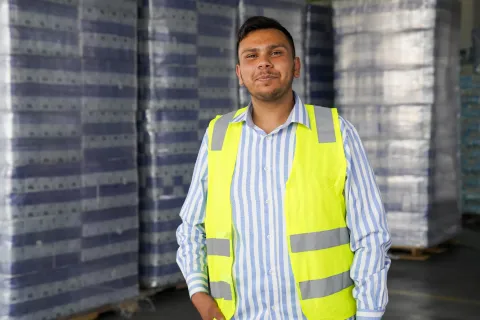
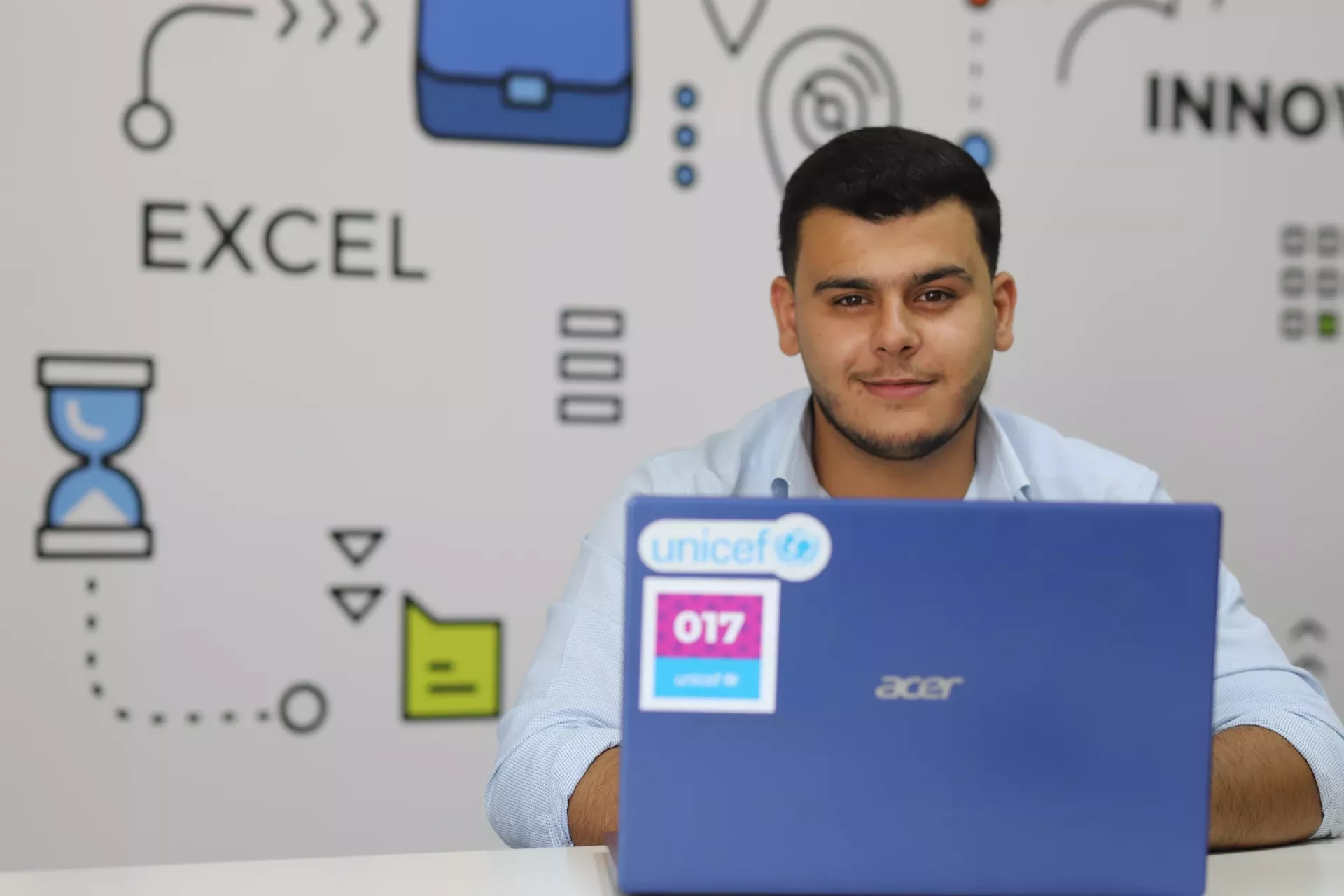
20-year-old Salah Al-Din from Ajloun has always been interested in the world of computers and software. “I would consciously observe and be fascinated with how technology can uplift communities and make life easier in so many ways. I saw an opportunity and wanted to be part of this world,” he says.
Just before getting into university, Salah Al-Din followed his passion and joined the UNICEF-supported Digital Skills For A Better Future programme.
In Jordan, 100,000 young people start looking for work every year and thirty-two per cent of youth aged 15-24 years are unemployed. Informed by research on the needs of the Jordanian job market, and in partnership with Jordan’s Ministry of Digital Economy and Entrepreneurship (MoDEE) and a non-profit organization called, Digital Opportunity Trust (DOT), the “Digital Skills For A Better Future” programme aims to help bridge the digital divide and enhance vulnerable young people’s employability by equipping them with demand-driven digital skills. It also links youth with income generating opportunities in both the formal and gig economy.
Over one and a half months, Salah Al-Din received training in essential digital skills. The training covered computer and operating systems, internet usage, email functionalities, Microsoft Office applications, and cloud storage. Additionally, he later joined the advanced digital training for creative careers and gained advanced graphic design skills. “I was learning what I love, and I also really liked how the trainers made us work in groups, explaining the importance of teamwork in the workplace,” he adds. The programme also provided him with financial literacy training, enabling him to create and manage his own e-wallet.
The first-year university student is now majoring in Software Engineering. The digital skills he learned are helping boost his academic performance, since as he explains much of the coursework is done digitally and online. He has also managed to find several freelancing opportunities. For Salah A-Din, the best thing about the training and these income-generating opportunities is how he feels he is progressing in his career. “I feel motivated to keep learning and growing. There is still so much to learn and the more I do, the more opportunities will come my way.”
Since its launch in 2019, more than 9,520 young people from across Jordan have participated in UNICEF’s Digital Skills for a Better Future programme. UNICEF is grateful for the generous support from Chloé, the Korea International Cooperation Agency (KOICA), and the Government of the Netherlands through the Prospects partnership.