A Champion for Children’s Education
How Abu Sham is helping a generation growing up in displacement heal through education

- English
- العربية
In Jordan, Abu Sham has spent over a decade proving that for a generation growing up in displacement, education is one of the most powerful tools for healing.
When Abu Sham speaks, everyone in Jordan’s Garden Camp, including the young people, pauses to listen. His influence is rooted in an unshakeable belief: that no child in displacement should lose their right to learn. To the families and youth here, many of whom have known no home other than these rows of caravans, he is more than a volunteer. He is an education advocate who understands that for a child growing up in uncertainty, access to learning is not a luxury but the foundation of every future they might still build.
A father of eight, Abu Sham was once a businessman in Damascus, managing a supermarket and landscaping the city’s public parks. When he fled the conflict in 2013, he expected to stay in Jordan for only a few months. But those months stretched into thirteen years.
Amid the uncertainty, Abu Sham discovered a calling that transcended his former life: championing children’s right to education in the shadow of displacement.
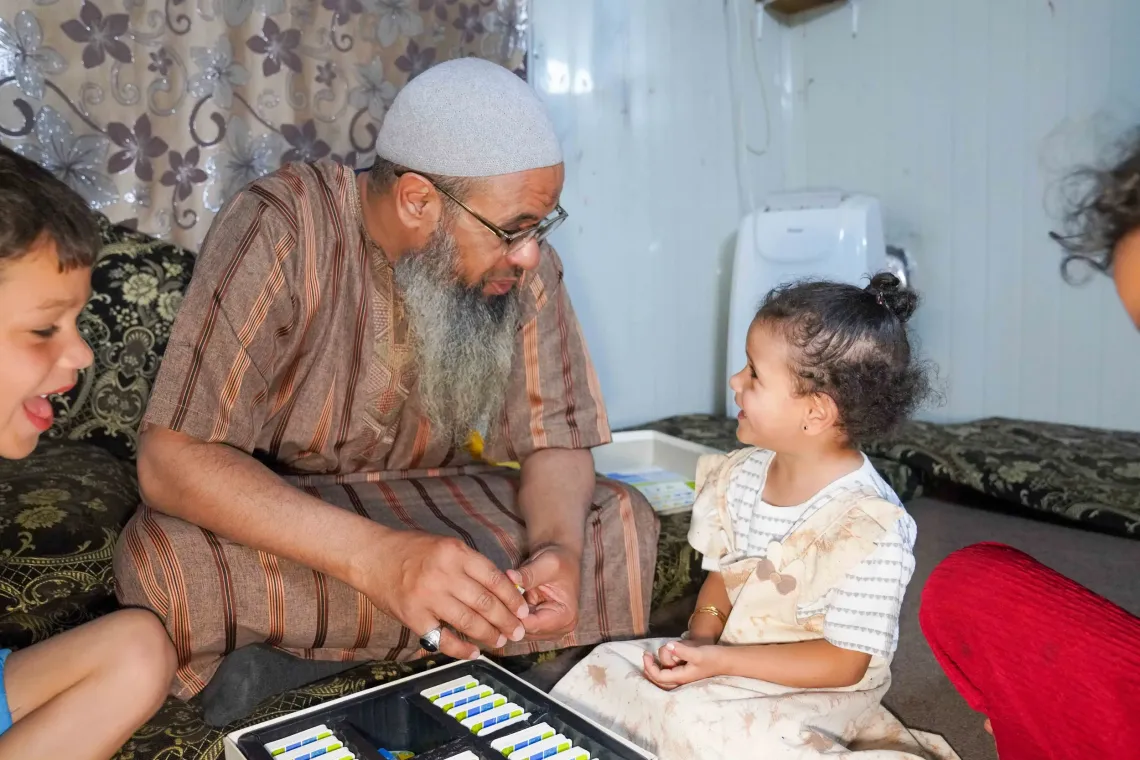
Abu Sham’s transformation didn't happen overnight, and it wasn't a journey he took alone. While he brought his own compassion, sustained support from UNICEF provided the critical tools in child protection he needed to lead. This training transformed him into an educator who understands the deep impact of displacement and knows exactly how to help a child move forward.
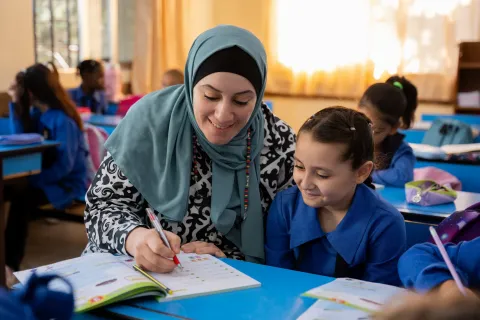
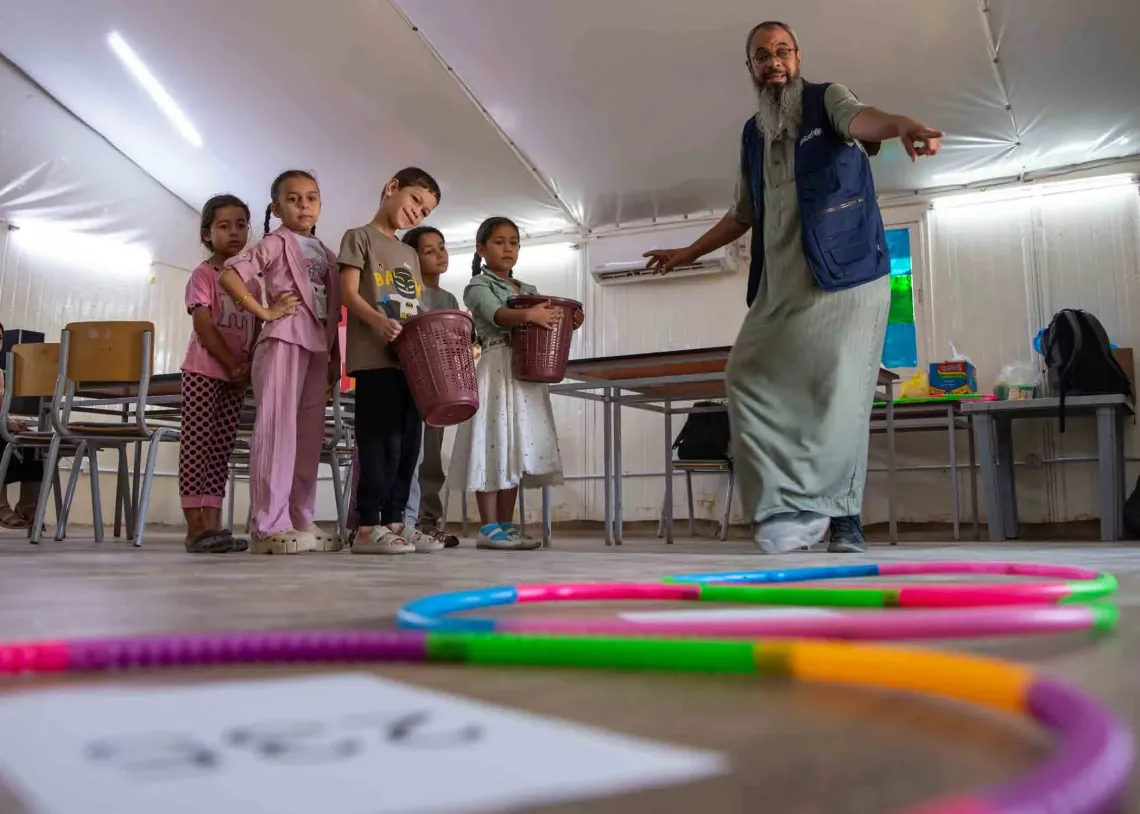
Today, as a dedicated UNICEF volunteer, Abu Sham is a constant presence in the camp. Since the Reading and Math Clubs programme started in July 2025, he has led the initiative, which offers informal and interactive activities designed to instill a love of reading and mathematics while encouraging curiosity, confidence, and foundational skills development.
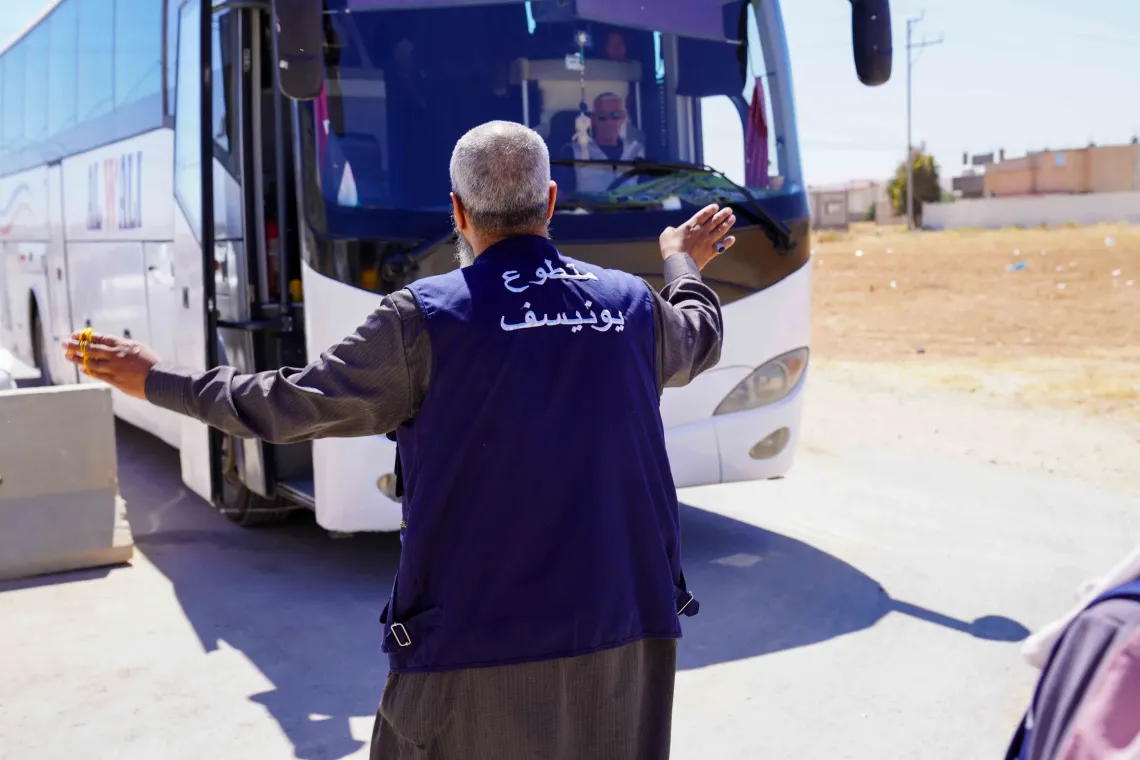
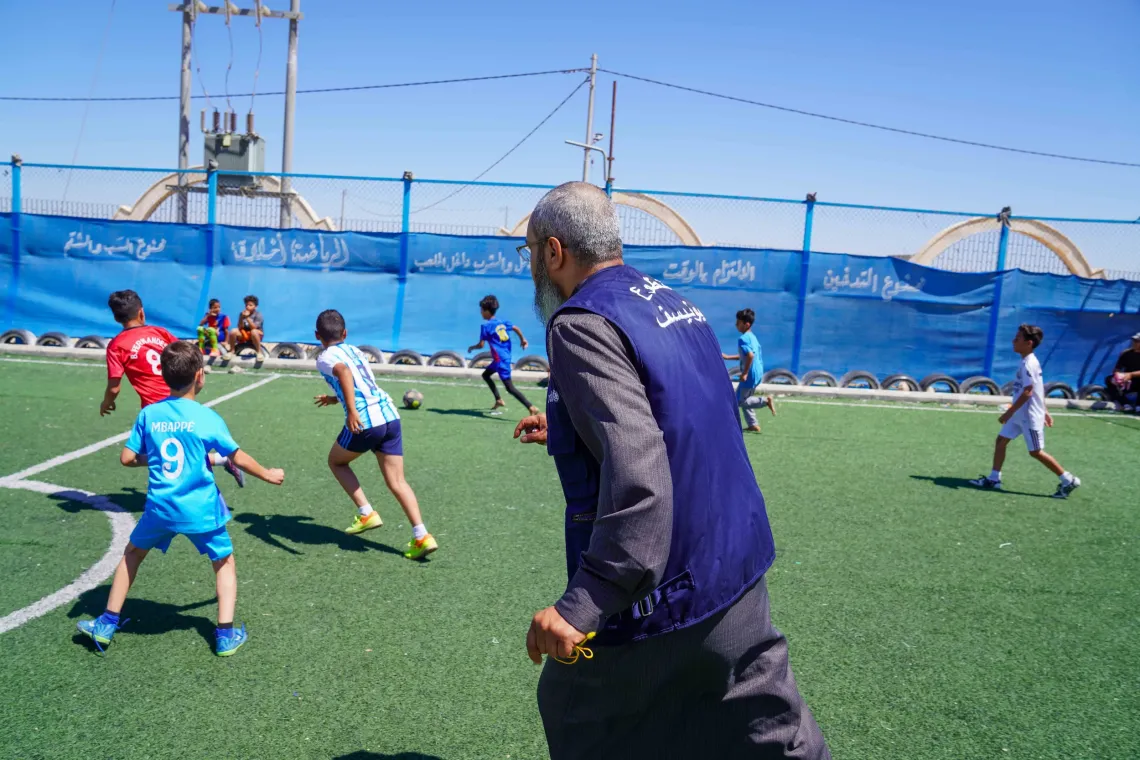
Every school day, Abu Sham organizes transportation for children to attend the nearby UNRWA school just outside the camp. And on the camp’s football pitch, he is a referee and a coach who, as he puts it, uses the game to teach life’s most important lessons—creating a space where children feel seen, respected, and part of a unified group.
As a community leader, Abu Sham is a figure of immense trust for the entire community. Parents and children alike seek his guidance, knowing that his advice is rooted in a decade of shared struggle and the professional knowledge he has acquired. He is relaying what he has learned, turning the concepts from his training into practical wisdom for his neighbors.
"If you don't listen to a child, they won't listen to you. For Abu Sham, education begins with a simple truth: when a child feels heard, they start to trust that learning matters. That trust is where their future begins."
"Watching a child laugh and simply be happy gives an enormous positive energy," he says.
"I needed those moments as much as they did because their joy is a reminder that despite everything we have lost, our humanity remains intact."
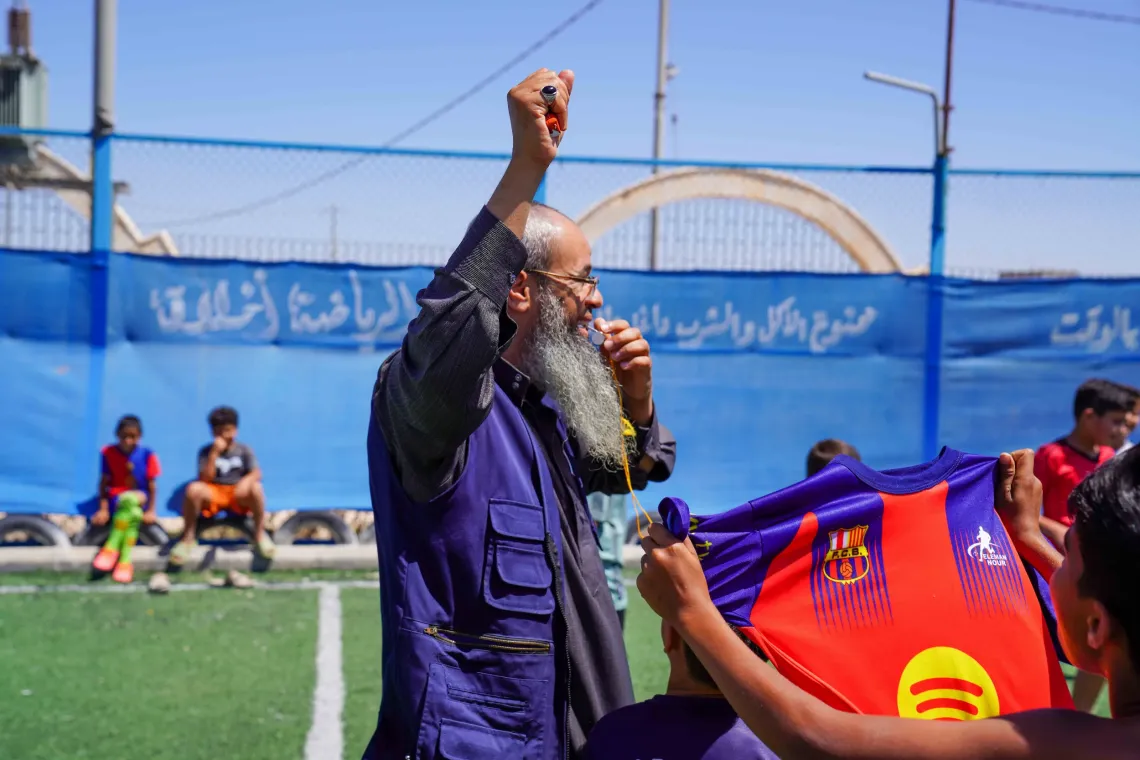
This emotional connection, strengthened by the skills he learned through UNICEF, is what has kept him in the camp for over a decade, serving as a steady anchor for a generation that has known so much change.
His commitment to the next generation extends into his own home and the wider community. As a father of eight, he practises the same patience he preaches, often be seen playing board games with his children. He frequently advises other parents on the importance of patience, believing that a child’s emotional wellbeing is the foundation upon which their entire future is built. For Abu Sham, being patient is not just a virtue; it is a form of protection. It allows a child to feel secure enough to ask questions, to make mistakes, and to keep learning.
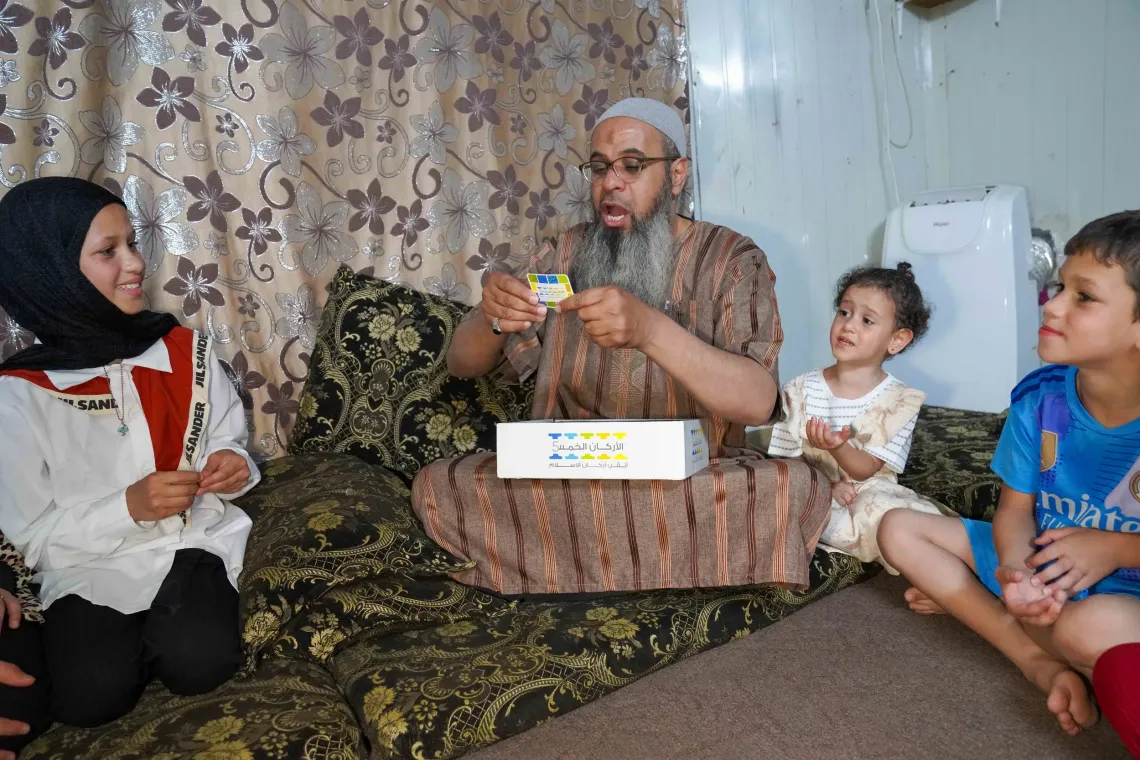
For the Syrian children in the camp, many of whom have no memory of their homeland, the support of organizations like UNICEF, UNRWA and UNHCR remains a lifeline. Abu Sham speaks fondly of the programmes and the training that have allowed him to grow into the mentor he is today. He knows that as the years pass, the need for emotional and educational support only grows. "When we listen to children and connect them with the right support," he says, "they are able to grow and build better futures."
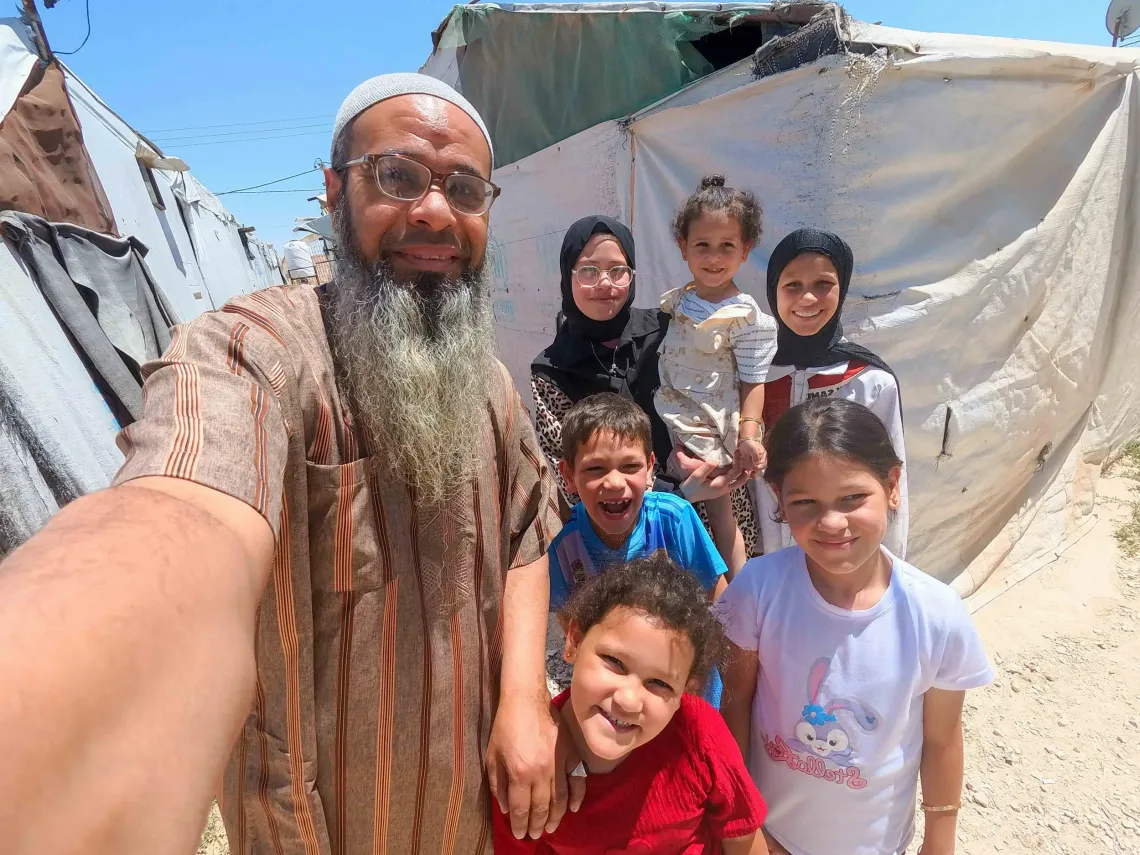
His own journey is mirrored in his daughter, Sham. She was just a child when they arrived and is now a mother herself, a symbol of the resilience and stability that Abu Sham has dedicated his life to fostering. As he stands on the synthetic grass with his whistle or waits by the school bus, he remains a steady presence in the lives of children in the camp. For Abu Sham, every child who boards that bus, opens a book, or solves a problem in maths club, is proof that displacement does not have to mean the end of learning. The future may be uncertain, but he has spent over a decade making sure it remains possible.