Back to School, Back to Hope: How Three children in Ramadi are Restoring Their Lives
From hardship to healing, through education and community support.

- English
- العربية
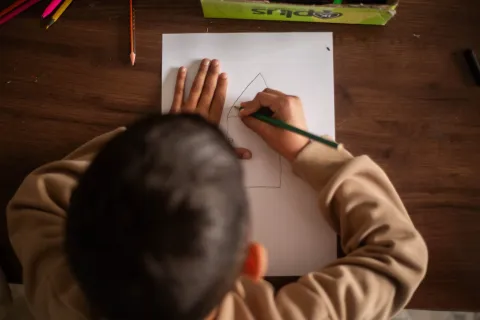
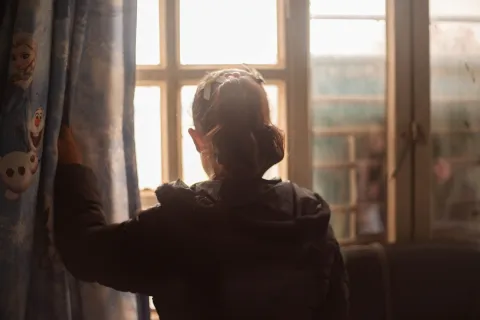
Ramadi, Iraq – 07 January 2026 – Returning home was only the first step of a much longer journey for Alaa (11 years old), Obaida (12 years old), and Abdullah (12 years old). After years of survival in crowded camps inside Iraq, with limited resources and constant uncertainty, the simple act of sitting at a desk in school feels like a quite new beginning.
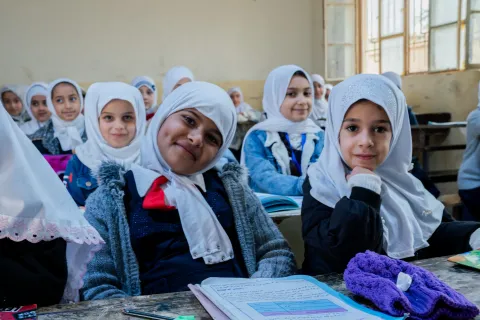
With support from the Ministry of Education, UNICEF, and funding from the Government of Canada, children returning from displacement are discovering that school is not only a place to learn, but also a space to heal, belong, and dream again.

Carrying Responsibility Too Young
Alaa, a third-grade student, returned home after years of living in a camp inside Iraq. It was the first step toward rebuilding his life. During displacement, classes in camps were overcrowded, preventing Alaa from learning as every child should.
“School is where I feel safe and can dream again,” he says. After returning home, Alaa joined remedial learning sessions supported by UNICEF and the Ministry of Education. Teachers trained in social cohesion and active learning encouraged him to re-enroll. “Here, the teachers care about me. They always ask if I understand. That makes me feel confident.” He adds.
After school, Alaa works in selling socks at the local market, to earn a living and support his elderly parents despite having 7 sisters, 4 brothers, all married, and busy with their lives. He loves football and dreams of a stable job that will enable him to better support his family one day. “Everyone in the market looks after me,” he says. “They treat me like a younger brother and make sure I am safe.”
With structured support through remedial classes, learning through play, and mentorship, Alaa is slowly replacing the hardship of displacement with hope.

Healing Through Learning and Belonging
In the nearby classroom sits Obaida, who spent seven years in displacement, away from his school and friends.
“They were dark days,” he says quietly. “I didn’t know when we would go home or live a normal life again.”
Through social cohesion interventions, peer learning, and community engagement, Obaida has reconnected with his classmates who initially excluded him. “We realized we are not so different after all,” Obaida says. “We love the same things; we laugh the same way. Slowly, we became friends.”
Now in fifth grade, Obaida excels in Arabic and poetry competitions, and plays school sports with pride. His confidence has grown alongside his sense of belonging. His dream is to become an engineer and help rebuild his hometown while supporting his family.
From Survival to Stability
Abdullah, in his sixth grade, still remembers the tension of camp life clearly. “You always had to argue or fight (over games, school) even when you were alone,” he recalls.
Upon returning to their home, his grandfather enrolled him in school. But Abdullah struggled to adjust. With consistent guidance from teachers trained in social-emotional learning and life skills, he has grown into a peer leader, helping younger students adapt to school life. “It feels good to guide others as my teachers guided me,” he says.
A School That Builds More Than Knowledge
The stories of Alaa, Obaida, and Abdullah reflect a wider effort led by the Ministry of Education, supported by UNICEF, and generously funded by the Government of Canada. Teachers and school staff in areas of returnee received training in remedial learning, social cohesion, life skills, and environmental awareness. Children were enrolled in remedial classes, peer-to-peer learning, and structured social and sports activities to strengthen their social bonds and support their emotional well-being, while parents and caregivers were engaged through awareness campaigns on education, child rights, and positive behavior.
“By knowing our students and their families, we can earn trust, solve problems even outside school hours, and encourage children who have dropped out to return,” says the school principal, Mr. Ali Abdulkareem. “Every student has a story, and understanding it makes a difference.” He adds.
From Hardship to Hope
Thanks to the Government of Canada, Alaa, Obaida, Abdullah and many other Iraqi children can now attend school regularly, participate in extracurricular activities, and imagine a future shaped by possibility rather than fear. Their journey shows how targeted interventions, capacitated teachers, and community support can transform the lives of children returning from displacement, helping them move from hardship to hope.
“The school helps us be happy again,” Alaa says, smiling. “We can learn, play, and dream. That’s what matters most.”
Note: To protect the privacy and confidentiality of individuals mentioned in this story, some of the names and locations have been altered.