

The Hidden Dangers of Wasting – and How Early Childhood Education Centres Protect Children
Teachers, health workers and parents work together to protect children from life‑threatening malnutrition
- English
- Bahasa Indonesia
Seven-year-old Melvi is known throughout her neighbourhood in Kupang municipality in the East Nusa Tenggara (NTT) Province as a bright and spirited child. At only four years old, she was diagnosed with severe wasting – the deadliest form of child malnutrition – during a routine check at her school. That early detection was a crucial turning point that put Melvi on a path of healing and restored her childhood.

Her mother, Merry, has been raising Melvi and her sister alone for several years. Around the time she started attending classes at TKN Kelapa Lima, a public Early Childhood Education (ECE) Centre in Kupang municipality, Merry realized something was wrong. Despite her cheerful nature, young Melvi was often sick. Eventually, her appetite faded and she kept losing weight. She began missing classes. Merry grew increasingly worried, unsure what was happening to her daughter.
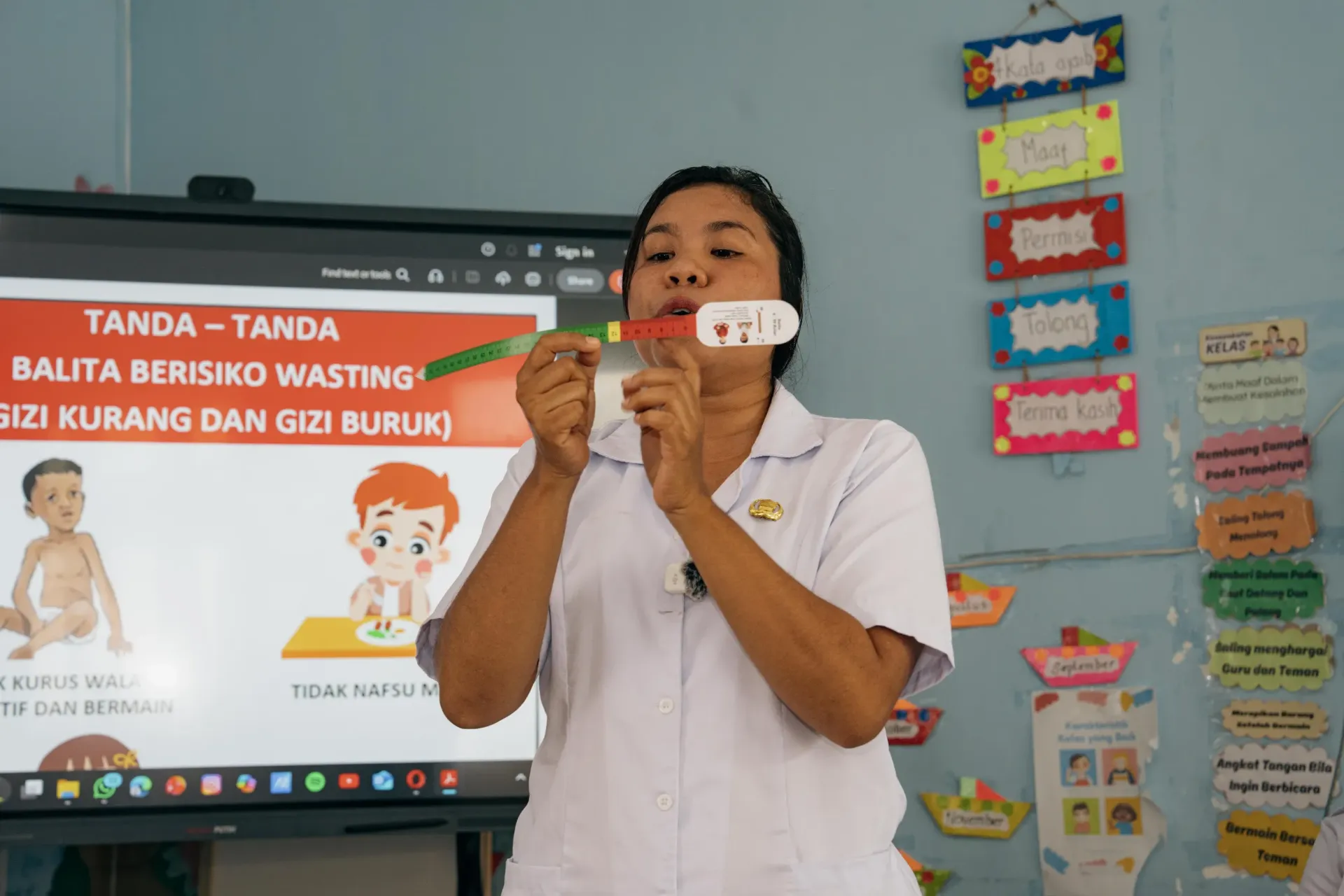
Teachers at Melvi’s ECE Centre had been trained to recognize the early signs of wasting and connect children to health services before their condition became severe, through the PAUD Peduli Wasting intervention (ECE-led Child Wasting) programme.
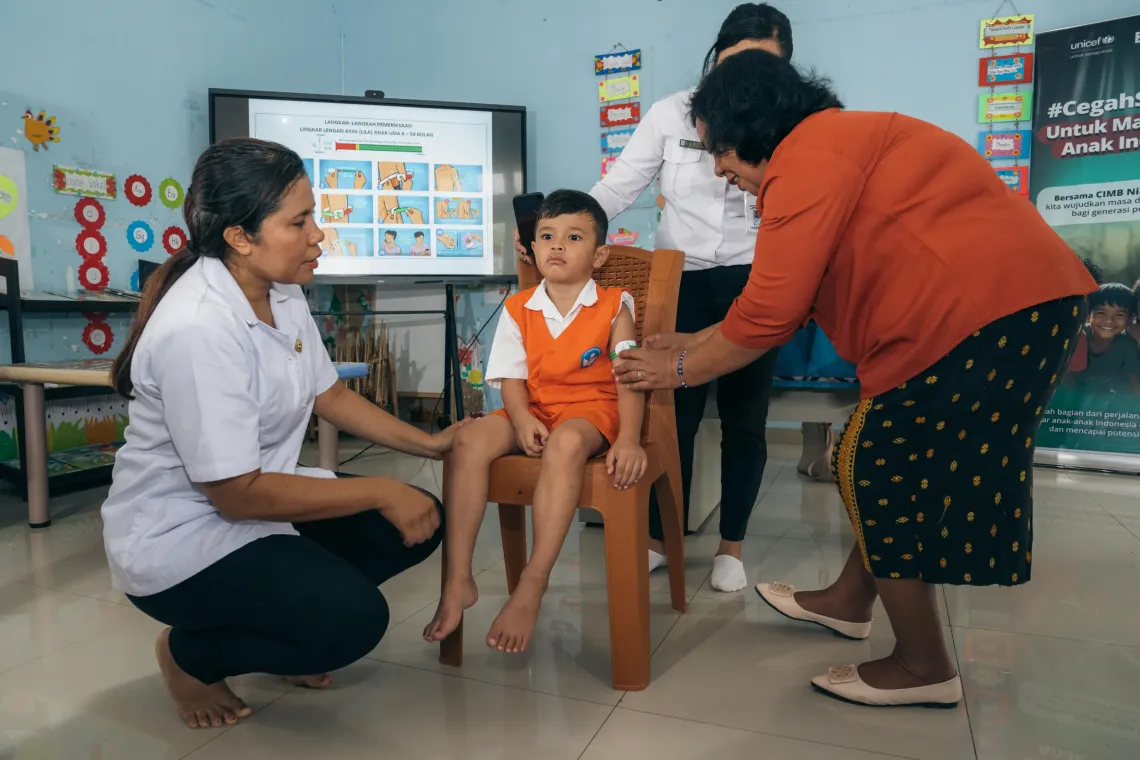
Through the programme, led by the District Health Office and Education Office of Kupang municipality, with support from UNICEF, they learned to use simple tools such as the Mid-Upper Arm Circumference (MUAC) tape to measure a child’s mid upper arm. They are also taught to spot risks early – such as visible thinness or swelling in the feet —and refer children promptly to a primary healthcare centre (Puskesmas) for further care and support.
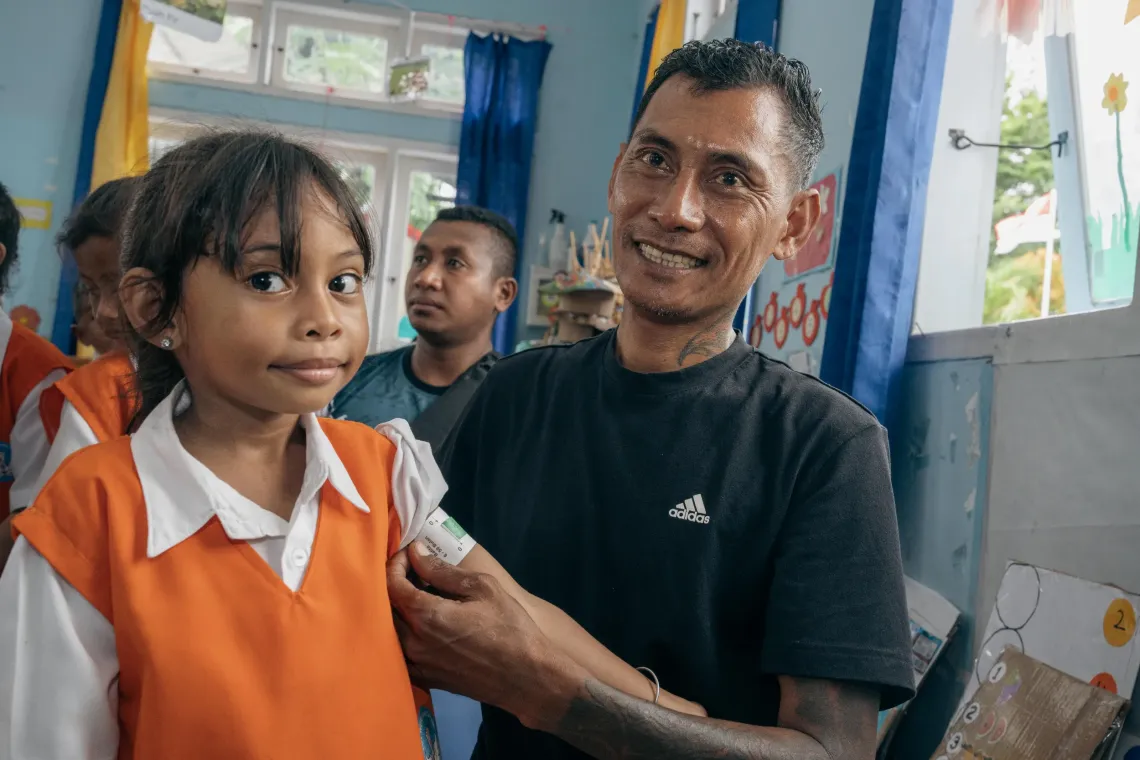
Along with training teachers to support the early detection and referral of children at risk of wasting, parenting sessions help families understand healthy child growth, encouraging regular MUAC measurement for children under five at home, and reinforcing timely care-seeking.
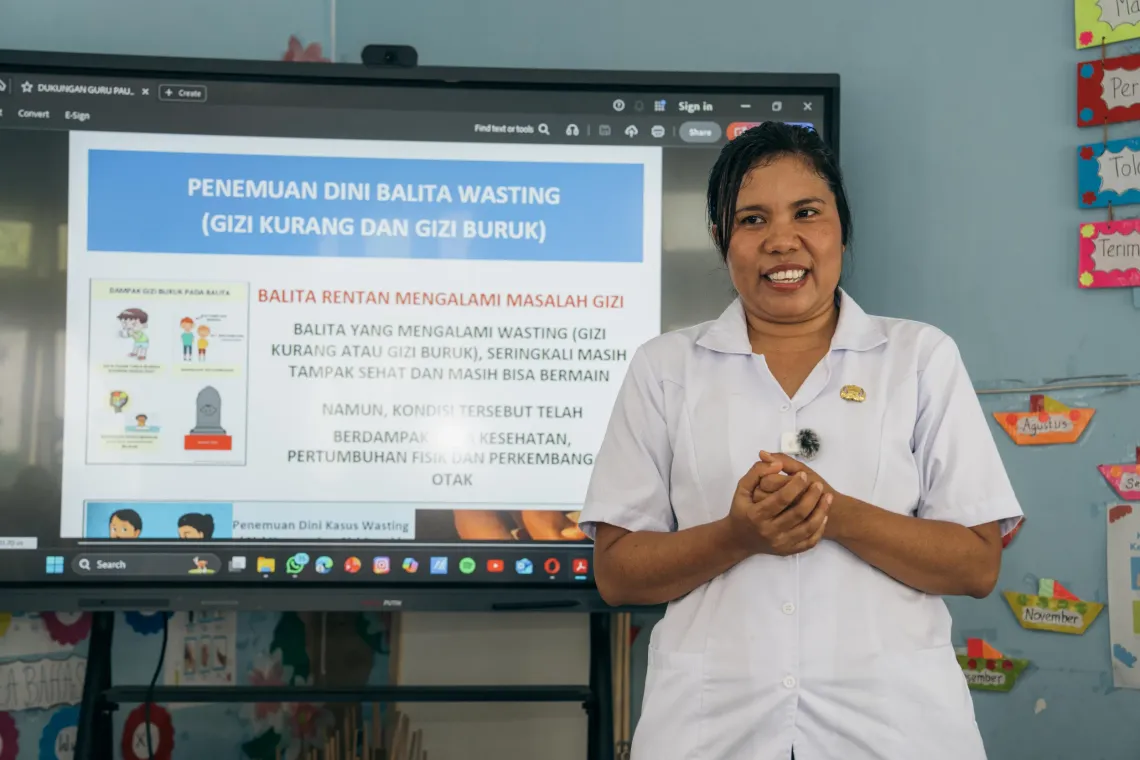
Because Melvi had stopped attending routine Posyandu visits after enrolling in the ECE Centre, her condition might easily have gone unnoticed. It was through the regular screening at ECE Centre that it was identified. This timely intervention ensured she received the care she needed – without it, her illness could have remained undetected much longer.
“When they examined Melvi (at the ECE Centre), her MUAC result fell in the yellow category, indicating that she was at risk of wasting,” Merry recalls. Yeni, a nutritionist from the Puskesmas Oesapa, urged her to bring Melvi to the Puskesmas for a follow-up examination. Understanding the importance of early detection, Merry agreed without hesitation.
After a careful assessment at Oesapa Puskesmas, Melvi was diagnosed with severe acute malnutrition and enrolled in outpatient care under the close attention of Yeni and the nutrition care team. Week after week, Melvi and her mother returned to the health centre, patiently following every step of the treatment as her small body slowly grew stronger.
Each visit brought new hope – until one day, Melvi’s reached a normal nutrition status and her MUAC finally turned green, a sign that she had recovered and was no longer wasted. To protect this hard-won progress, Yeni continued supporting Melvi’s mother, encouraging the use of nutritious local foods and gently guiding her on how to prepare balanced meals at home, so her daughter could stay healthy, active and full of life to reach her full potential.
Today, Melvi is a different child. Her appetite has returned, and she happily eats foods she enjoys, including eggs that her mother prepares at home. She rarely falls sick and has the energy to play, learn and explore like other children her age. Melvi no longer misses classes and eagerly takes part in classroom activities, her enthusiasm and confidence reflecting the steady recovery of severe wasting.
Why Early Detection Matters
Working at the Puskesmas, Yeni sees firsthand the contrast between healthy children and those who are at risk of malnutrition, specifically severe wasting. It troubles her that many parents only seek help when their children are already sick.
Children who appear visibly thin may already fall into the category of severe wasting, yet because they are still active and able to play, caregivers often do not recognize this as a serious problem. This delay in seeking care is concerning, since children with severe acute malnutrition face a significantly higher risk of illness and death if they do not receive timely treatment.
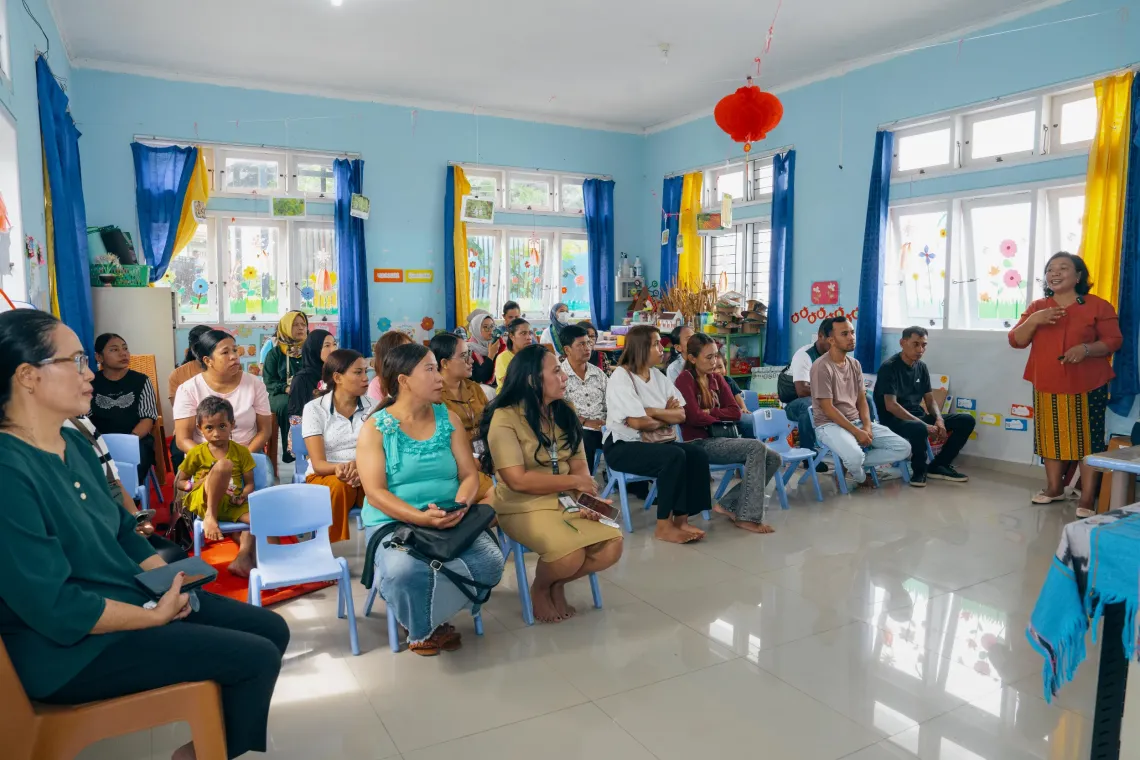
In every parenting session, Yeni emphasizes the importance of bringing children for routine growth monitoring and development. "It is frustrating when parents wait too long. We always tell them – we are the nutrition experts. Come and consult with us at Puskesmas." She encourages parents to trust health workers who can help their children to have a proper diet and treatment when needed.
“It saddens me to think Melvi suffered for so long before reaching us,” Yeni says softly. “But I’m thankful she was found during our visit to the ECE Centre. The earlier we find these children, the faster we can bring them back to good health.”
Even though Merry had noticed her daughter’s condition deteriorating for some time, she struggled to accept the diagnosis at first. “I did not want to believe it, because my child seemed okay,” she says. “However, the constant sickness, weight loss and poor appetite made me question.”
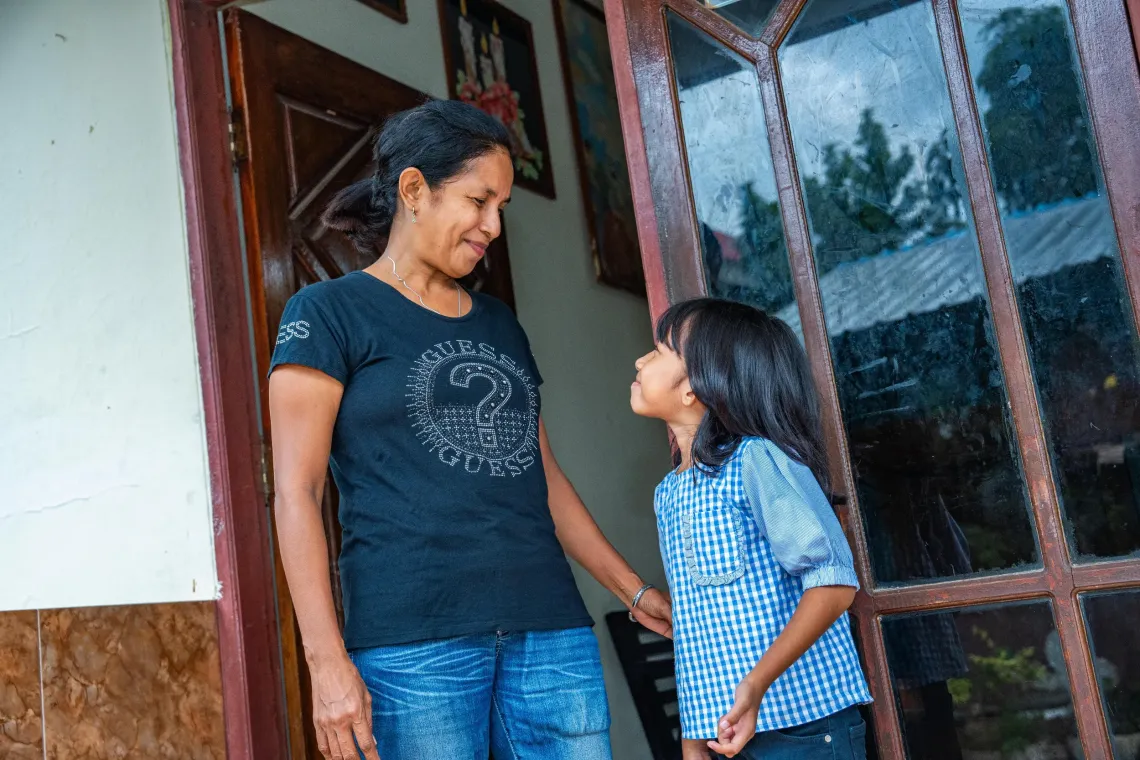
The experience has been eye-opening for Merry. “I learned how important it is to understand what children should eat and drink, to make sure they do not have too many snacks, and to always wash their hands before they eat,” she says, recalling Yeni’s close guidance. “This supports us as mothers, giving us the knowledge to understand our children's health.”
Melvi’s story reflects a larger issue across NTT where wasting – one of the most dangerous forms of child undernutrition – is a serious concern. According to the National Nutritional Status Survey by the Ministry of Health/SSGI 2024, wasting affects 15.9 percent of children throughout the province – the highest rate among provinces in Indonesia – and 13.8 percent in Kupang municipality, the capital city.
Wasting causes children to become dangerously thin and weak, leaving them vulnerable to disease and infection. Children with severe wasting are up to 12 times more likely to die than well-nourished children.
Early detection and referral of wasting are critical to prevent wasting and save young lives. Simple, community-based tools including MUAC tapes and approaches such as ECE-led screening are used to identify children who are at risk of malnutrition, including wasting. This can enable timely detection and referral for ensuring prompt treatment before severe complications arise.
A Community-Based Solution
UNICEF supported the Ministry of Health and Ministry of Education to introduce the PAUD Peduli Wasting intervention in 2022, as part of a wider initiative to provide Holistic and Integrative Early Childhood Development (HI-ECD) services for young children.
Along with training teachers to support the early detection and referral of children at risk of wasting and hosting parenting sessions, ECE centres also promote healthy habits through school gardening, where children, teachers and parents grow food together and use the harvest for cooking demonstrations. This “garden-to-table” approach strengthens practical nutrition skills and encourages families to provide diverse, nutritious foods at home.


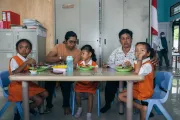
Today, more than 200 ECE centres in Kupang municipality are implementing the programme, supported by all 12 Puskesmas in the Kupang municipality. Since 2023, screening coverage using MUAC has risen to nearly 89 percent for children aged 6-59 months. Participation in Posyandu services has also increased from 50 percent to over 90 percent, demonstrating the benefit of the parenting sessions.
Parents have also become more confident about using healthcare facilities, voluntarily bringing their children on a more regular basis. As a result, hundreds of children identified with severe and moderate wasting have received follow-up support through the referral system, thanks to the early detection at ECE centres.
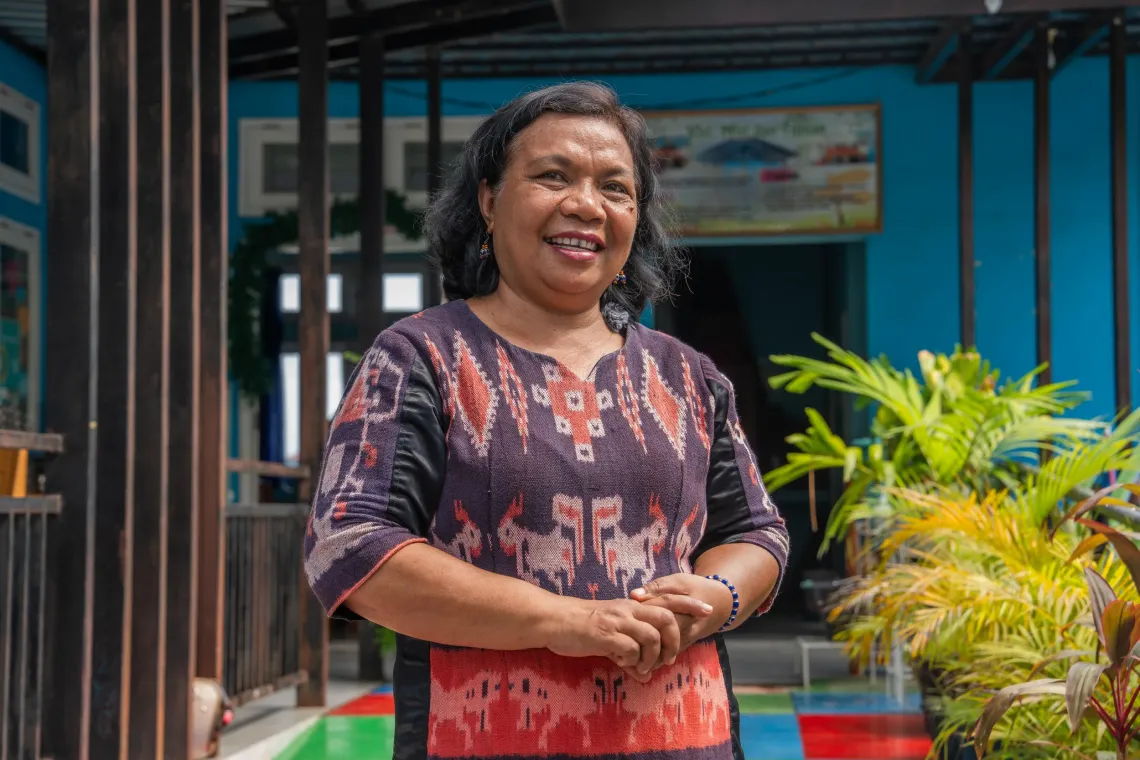
Ibu Erni Hailitik, the Headmaster of Kelapa Lima Public ECE Centre, has seen the transformation firsthand. "Seeing the results of this programme in our school is wonderful. The children are so cheerful and active, and the parents now have the skills to make sure their children are eating the right foods at home,” she says.
Based on the promising results of the PAUD Peduli Wasting approach in complementing existing Posyandu services and reaching children who may otherwise be missed, the Kupang Municipality District Health Office has committed to strengthening and scaling up this approach to ensure early detection and timely care—so that many more children like Melvi across Kota Kupang can grow healthy and thrive.
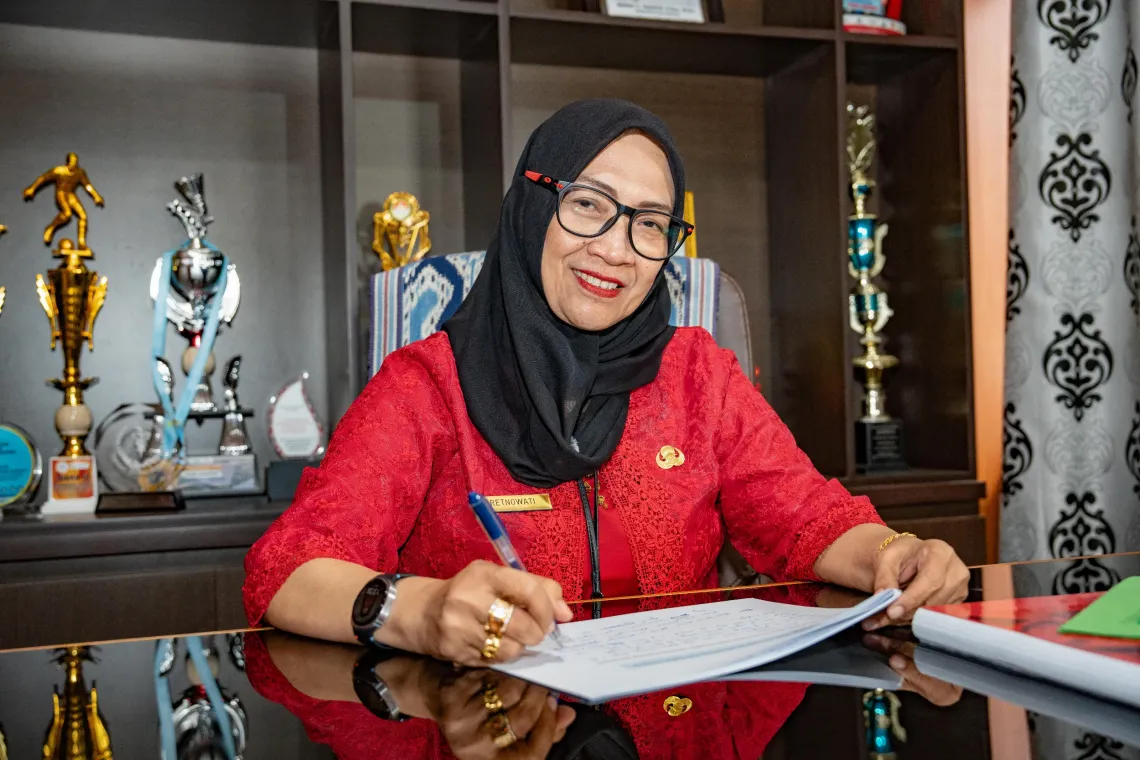
“The District Health Office is committed to the PAUD Peduli Wasting programme, because eliminating wasting is a critical factor to reduce stunting,” explains drg. Retnowati M.Kes, Head of the Kupang City Health Office.
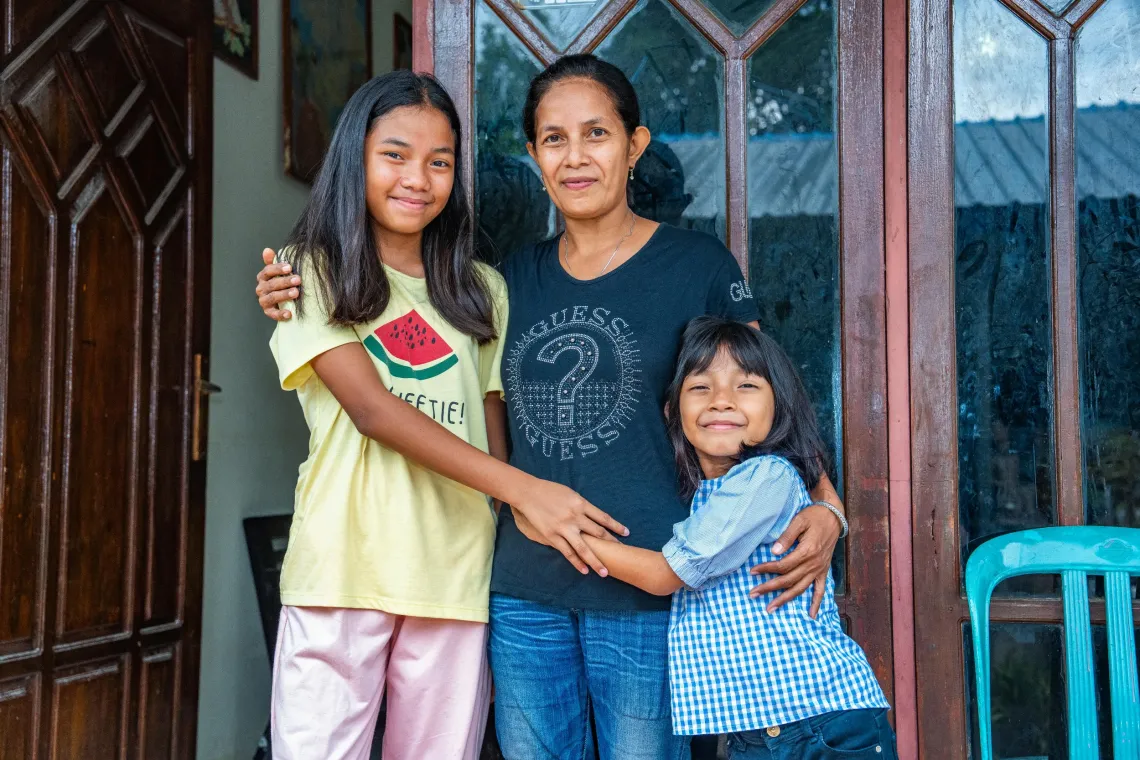
Merry is filled with gratitude – for Yeni, for the programme, and for the partnership with ECE centre that helped her daughter recover. Her message to other parents is simple: “Don't be afraid. We need to be confident and trust that our health workers are here to do what is best for the health of our children.”