A Blueprint to Get Children Back to School in Indonesia
Growing National Movement for Second Chance at Learning

- English
- Bahasa Indonesia
In the wake of the COVID-19 pandemic, Indonesia faced an unprecedented crisis. Widespread learning loss and economic hardship left many children with little choice but to leave school. Sixteen-year-old Sava, from a small village in East Java, was one of them.
The financial burden of school fees, books, and supplies became too heavy for her family to bear. "There were so many things to pay for," Sava reflects. "I didn’t want to ask my mother for money because I knew we didn’t have much."
With no way to continue her education, Sava spent her days helping her mother with housework and working in their garden. Yet, even as she took on these responsibilities, her mother never let go of the dream that Sava would one day return to school.
My mother always encouraged me. She would say, ‘School is good, you can gain knowledge and become a doctor.'
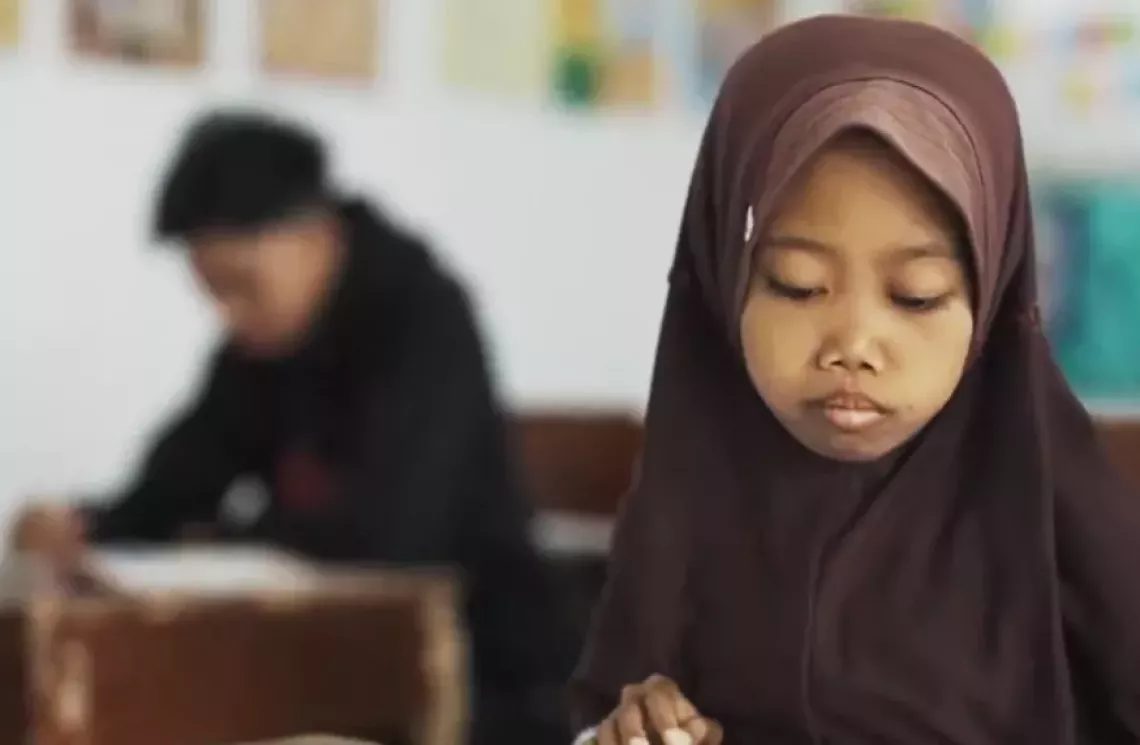
Today, Sava is back in school – thanks to a growing national movement dedicated to tackling an immense challenge: how to get 3.9 million out-of-school children back to the classroom. The Government of Indonesia is leading the charge, collaborating with UNICEF and a range of partners to create various pathways for children to return to learning, whether through formal education or alternative learning programmes.
At the heart of these efforts is a comprehensive data collection and monitoring system that enables local governments to identify children like Sava, who are at risk of dropping out or who have already left school.
In Trenggalek, a district in East Java, the local government used this data to pinpoint close to 4,000 children who were out of school. “For so long, this issue was overlooked, and as a result we had so many out-of- school children without knowing who they were and how to support them,” says Dr. Ratna, head of the District Planning Board.
Armed with accurate data, districts and provinces across the country have developed targeted policies and interventions to address the barriers keeping children out of school. These measures include providing scholarships, transportation subsidies and basic school supplies.
Local authorities have also forged coalitions with non-governmental and faith-based organizations to provide scholarships and financial support to vulnerable families. Local banks have also come on board to provide financial aid.
"One day, someone from the village office came to our house and asked if I wanted to go back to school. They wrote my name down, and I started again the next day," Sava recalls, her voice filled with the quiet determination of a young girl whose dreams are now within reach.
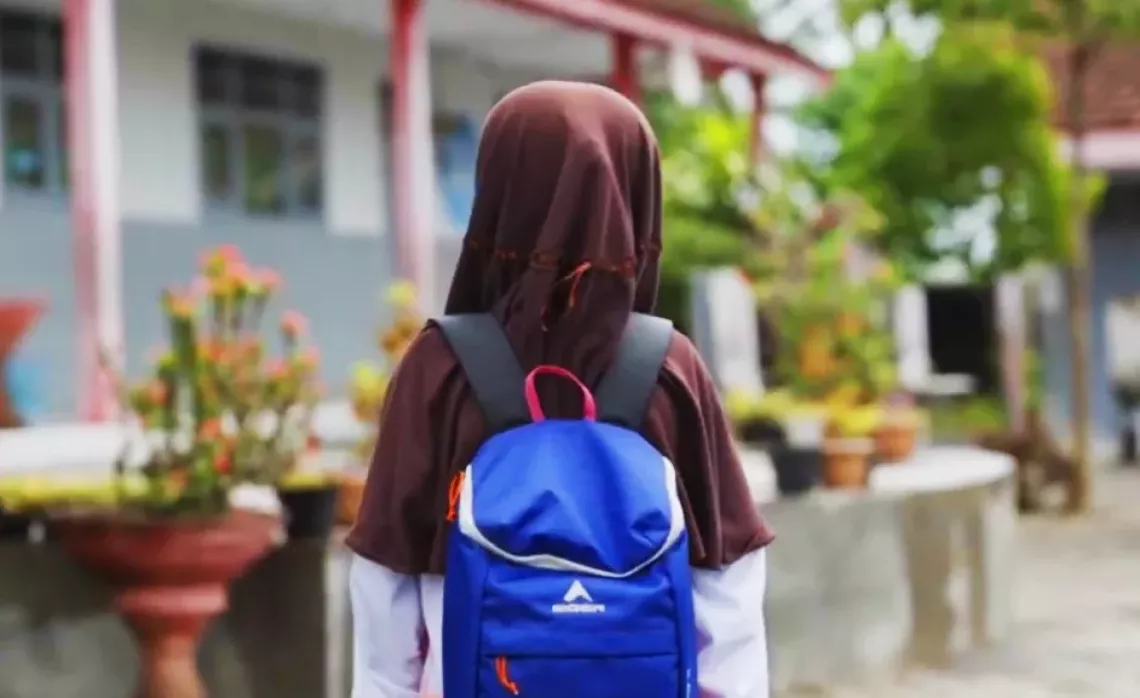
In South Sulawesi, the largest province in Eastern Indonesia, where there is a high risk of children and adolescents dropping out of school – the initiative has been rolled out across all 24 districts. Over three years, almost 94 per cent of identified children have returned to learning, contributing to a reduction of approximately 12 per cent in the number of out-of-school children in the province.
The success of the initiative is driven by strong government commitment. “The most significant breakthrough is building the capacity of local governments at both provincial and district levels to take the lead in scaling up this model,” says Henky Widjaja, head of UNICEF’s office in Makassar. “This makes us confident that this initiative will not only be sustained but will continue to grow and evolve.”
Since 2021, nearly 37,000 children have returned to learning across Indonesia, and almost 149,000 children have been prevented from dropping out of school. The movement to get children back to school has expanded to 42 out of 50 target districts, aiming to reach all by 2025, across six of Indonesia’s 38 provinces.

It’s not just about covering the costs. This is about having the support we need from our families, communities, and the government. Besides helping us continue our education, this helps us aim for higher levels of schooling.