Triumph over challenge: children overcome obstacles to return to school
Holistic approach helps out-of-school children in Purbalingga thrive on new learning journeys
- English
- Bahasa Indonesia
Just before dawn, it is quiet in the small four-bedroom house that Renata Azhari (Rere), age 11, shares with 15 other family members in Rembang, Purbalingga District, Central Java. Sitting in the living room, Misyati gently pulls together her youngest daughter’s strands of hair, as she helps her get ready for school.
Rere – who has hearing and speech disabilities – has been eagerly waiting for this daily routine for the past three years.
“Her biggest wish since she finished kindergarten has been to wear a school uniform. Every morning when she saw kids around her age with uniforms, she would say, ‘Mom, I want to wear that and go to school’.”
Misyati, who has two other children, was also enthusiastic about sending her to school. However, the family’s hopes were dashed when they learned that no formal primary school near to their house would admit Rere due to her disabilities. The closest special needs school was too far away.
Prolonged school closures due to the COVID-19 pandemic in 2020 worsened the situation, leaving the devoted mom no choice but to pause Rere’s education.
Their hopes were renewed in 2022 when Subeno, UNICEF’s implementing partner in Purbalingga district, visited their home with news that would change Rere’s life. The local government, in partnership with local civil society organizations, would provide hearing aids and coordinate enrollment with a local school.
This effort was made possible through UNICEF’s Out-of-school Children programme that uses a system to detect children who are not in school, then provides various interventions to support their return to learning – either to formal or non-formal education – and to bolster their well-being.
With the same support, Agung Nugroho, age 17, is now able to continue his studies at a local community learning center in Purbalingga district, after being out of school four years due to lack of motivation.
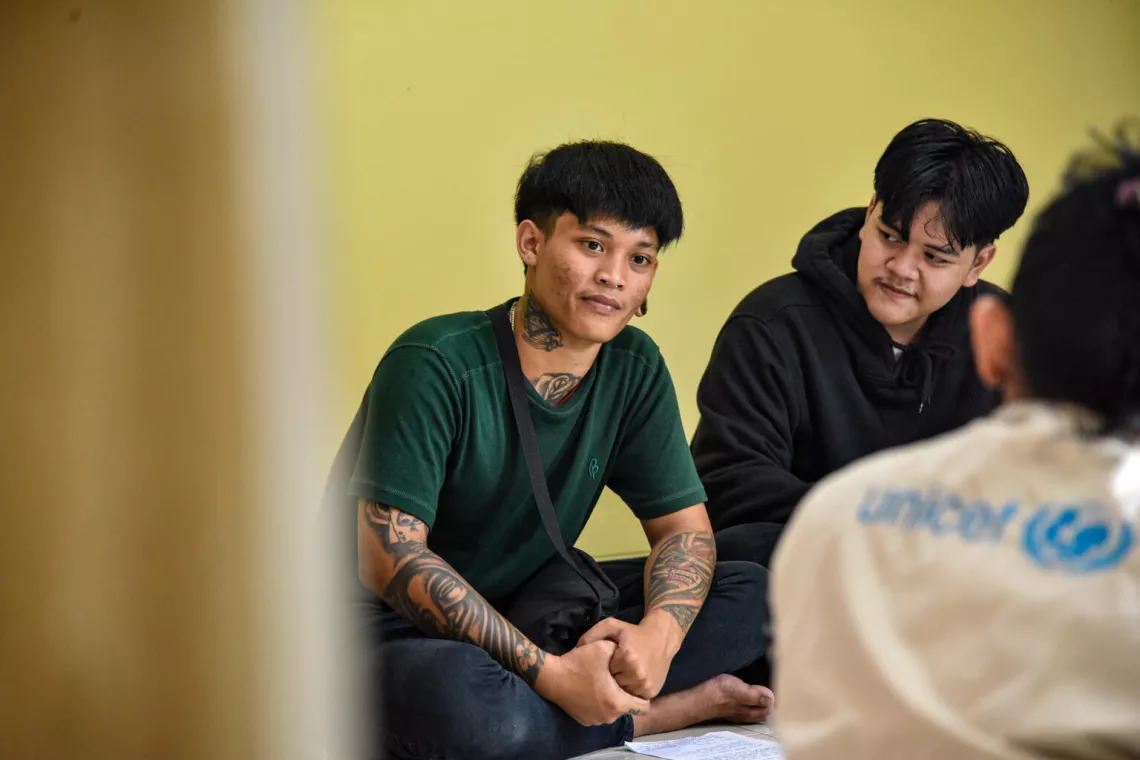
“Seeing my peers wearing high school uniforms, I am disappointed with the life I chose a few years ago,” confesses the passionate motorbike rider. “I was skeptical about being admitted by a learning centre. But I am back to learning now and making my mom happy to pursue my dream that was nearly halted.”
Based on a 2022 UNICEF-supported assessment, there are around 3,800 school-age children in Purbalingga who are not in school. These figures are among the highest in Central Java Province. Reasons vary, ranging from financial challenges, unplanned pregnancies, work demands for boys and the lack of accommodation for children with disabilities. Bullying and corporal punishment by teachers also affects the motivation of some children.
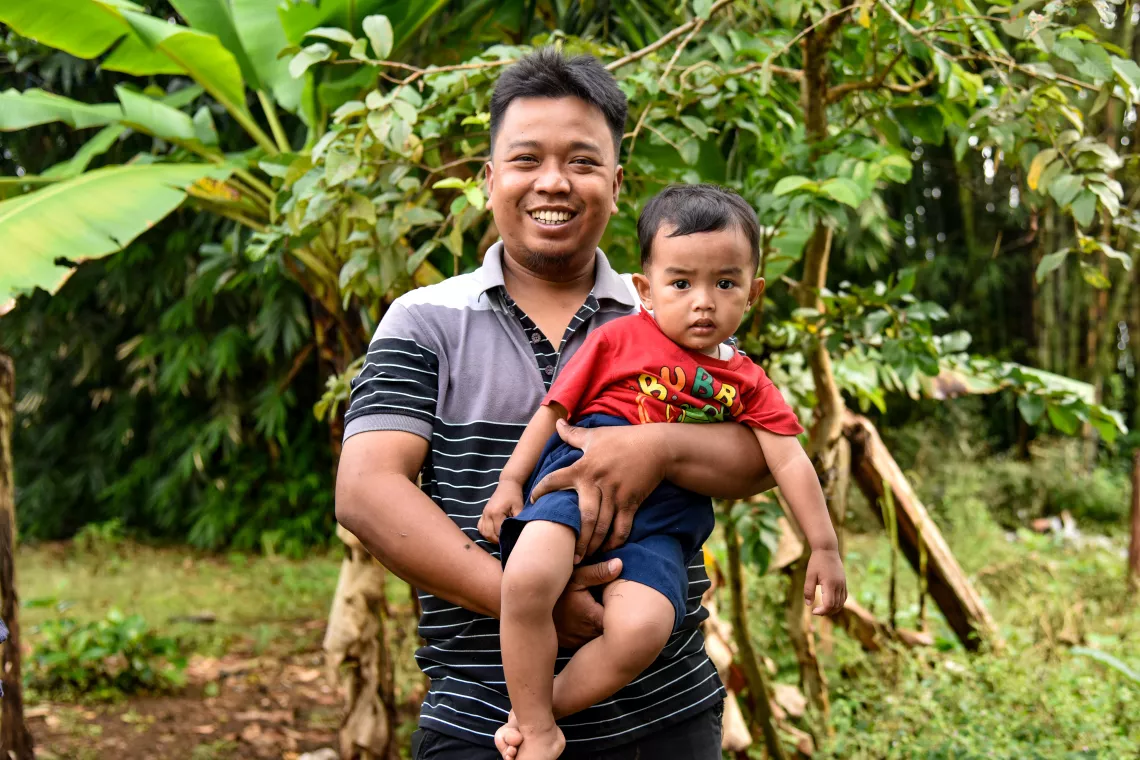
“Helping children return to school has been difficult – as if there was a high wall separating us,” admits Imam Prambudi, a local social activist who has been actively helping out-of-school children in Purbalingga for decades. “Thanks to this programme, the wall is now gone, and we can help our children continue thriving.”
From 2020 to 2023, out of the 22,000 identified out-of-school children in Central Java province, nearly 9,000 have been successfully returned to school, representing a 40 per cent re-enrollment rate.
In Purbalingga, over 44 per cent of out-of-school children have made their way back to the classroom. These numbers reflect a significant stride forward in UNICEF’s efforts to ensure every child has access to quality education.
As the programme continues to support more children to return to learning, the scope is being expanded to prevent more children from dropping out of school. One of the strategies is encouraging schools to eliminate school dismissals and violent punishment. Monitoring conducted by UNICEF in 2022 found that three out of four children enrolled in school in Indonesia have at least one risk factor that could lead them to dropping out.
The district government is committed to strengthening the programme by transforming the regent decree into a bylaw. With the new legal basis, the programme will last beyond the current regime.
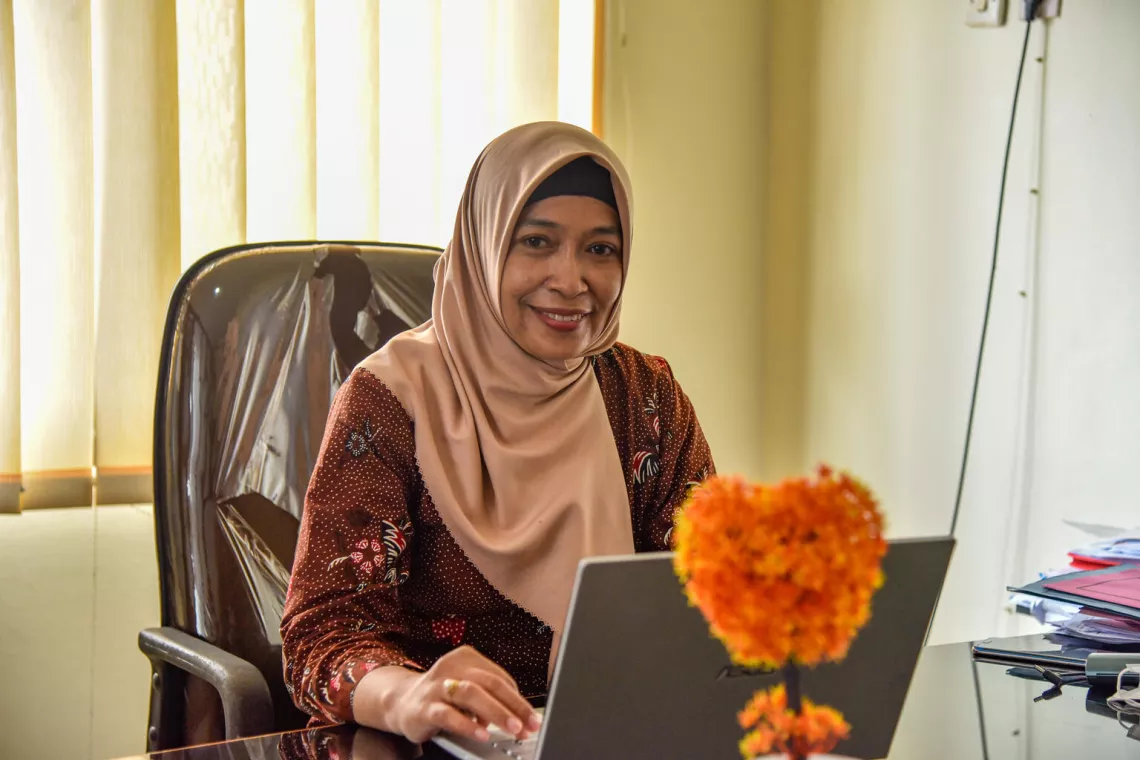
“We are committed to continuing this, and we are on the right track,” says the Head of Government and People’s Walfare (BAPPEDDALITBANG) Rida Kusumawati.
How You Can Help
Thanks to your generous contribution and collaboration with all stakeholders, UNICEF can continue to promote equal access to education #ForEveryChild, including children with disabilities. The story above is one of the concrete actions taken by UNICEF and partners to return children to school and will continue to be expanded to other areas in need.
However, there are still many sustainable actions that need to be taken so that millions of other Indonesian children can access the basic education they need. For that, we need your support.
If you want to support our educational or other programs, please join and become part of the #PendekarAnakUNICEF through monthly or one-time donations here. We would really appreciate it.