Improving living conditions in Temenetaye
UNICEF supports the women and children of Conakry's Temenetaye fishing port with a pre-school center, renovated work spaces and training courses.

- Français
- English
Guinea, a West African country open to the Atlantic Ocean, has 300 kilometers of coastline. The artisanal fishing sector is a very important segment of the country's socio-economic activity. It contributes to job creation, provides income for the population and plays a crucial role in the country's food security. Traditional Guinean artisanal fishing is carried out on foot or by non-motorized pirogues using mesh nets, hawks, lines, longlines or traps.
Approximately 25,400 people have been identified as involved in the development and marketing of Guinean fisheries products, 98.7% of whom are women. Of these, about 10,300 are fishmongers and 14,000 are fish smokers. If we estimate that a fish smoker needs the services of at least 10 people to manage all the operations involved in smoking fish, this would mean that almost 200,000 people depend on the processing and distribution of fish products for their livelihood1. Guinea's artisanal fishing ports are home to a large population of economic migrants from neighboring countries such as Liberia, Ivory Coast and Sierra Leone.
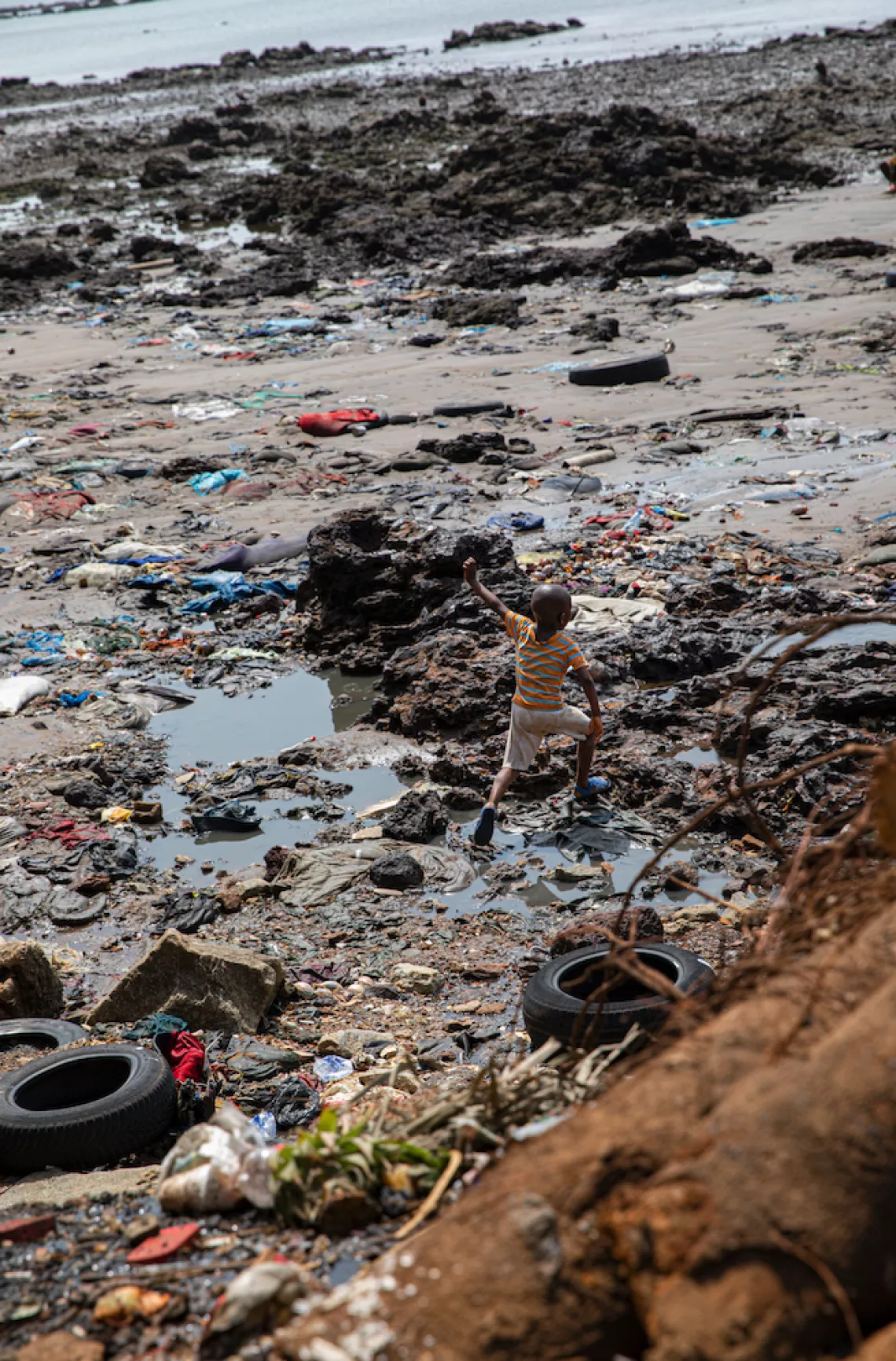
Climatic, health and environmental issues are of great importance for the sustainability of artisanal fishing in Guinea, as well as for the survival and living conditions of families. Many women, accompanied by their young children, work in precarious conditions, exposed to smoke from ovens and surrounded by mountains of waste. They have no access to drinking water or sanitation. During the rainy season, floods and violent waves destroy the very precarious homes made of tin and plastic sheeting. Women and children live with their feet in the water and rubbish. Much of the garbage comes from the sea or is dumped on the beach by the local population because there is no proper waste management system.
At the artisanal fishing port of Temenetaye in Guinea's capital, Conakry, women smoke fish (jawfish, barracuda, and flat sardinella) for local consumption and export to countries in the subregion. Despite their smiles and joyful, their living conditions are difficult. The population living in the port is mainly made up of women fishmongers and fish smokers, young girls under the age of 18 and children under the age of five. Approximately 800 women live and work in the area.
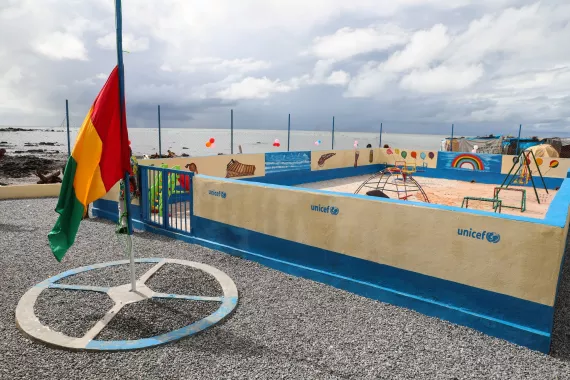
To improve the living and working conditions in the artisanal fishing port, UNICEF implemented a multisectoral project that included the construction of a pre-school care center, the renovation of work spaces, the provision of water, hygiene and sanitation services, and training in nutrition, gender-based violence and children's rights.
Prior to these interventions, the smoking of fish produced heavy smoke, the ground was littered with garbage, the lack of latrines led to open defecation, and the lack of drinking water forced the population to draw water from the sea. Many women and children regularly suffered from respiratory diseases, eye problems and skin infections.

The main hangar, which was used for fish processing during the day and converted into dormitories after dark, was rehabilitated. Water tanks were installed, latrines built, and cleaning equipment provided for sanitation. Haidara Dialikatou Chérif, leader of the women's groups working at the artisanal fishing port, points out that before this project, the women worked and lived in unhygienic conditions, exposed to smoke and bad weather such as heavy rain or blazing sun.
"Fish are now smoked in improved ovens under a roofed shed. Public toilets have been installed, the women can sleep in clean dormitories, and they are receiving training to strengthen their knowledge of how to manage their property."
A large number of children under the age of five accompanied the women working in the fishing port. These children did not attend school and sometimes helped their mothers with fish processing or played alone on the seashore among the garbage. In these precarious conditions, one child tragically drowned in 2022. To give these children access to education and protection, UNICEF built a community support center. Children between the ages of three and five now benefit from nutritional support and can play and learn in complete safety.
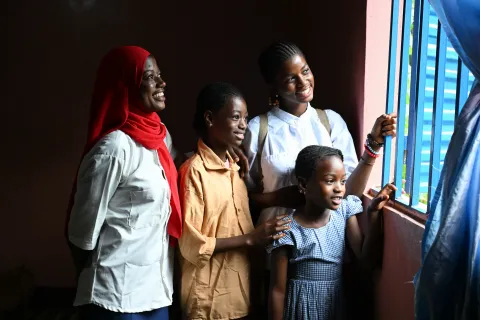
To care for these children, three women from the Temenetaye community were trained in children's rights, basic family practices, supervision and stimulation. "We have received professional training in teaching. Now we're better prepared to take care of them and provide them with an environment conducive to their well-being. The children have school supplies and games, and now they live in a healthier environment," said Aicha Kamano, a supervisor in the early childhood section.
As women play an important role in the fight against malnutrition, UNICEF has trained the women of the artisanal fishing port in the prevention and early detection of malnutrition. The women fishmongers and fish smokers now know how to identify children suffering from acute malnutrition using the brachial perimeter. They have also been trained in essential nutritional practices, such as exclusive breastfeeding, dietary diversification using local products, and proper nutrition for pregnant women and children under five.
1. Speech by Ms Charlotte Daffé Toure, Guinea's Minister of Fisheries, Aquaculture and the Maritime Economy, at the project's official ceremony in June 2022.