I Almost Quit Teaching in This Remote Village in Ghana – Here's Why I Stayed.
A Teacher's Seven-Year Journey of Sacrifice and Hope in Rural Ghana.
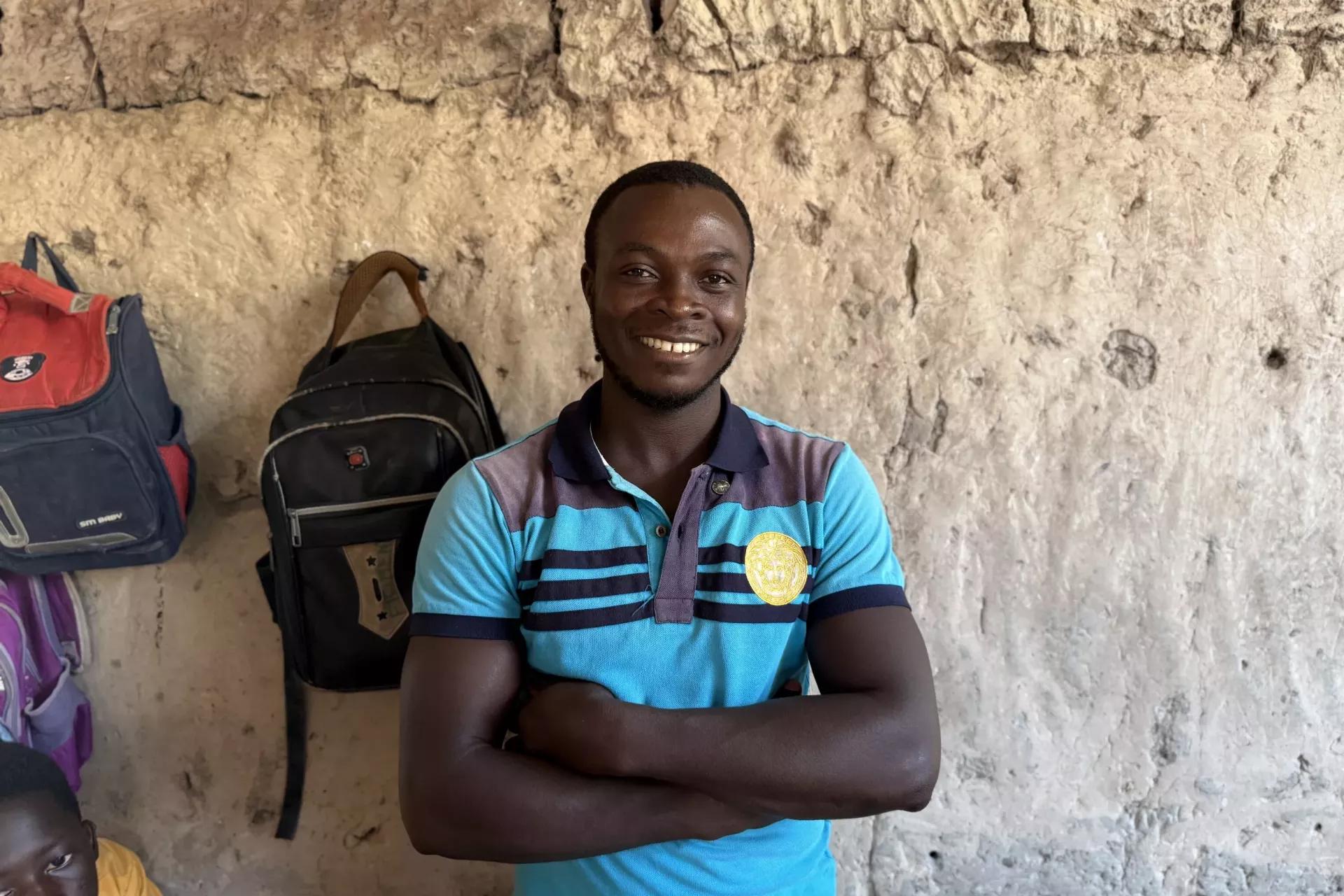
When I first saw that I was being posted to Bumpata (a remote island community in the Afram Plains South of the Eastern Region) for my teaching assignment, I wanted to quit.
The community was too far, with no electricity, no water, nothing. I couldn’t imagine living here, let alone teaching here.
But one night, as I lay awake, I remembered my own Primary Six teacher. He walked long distances every day, taught us under trees, and made countless sacrifices so that I could have a future.
And it hit me: I am here today because someone didn’t give up on me, even when it was hard. That is why I chose to stay.


My name is Gabriel Sosu Blewusi, I am 39 years old, originally from Nkawkaw (a town in southern Ghana and the capital of Kwahu West Municipal). I’ve been teaching here in Bumpata DA Basic School for the past seven years, and despite the challenges, I don’t regret the decision I made.
Here, I teach nine subjects: English, Math, Science, PE, Creative Arts, Computing (even though the children have never seen a computer before), History, and Religious and Moral Education. My knowledge in some of these areas isn’t vast, but I try my best because I believe these children deserve the chance to learn, to understand the world around them, and to make informed decisions for their future.
It hasn’t been easy. Sometimes, I’ve become a target in the community because I advocate strongly for education. Some parents feel I’m challenging their way of life by insisting their children should stay in school rather than joining the fishing profession, which is common here. It has caused tension, but I stand my ground because I know the power education holds and what it can do for a child’s future.


The lack of understanding from some parents is one of the hardest challenges. I see brilliant students in my classroom, full of potential, yet their parents want a different path for them. It’s painful, but I keep pushing, one conversation at a time.
Despite everything, I remain determined. In the seven years I’ve been here, I’ve seen improvement. School enrollment has increased, and even though we don’t have enough chairs, some parents now carry stools from home so their children can sit in class. Parents are getting school uniforms, attending PTA meetings, and showing a growing interest in their children’s education. This was not the case when I first arrived, and it gives me hope.
This job comes with many challenges, including personal ones. My wife and children live in Nkawkaw, which is over 6 hours away from here, and because of how difficult it is to commute, I don’t see them often. Sometimes, I can go for months without seeing my family. The journey back and forth isn’t easy and if I leave these students even for a while, I worry about what might happen in my absence. Some of them might lose interest in school altogether, and that could mean a future lost.


It’s been hard, trying to balance my role here with being a husband and a father. I have young children who need a father’s presence, someone to guide and protect them, and it pains me that I can’t always be there in person.
But despite these sacrifices, I stay because I know the work I’m doing here matters. I see the spark in these children’s eyes, the dreams they carry, and I know that if I can help even a few of them hold on to those dreams, it will all be worth it.
Children everywhere deserve the right to go to school, no matter where they live or the circumstances they were born into. I want to encourage my fellow teachers to make sacrifices when necessary, remembering that our own destinies were shaped by the teachers who believed in us when we were young.
Now it is our turn to do the same, to help these children grow into responsible citizens who will one day contribute to building a better society for our children and grandchildren.
This is how we keep the light of education burning, one child at a time.