I’ve heard the phrase “Water is Life” more times than I can count. It’s on billboards, in textbooks, and in every water campaign across Ghana. But standing in the Nayiri Community in the Wa Municipality in northern Ghana on March 25, that phrase felt different. It felt human.
To commemorate World Water Day 2026, we joined our partners at Ghana Water Ltd (GWL) to talk about a truth we often overlook: the deep connection between the water in our pipes and the equality in our homes.
The theme this year says it all: “Water and Gender – Where Water Flows, Equality Grows.”
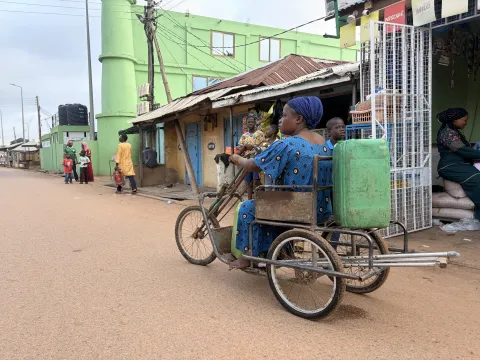
The numbers tell a story that many of our sisters and daughters live every day. In Ghana, 60% of people still live in homes without drinking water on the premises. When the taps aren't close by, it’s rarely the men who go searching.
62% of water collectors in our country are women.
12% are girls under the age of 15.
When a young girl is carrying a heavy basin of water from a distant source, she isn’t in a classroom. When a mother is spending hours in a queue, she isn't growing a business. This isn’t just a "water issue", it’s a barrier to our nation’s progress.


Beyond the Taps: The Real Cost of Inaction
We also have to be honest about the state of our water bodies. Between the damage from illegal mining (galamsey) and human settlements encroaching on water-prone areas, our vital sources are under siege.
The consequences are heartbreaking. Every year, around 1,600 children in Ghana under five lose their lives to diarrhea. These are preventable deaths. In 2022 alone, health care associated infections cost our economy a staggering $1.57 billion. We cannot afford to wait any longer.
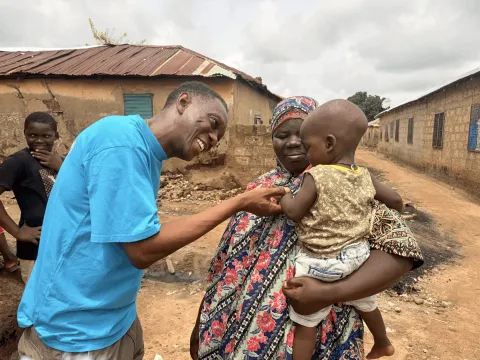
Our World Water Day event in Wa wasn’t just about speeches; it was a gathering of over 250 people, from traditional authorities and youth reps to vibrant women’s groups. We held a community procession and a "durbar" (a traditional gathering) to talk about the Denmark-funded Water Access and Efficiency Project for Low Income Urban Areas in Ghana.
This project is a game-changer for low-income urban areas because it focuses on:
Making it affordable for families to get water directly into their homes.
Making sure women and youth aren't just consumers, but active voices in how water is managed.


Learning to protect every drop we have
What I took away from our time in the Nayiri community is that water management is shifting. It’s no longer just about laying pipes; it’s about equity.
When we center women and girls in our water solutions, the results are better for everyone. Services become more sustainable; health outcomes improve, and local economies thrive. We are deeply grateful to the Government of the Kingdom of Denmark for recognizing that investing in water is, at its core, an investment in gender equality.

As we look toward the rest of 2026, let’s remember water is about more than just infrastructure. It is about dignity. It is about justice.
When women and girls have appropriate power in water decisions, services become more inclusive and effective. It is time to make water a force for a gender-equal future.
Because when water flows, equality grows. And when women thrive, all of Ghana prospers.