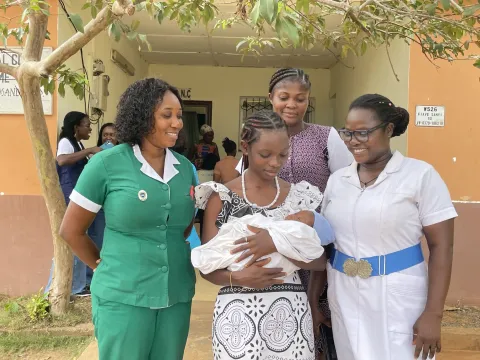
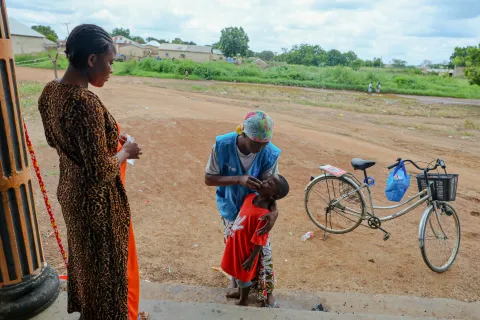
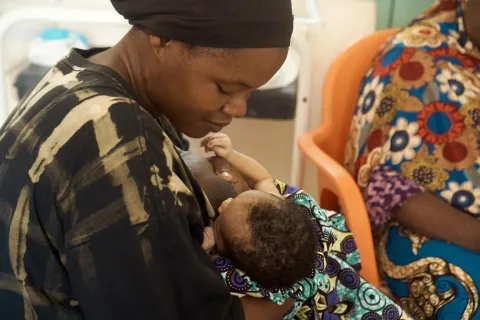
In many communities in Ghana’s North East Region, adolescent girls are looking for a fair chance: to stay in school, protect their health, learn new skills and hold on to dreams that too often face barriers such as poverty, early pregnancy and harmful social norms. For many girls, these challenges do not come one at a time. They overlap, making a girl’s world feel smaller before she has had the chance to imagine the future she wants. That is why support must meet girls where they are: in school, at the health facility, at home and in the community. A girl may need information, but she also needs protection, care, confidence and the opportunity to keep learning.
During the mission, the team visited schools, health facilities, communities, and youth platforms to implement interventions designed to support girls at different stages of their lives. These included the Girls' Iron-Folic Acid Supplementation Programme (GIFTS), the Local Economic Participation and Integration Programme (LEPIP), social protection and safety net interventions, adolescent-friendly health services, child protection mechanisms and community engagement initiatives. Together, these efforts are helping girls access information, care, protection and opportunities to build brighter futures.
But programmes and services alone do not create change. Their impact depends on the people who bring them to life every day. District leaders and frontline workers are also helping identify vulnerable girls, support referrals and strengthen local systems so change can continue close to home.
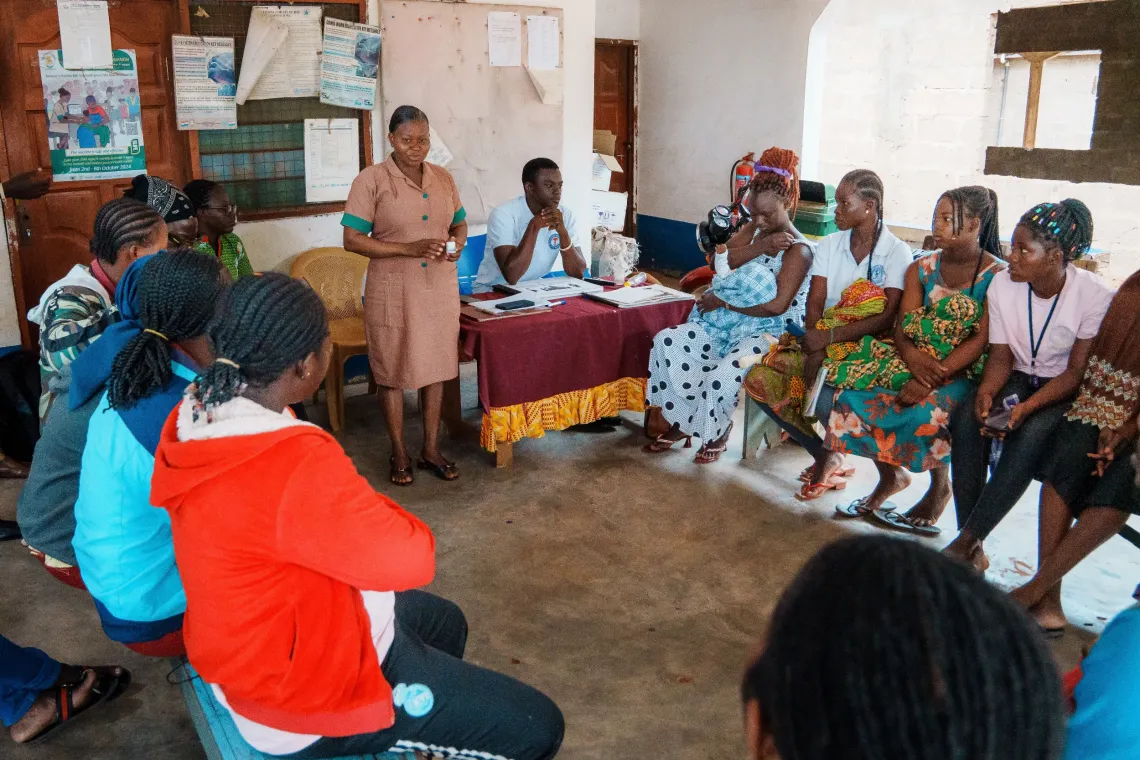

The mission also showed why prevention is urgent. Early pregnancy can interrupt education, affect health and limit future opportunities. But behind every statistic is a girl who may still hope to return to school, learn a skill, care for her child and build a life defined by possibility. Preventing adolescent pregnancy remains important. And when a girl is already pregnant or parenting, she should be met with dignity, not judgement. She still deserves the chance to learn, access care and find her way toward a better future.
Practical support, including skills development, livelihood support, financial assistance and referrals, can reduce the pressures that limit girls’ choices. This work takes more than one service or one conversation. It requires families, teachers, health workers, community leaders, boys and men to help challenge harmful norms and support girls’ health, education, safety and empowerment.
The experience from the North East Region shows that connected support is more meaningful for girls. When services work together, girls are more likely to stay in school, access care, receive protection, build skills and make informed decisions about their future. This is where the Adolescent Girls’ Programme (AGP) Phase II becomes an important part of the solution. Supported by Global Affairs Canada and jointly implemented by UNFPA and UNICEF, the programme is helping district systems work better together and respond more closely to adolescent girls' lives.
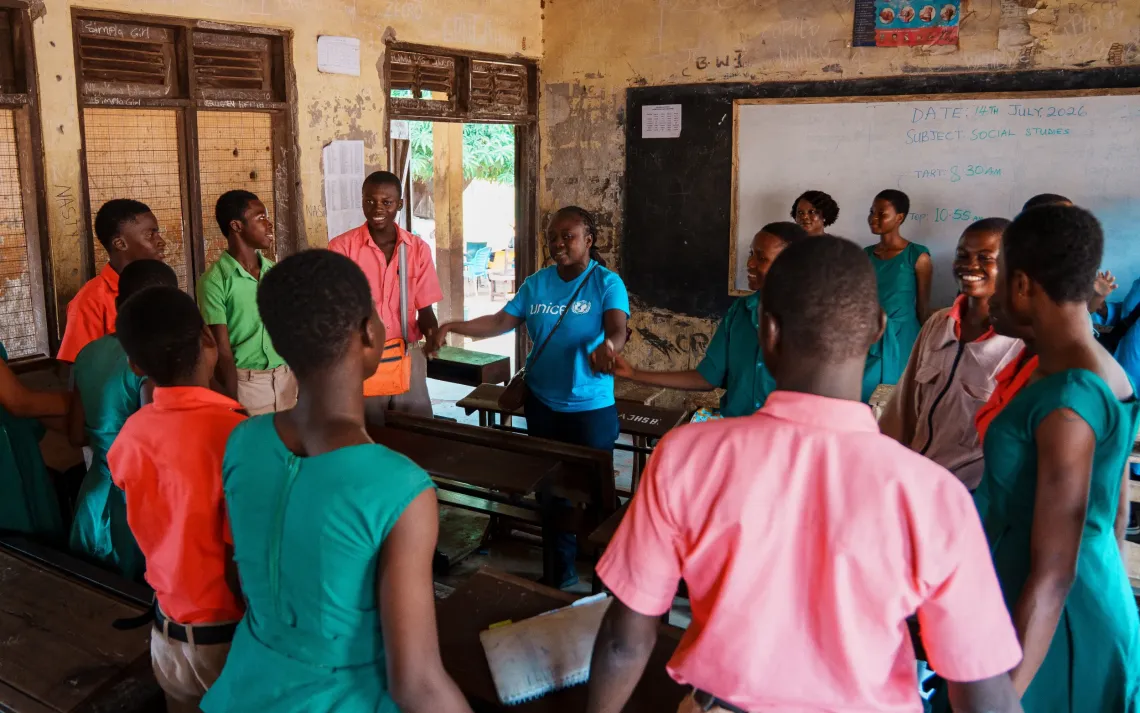
For every girl met during the mission, the promise of support was deeply personal: the chance to return to class, receive care without shame, learn a skill, be heard and believe that her future is still hers to shape.
Every girl’s future is shaped by the people around her. We can all play a part by listening when girls speak, encouraging them to stay in school, challenging harmful norms and supporting girls without judgement. Because when a girl is given the chance to learn, grow and believe in her future, she does not change her life alone; she helps transform her family, her community and the future of Ghana.