Documenting Change and Childhood in Northern Ghana

Eric shares experience working in the Northern parts of Ghana

Eric Agyemang Duah
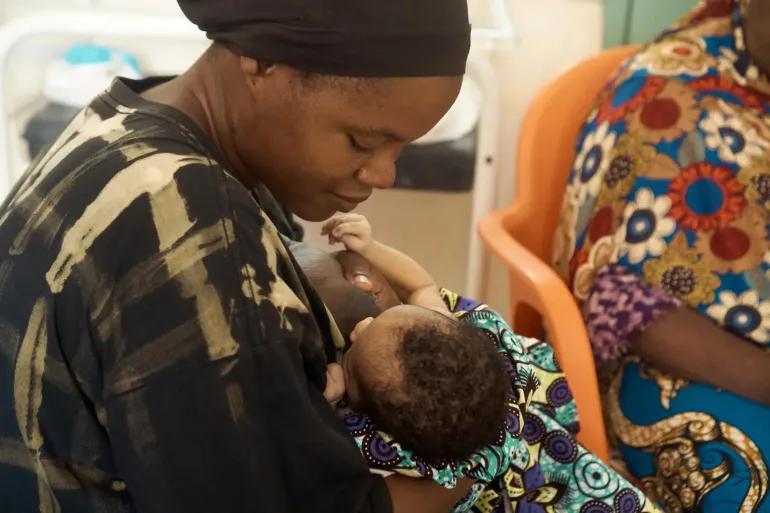
A mother breastfeeds her infant during a postnatal care session  at the Upper East Regional Hospital.
UNICEF/UN0908674/Agyemang A mother breastfeeds her infant during a postnatal care session  at the Upper East Regional Hospital.
02 September 2026

Between 20 and 23 July 2026, I travelled with UNICEF’s Communications and Advocacy team from Accra to Ghana's Upper East and North East regions. My role was simple yet profound: to document, through my camera lens, the impact of UNICEF and KOICA partnerships on often-overlooked communities. I found not just evidence of progress, but living stories, mothers, children, health workers, and community health volunteers whose daily lives are being reshaped by these interventions.
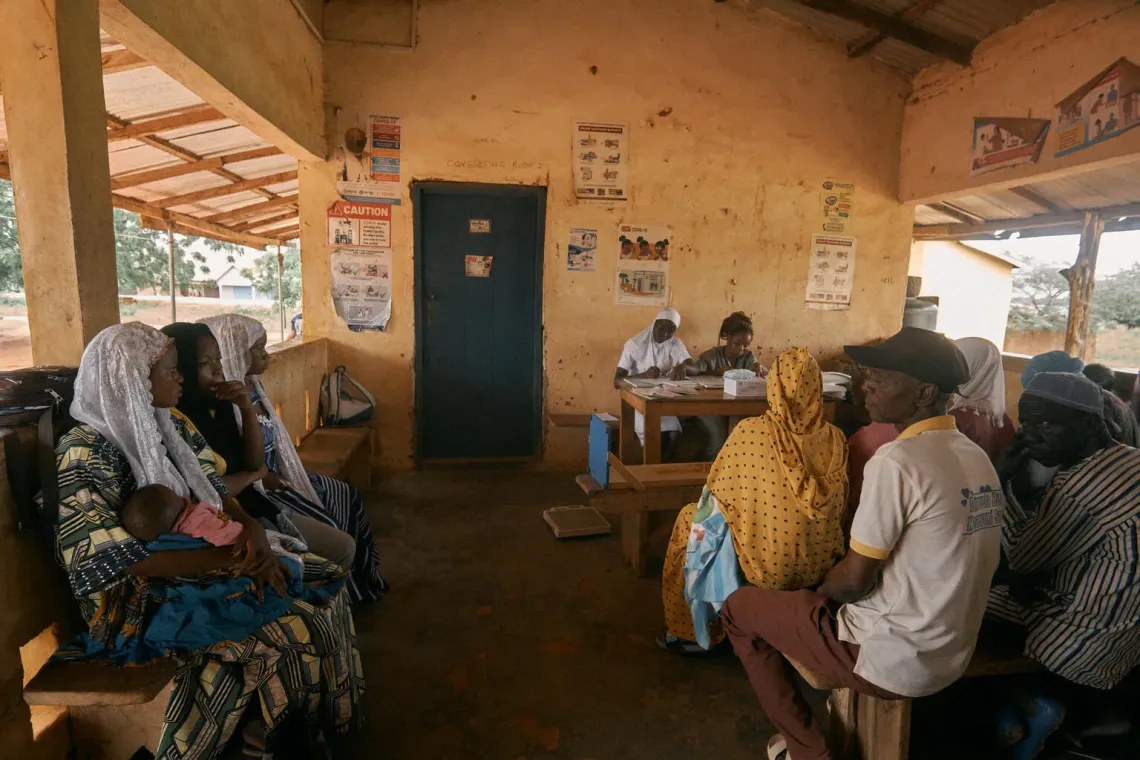
Families gathered at the Nagboo CHPS compound near Nalerigu for a maternal and child health session, part of the UNICEF and KOICA CHPS+ Project, which strengthens primary care across northern Ghana.
UNICEF/UN0908683/Agyemang Families gathered at the Nagboo CHPS compound near Nalerigu for a maternal and child health session, part of the UNICEF and KOICA CHPS+ Project, which strengthens primary care across northern Ghana.

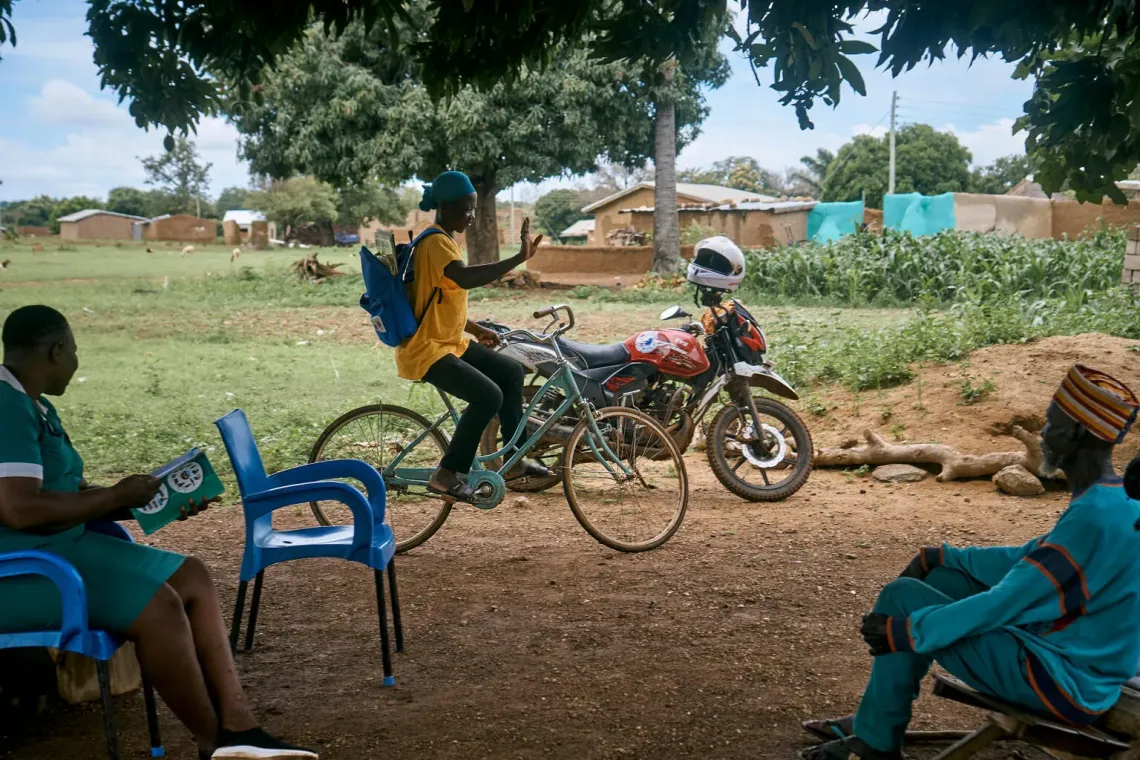
Like the midwives in Cotabato City (in the Philippines) who ride motorbikes to deliver vaccines in distant barangays, the health volunteers and nurses I met in Upper East and North East Ghana embody the same persistence. They carry backpacks filled with health materials, ride motorcycles, bicycles, or walk narrow paths to reach expectant mothers, and sit under trees to explain maternal care. Their work is not only about distributing supplies but about building trust, being present, and bringing knowledge into the reality of community life. It takes a chain of people, from health workers, parents, local leaders, and partners, to ensure that every child is reached.
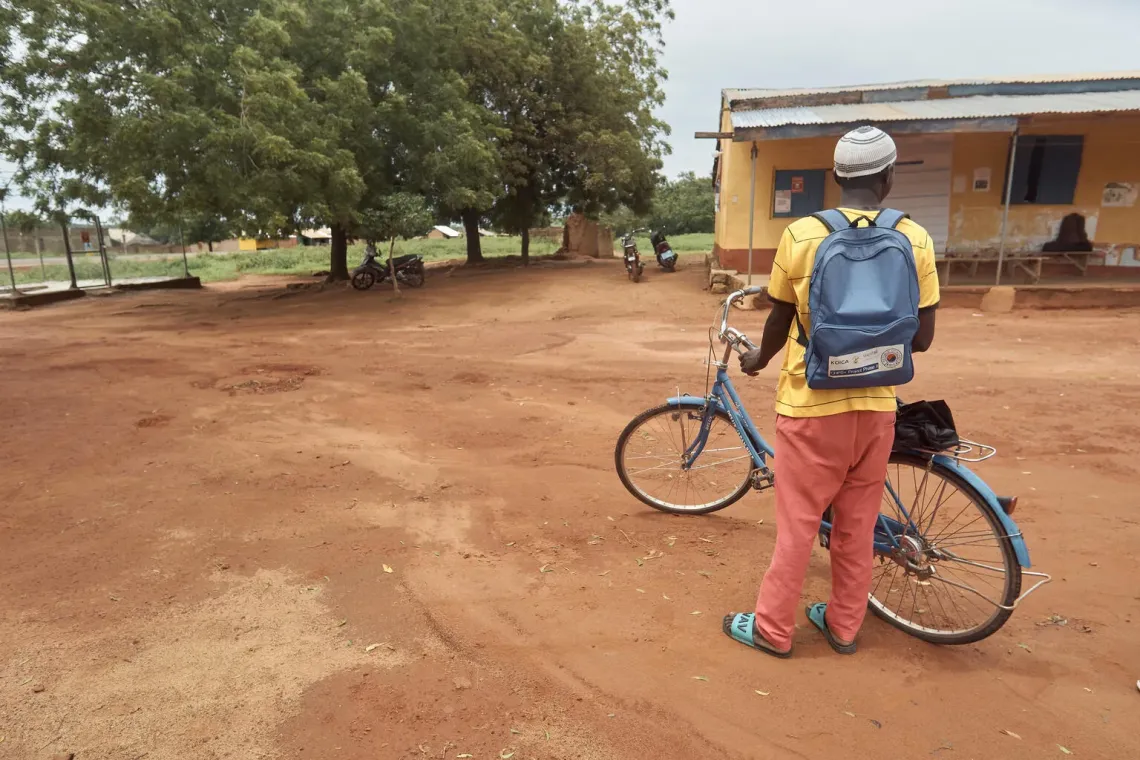
In Nagboo, North East Ghana, a Community Health Promoter sets off by bicycle to deliver maternal and child health services - reflecting the dedication of frontline workers under the UNICEF and KOICA CHPS+ Project.
UNICEF/UN0908691/Agyemang In Nagboo, North East Ghana, a Community Health Promoter sets off by bicycle to deliver maternal and child health services - reflecting the dedication of frontline workers under the UNICEF and KOICA CHPS+ Project.
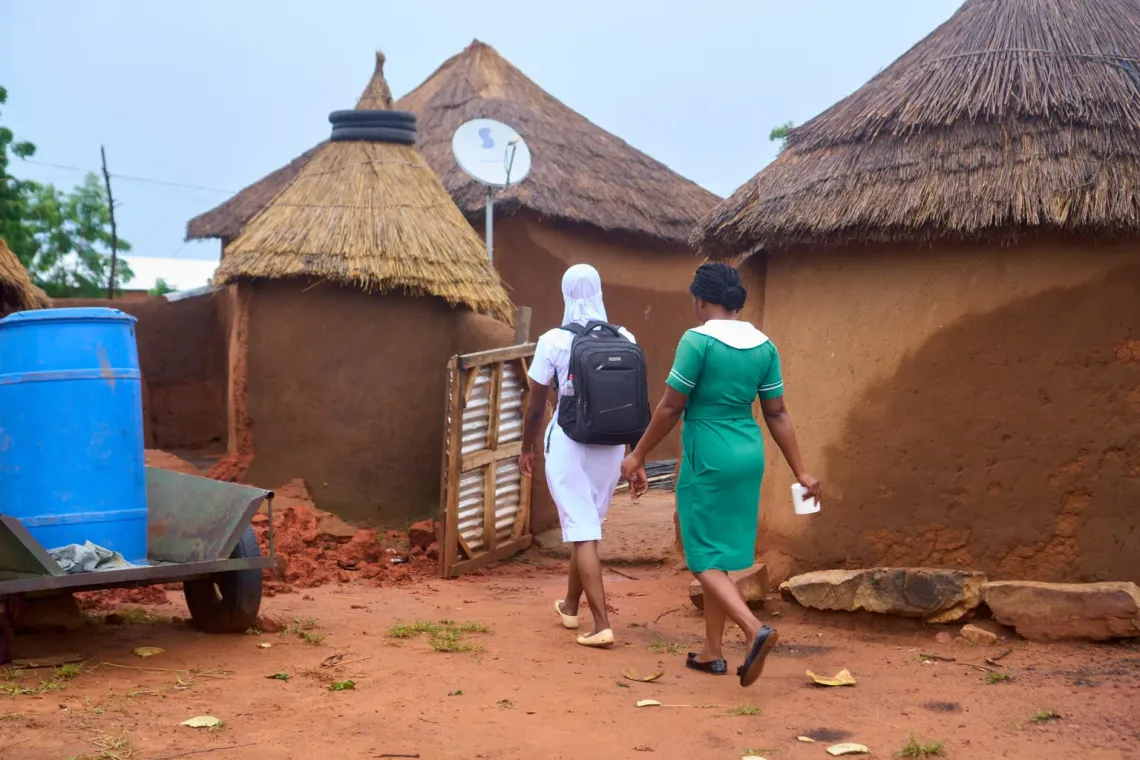
In Nagboo, North East Ghana, nurse Fouzia and her colleague walk through traditional huts to visit a new mother - symbolising the reach of UNICEF‑supported community health care that brings vital guidance and follow‑up directly to families in rural areas.
UNICEF/UN0908619/Agyemang In Nagboo, North East Ghana, nurse Fouzia and her colleague walk through traditional huts to visit a new mother - symbolising the reach of UNICEF‑supported community health care that brings vital guidance and follow‑up directly to families in rural areas.
In Gundoug, Upper East Ghana, community health volunteer Aida Bugre visits a pregnant woman with the local nurse - reflecting the collaboration between frontline workers and health professionals under the UNICEF and KOICA CHPS+ Project to bring essential.
UNICEF/UN0908695/Agyemang In Gundoug, Upper East Ghana, community health volunteer Aida Bugre visits a pregnant woman with the local nurse - reflecting the collaboration between frontline workers and health professionals under the UNICEF and KOICA CHPS+ Project to bring essential.

I saw firsthand how these partnerships translate into impact. In Gundoug, Aida Bugre, a community health volunteer, spent time with a pregnant woman in her home and helped relay maternal health information. In Nagboo, Fouzia, a nurse, gently reassured a mother while checking her newborn. These moments reminded me that impact is not abstract; it is visible in gestures of care, in a child’s cry turning to a smile after a vaccine, or in the relief etched on a mother’s face when she knows she is not alone.
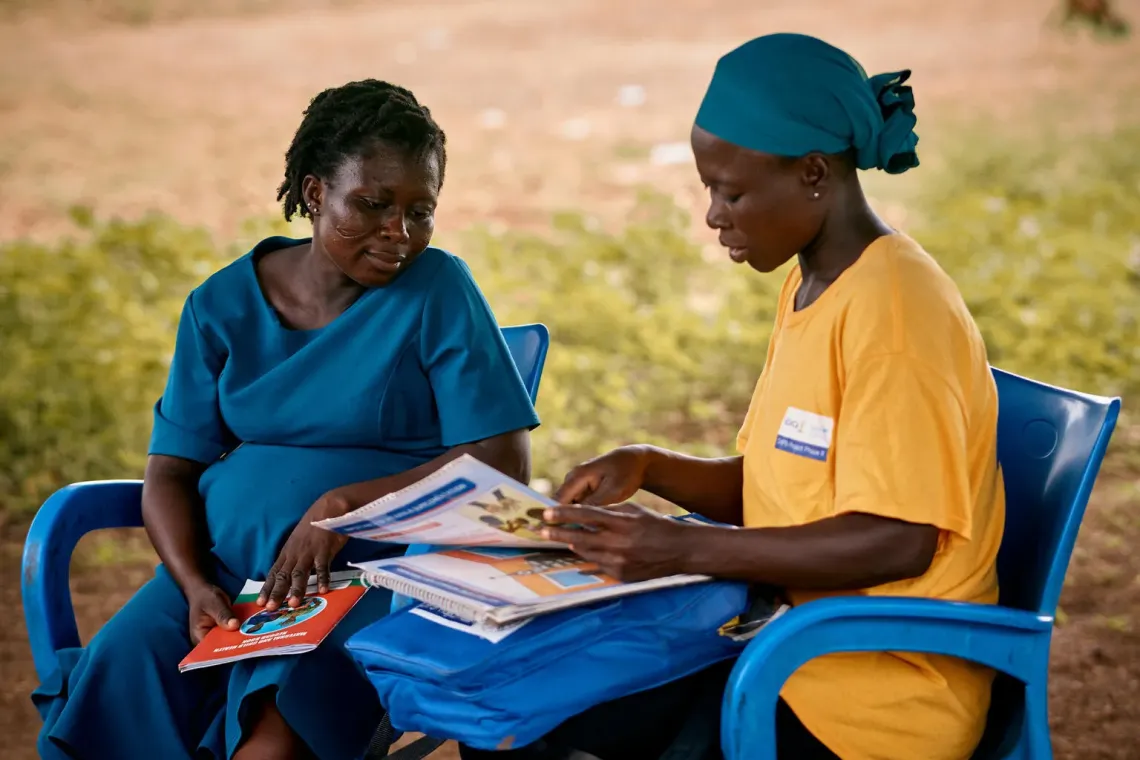
In Gundoug/Mihiiboug, Upper East Region, Ghana, community health volunteer Aida Bugre (34) meets with a pregnant woman during a home visit.
UNICEF/UN0908601/Agyemang In Gundoug/Mihiiboug, Upper East Region, Ghana, community health volunteer Aida Bugre (34) meets with a pregnant woman during a home visit.

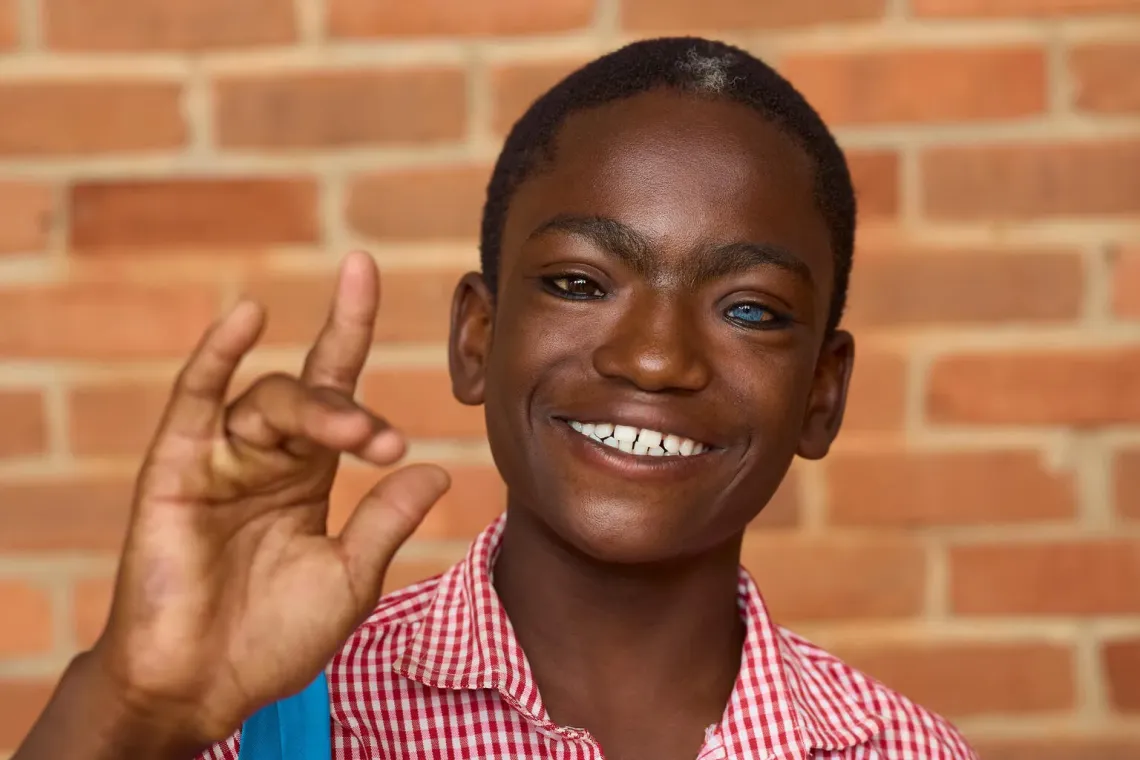
Then came 24 July 2026, a day that felt like a celebration of everything we had witnessed. At Red Clay Studio in Tamale, we organised an excursion for children that combined art, learning, and portraiture in preparation for World Children’s Day. The studio's rusted train carriages and earthy tones became a backdrop for stories of joy and possibility. I photographed Samari’s gentle smile, Nyaniba’s quiet grace, Nyamdie’s innocent wonder, Hayat Hardi’s poised confidence, and Anass’ sign language gesture that spoke of inclusion and love. Each portrait was more than an image; it was a declaration that every child has a voice, a right, and a dream worth honouring.
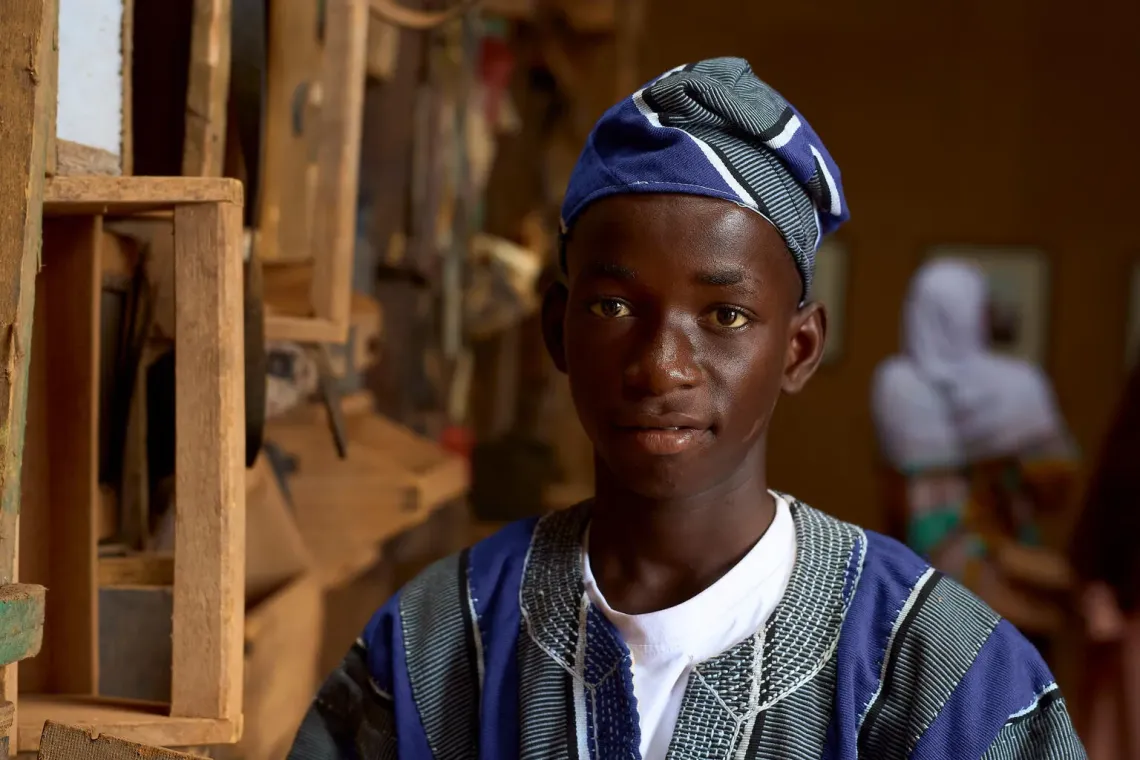
At Red Clay Studio in Tamale, Samari Azumah from the Tamale School for the Deaf poses during an art excursion ahead of World Children’s Day- a portrait that celebrates inclusion and creativity, showing how UNICEF and partners empower children of all abilities to share their stories through art.
UNICEF/UNI1018595/Agyemang At Red Clay Studio in Tamale, Samari Azumah from the Tamale School for the Deaf poses during an art excursion ahead of World Children’s Day, a portrait that celebrates inclusion and creativity and shows how UNICEF and partners empower children of all abilities to share their stories through art.
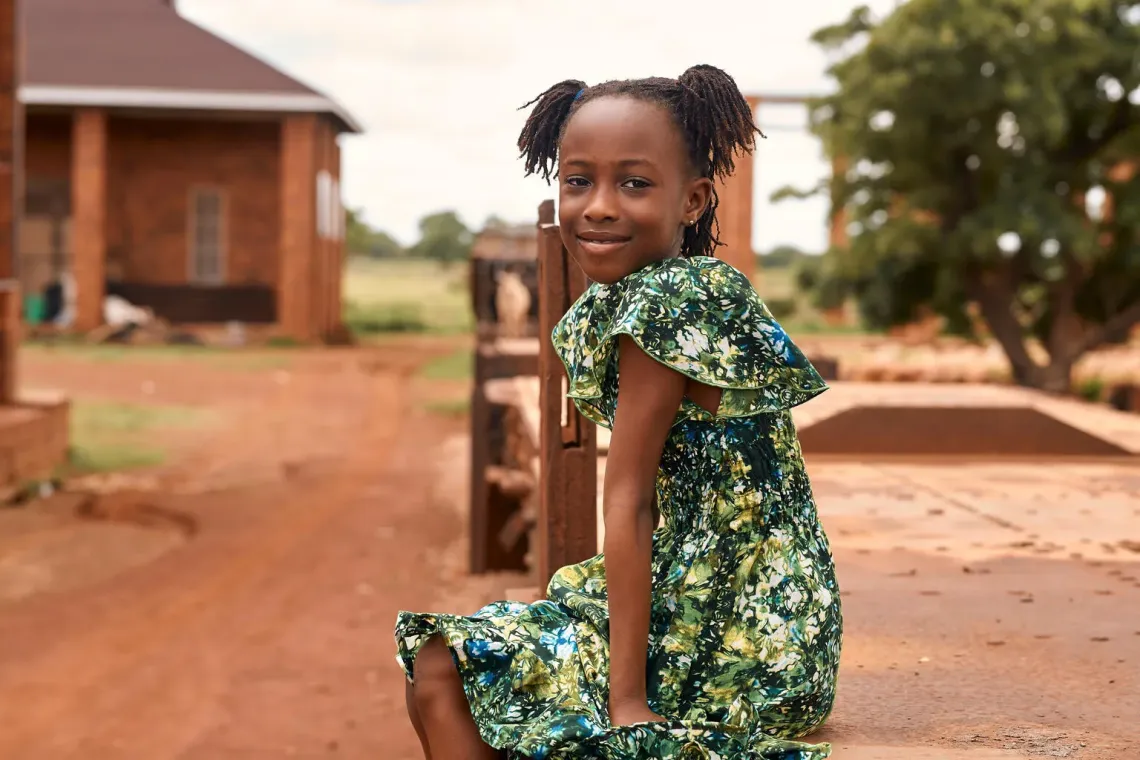
Red Clay Studio in Tamale, Ghana, seven‑year‑old Nyaniba was photographed during an art and learning excursion ahead of World Children’s Day.
UNICEF/UNI1018557/Agyemang Red Clay Studio in Tamale, Ghana, seven‑year‑old Nyaniba was photographed during an art and learning excursion ahead of World Children’s Day.
In Tamale, Ghana, Anass from the Tamale School for the Deaf smiles and signs “I love you” during a portrait at Red Clay Studio-a moment that celebrates UNICEF’s commitment to inclusive education and creative expression, showing how every child shares their voice beyond words.
UNICEF/UNI1018596/Agyemang In Tamale, Ghana, Anass from the Tamale School for the Deaf smiles and signs “I love you” during a portrait at Red Clay Studio-a moment that celebrates UNICEF’s commitment to inclusive education and creative expression, showing how every child shares their voice beyond words.

Through my lens, I saw Northern Ghana not as a place defined by scarcity but as a landscape of possibility. The children’s faces carried echoes of light, a reminder that progress is not only measured in infrastructure or statistics but in the confidence of a child who feels seen.

As my trip came to an end, I realised this journey was more than documentation. It was bearing witness to a quiet revolution: communities strengthened by partnerships, children empowered to imagine, and stories that will continue to ripple outward. For me, photography is about preserving these truths, truths that live in the eyes of children who dream beyond their circumstances.

This is the story I carry forward: every child deserves to be seen, heard, and celebrated, and their faces hold the promise of a brighter tomorrow.
About Blog

UNICEF, the United Nations agency for children, works to protect the rights of every child, everywhere, especially the most disadvantaged children and in the toughest places to reach. Across more than 190 countries and territories, we do whatever it takes to help children survive, thrive, and fulfil their potential. For more information about UNICEF and its work, please visit and follow UNICEF Ghana on LinkedIn, X, Facebook, Instagram, TikTok and YouTube.

Explore our blog topics: