Before she thinks about customers, sewing orders, or what she will cook for her family, Ajara Kwadjo must first think about water.
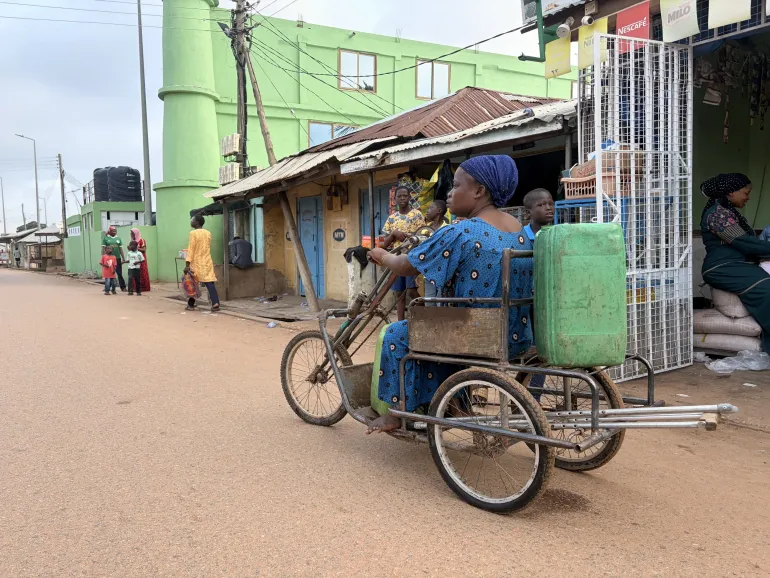
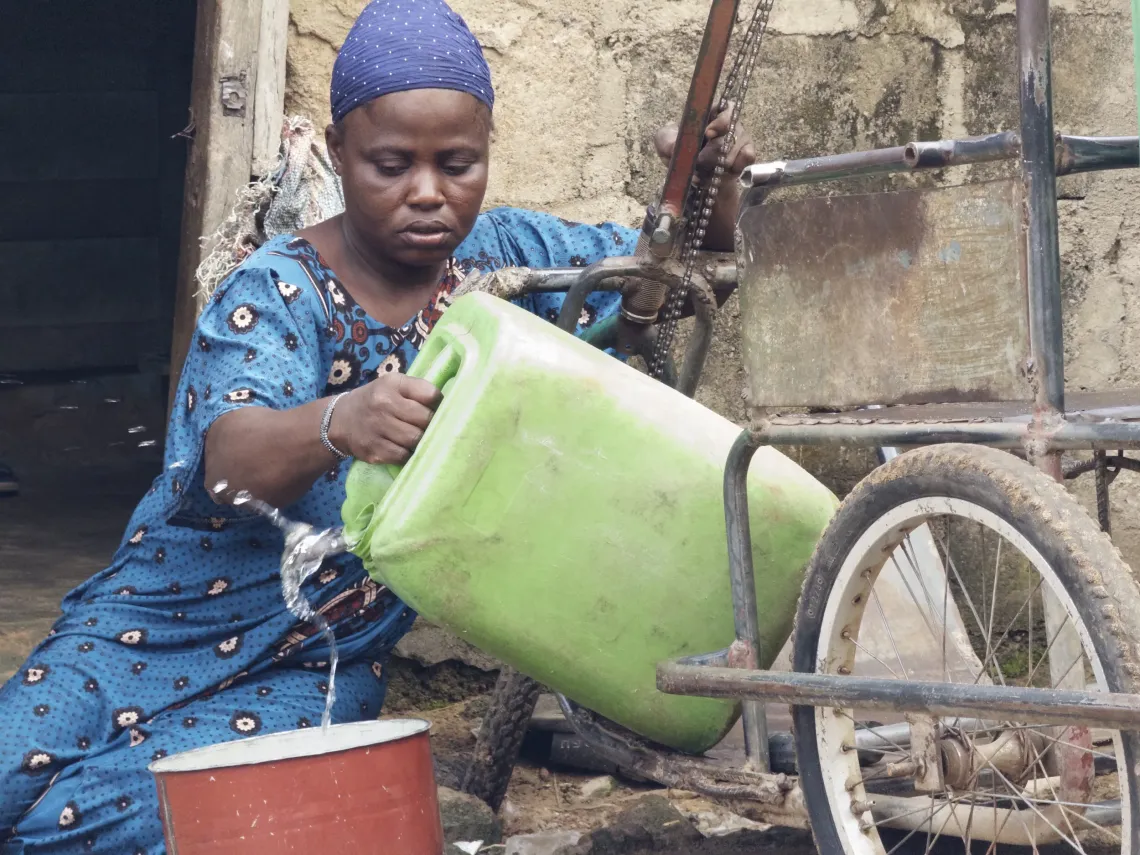
Every morning, the mother of two secures empty gallons behind her wheelchair and sets off on a journey she has made countless times before. The commercial water point is about 200 metres from her home in Sokpeyiri, a growing community in Wa, the regional capital of the Upper West region of Ghana. Each round trip covers about 400 metres.
It is a journey she makes in pursuit of one of life’s most basic necessities.
"Water is a need every day. Whether I am tired or not, I have to fetch it,"
Living with a disability has not stopped her from working hard to support her family. By day, she runs a small petty trading and tailoring business at the Resource Centre for Persons with Disabilities at the Wa Central Market.
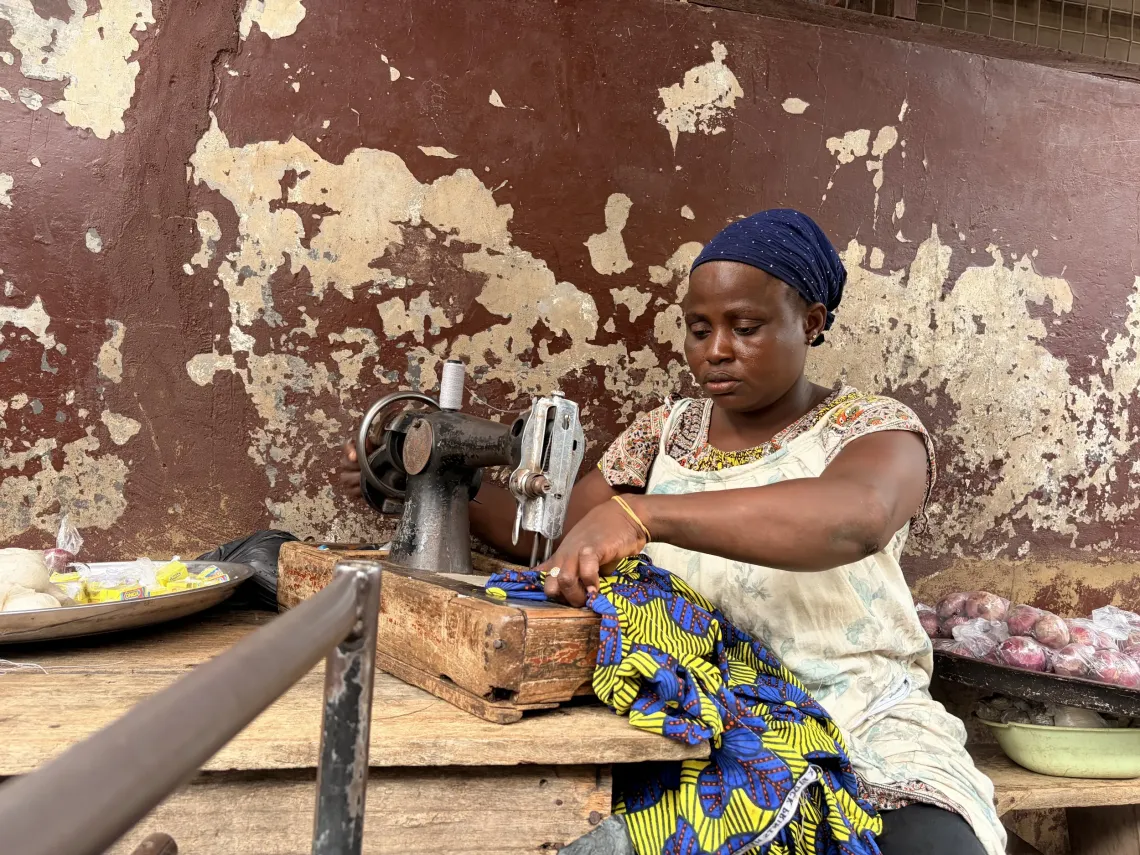
On a good day, she earns between GH₵ 20 (US$ 1.77) and GH₵ 30 (US$ 2.66). On other days, she returns home with little or nothing. Yet no matter how much she earns, water remains a daily, unavoidable expense. For drinking, she pays GH₵ 1 (US$ 0.08) per gallon. Water used for laundry and household cleaning costs GH₵ 0.50 (US$ 0.044) per gallon. On most days, she fetches two gallons. On washing days, that number increases to three or four.
"If I have to wash clothes, I need more water. The more water I need, the more trips I make and the more money I spend."
The amounts may seem small, but for a mother whose income can vary from day to day, they add up quickly. Every cedi spent on water is a cedi that cannot be invested in food, school needs, business supplies, or the household.
And every trip to fetch water takes time. Time she could use to grow her business. Time that could be spent resting. Time she could spend with her children.
Her oldest son, 17, recently completed secondary technical school and is learning a trade. Her younger son, 12, is in basic school. Like any mother, she hopes their future will be brighter than her own.
"I want my children to do well in life. Anything that reduces our burden and makes life easier for them is important."
Like many parents, she dreams of creating opportunities for her children that she never had herself. That is why, despite the daily challenges, she continues to work hard to support their education and future.
Last week, Ajara had the opportunity to share her experience with representatives from the Embassy of Denmark, UNICEF and Ghana Water Limited, when the Danish Ambassador to Ghana visited Sokpeyiri to better understand the daily realities of accessing water and the difference household connections could make for families.
Ajara explained to the members of the delegation how every gallon of water comes at a cost. Not only the money she spends each day, but also the time and physical effort required to bring water home.
In Sokpeyiri, water is available through public water points. The challenge is bringing it home. For many households, daily life revolves around transporting water from boreholes, standpipes, and commercial vendors. For a woman using a wheelchair, that burden is even greater.
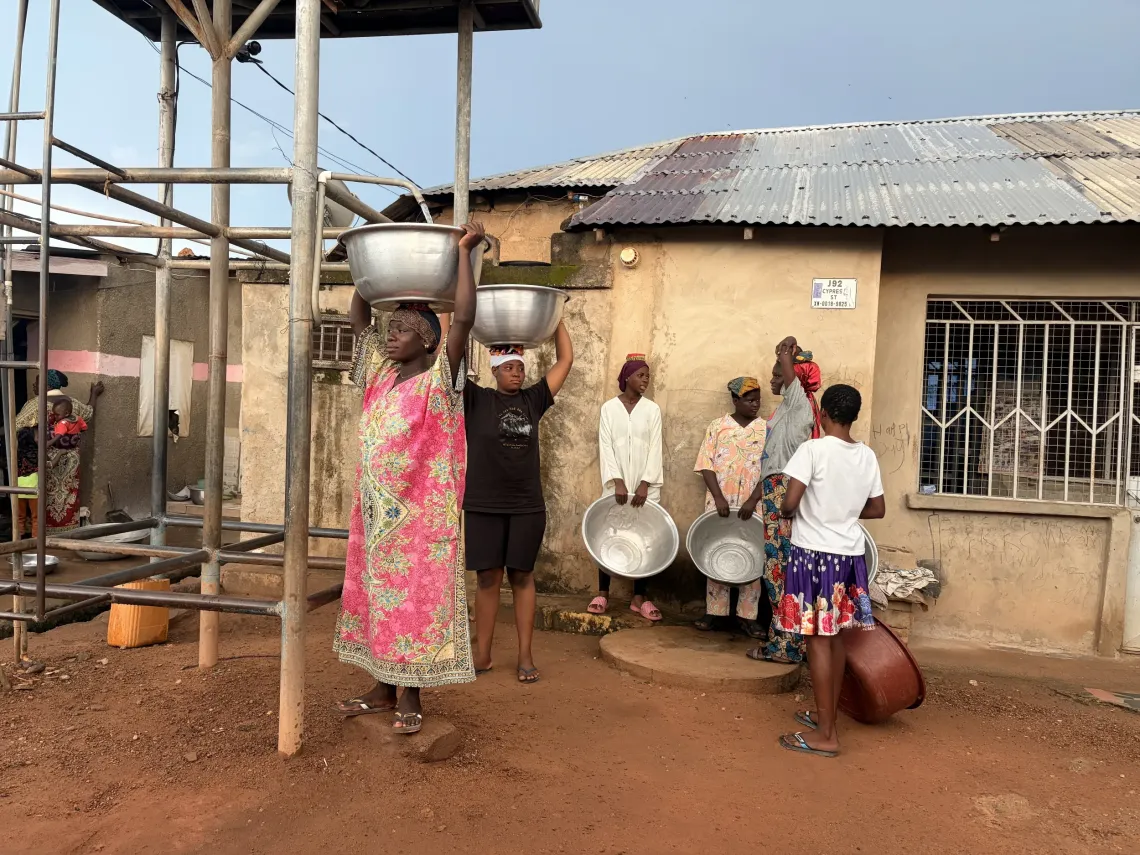
For Ajara and thousands of families like her across Wa in Ghana’s Upper West region, there is hope that things could soon change. Ghana Water Limited (GWL) and UNICEF, with the support and funding from the Government of Denmark, are rolling out the Water Access and Water Efficiency for Low-Income Urban Areas initiative. Designed to reach more than 105,000 people across the Upper West and Upper East regions, the project focuses on expanding sustainable household water connections in rapidly growing communities like Sokpeyiri.
For residents like Ajara, having water closer to home means more than convenience.
"If we could access water at home, it would help us greatly," she says. "We will save time, save energy and use that time for other things."
“If water were available in my home tomorrow, the first thing I would do with the extra time would be to have an adequate rest," Ajara says with a beam of a smile.
Her hope is shared by thousands of families across the community.
Access to water is often measured in litres, pipes, and infrastructure. But for mothers like Ajara, its true cost is measured differently. It is measured in the distance travelled each day, in the money spent on every gallon, and in the opportunities sacrificed to secure something as basic as a connection.
Most importantly, water is measured in the hope that one day, for mothers like Ajara, securing it will no longer require a daily journey, but simply the turn of a tap.
For now, Ajara will continue the daily journey for water, carefully securing gallons behind her wheelchair before making the trip to and from the community water point. But like many families in Sokpeyiri, she looks forward to the day when access to water no longer depends on a daily journey, but simply the turn of a tap at home.