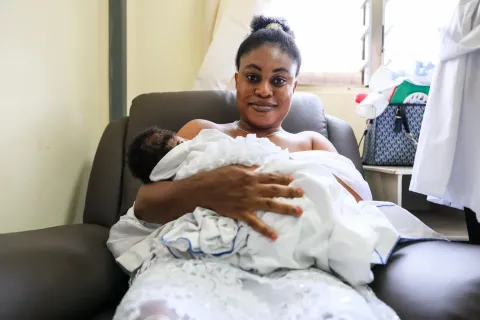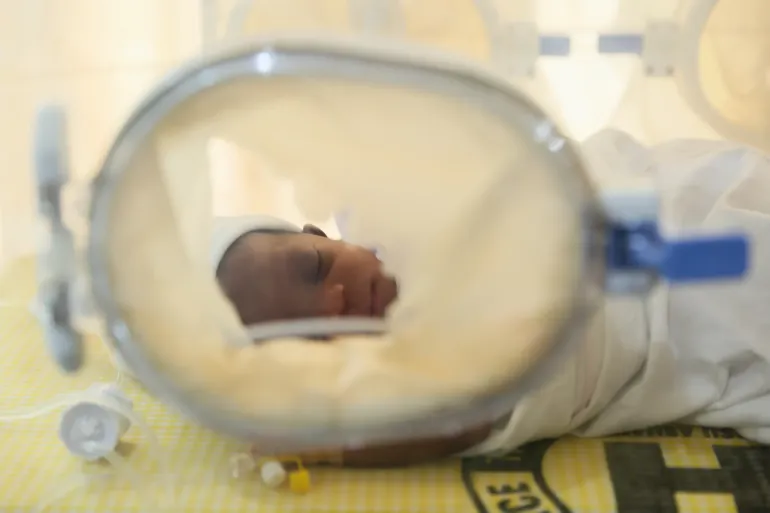
Before dawn one September morning in 2024, midwife Amponsah Abigail stood beside a woman in labour at Asitey Health Centre in Ghana’s Eastern Region.
The baby was coming...
The lights were out...
With no reliable backup power, the delivery unfolded under two torchlights, one from Abigail’s phone and another held by a relative. In a room where every second mattered, two small beams of light guided a baby girl safely into the world.
“The moment I saw the baby blink against those two torchlights, I thought, no child should meet the world like this.”
That night reflected a challenge many frontline health workers in Ghana know well: delivering quality maternal and newborn healthcare when electricity is not guaranteed. It also raised a practical question: how can renewable energy and clean power solutions help keep mothers, newborns and children safe when the grid is unreliable?
Clean Energy for Healthcare at the Last Mile
For Johannes Amo-Aye, founder of Minagie Energy, the answer was shaped by childhood memories of power interruptions in South Labadi’s Otswe community. Those experiences stayed with him and inspired a simple ambition: build reliable, low-maintenance renewable energy solutions for communities that need them most.
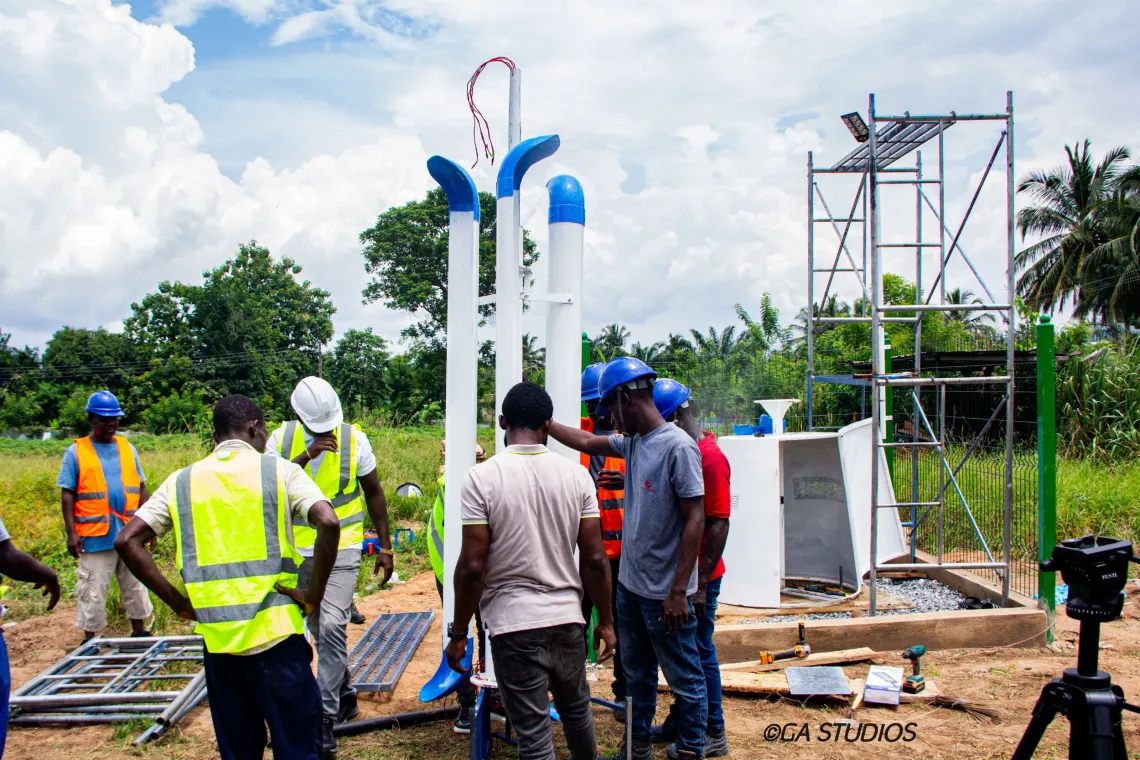
Johannes' solution, the Fusion Wind Turbine and Solar Arch, is a compact hybrid renewable energy system designed for rural African health facilities. Today, Fusion systems at Asitey and Adeiso Health Centres generate more than 7,000 kilowatt-hours of clean electricity annually, powering maternity wards, vaccine fridges, sterilisation equipment, lighting and digital health services.
The change is practical and immediate. Vaccines can now be stored safely on-site instead of being moved by motorbike to the district hospital during prolonged outages. Delivery rooms remain lit. Health workers can focus on patients, not power interruptions.
"Fusion didn't just light up our clinic, it brought calm to our maternity ward."
UNICEF Ghana Startup Lab: From Innovation to Impact
Good ideas need more than engineering to reach children and families. They need partners, evidence and trust. For Minagie Energy, that bridge came through the UNICEF Startup Lab in Ghana, which supports social innovation, entrepreneurship and scalable solutions for children.
Since 2019, the UNICEF Startup Lab has supported more than 100 startups across five cohorts through the UNICEF–KOICA partnership, “Accelerating Entrepreneurship and Innovation in Ghana.” Minagie Energy joined Cohort 4 in 2024 with a promising technology and a need for a pathway to scale.
Through mentorship, technical guidance and links to UNICEF programme teams, the Startup Lab helped Minagie strengthen its business model and sharpen its focus on maternal and child health outcomes. UNICEF also connected the startup with the Ministry of Health, Ghana Health Service and district health authorities to identify facilities where reliable renewable energy could make the greatest difference.
From Renewable Energy Prototype to Public Good
Through the UNICEF Startup Lab ScaleUp Fund, Minagie Energy received catalytic financing to install two pilot Fusion systems at Asitey and Adeiso Health Centres.
UNICEF Ghana, the Ministry of Health, Ghana Health Service, district health teams and Minagie worked together throughout implementation, monitoring performance, collecting feedback from health workers and strengthening maintenance systems so the technology could work in real healthcare settings.
The pilots showed that locally developed renewable energy solutions can strengthen frontline health services in Ghana, support national development priorities and demonstrate what is possible when government, development partners and the private sector work together for children.
"We had the technology, but UNICEF Ghana gave us the ecosystem, which includes the partners, the mentors and the trust to demonstrate what was possible."
The journey has since received international recognition. In 2026, Minagie Energy was selected as a recipient of the imaGen Venture Fund under Generation Unlimited (GenU), providing additional investment to expand the company's impact and validating the potential of youth-led innovation to address complex development challenges.
How Reliable Electricity Changes Maternal and Child Health
Today, reliable electricity has become part of everyday life at the Asitey and Adeiso Health Centres. One year after the night Amponsah Abigail, Midwife, Asitey Health Centre, delivered a baby by phone torchlight, she stood in the same maternity ward under bright, reliable lights and safely delivered another child.
“With the Fusion system at Asitey Health Centre, I believe those past experiences won’t repeat during emergencies,” Abigail said.
The impact reaches beyond one delivery room. The two health facilities now serve more than 607 patients every month, about 36 per cent of them children. The facilities are also saving approximately GHS 750 each week by reducing dependence on diesel generators, resources that can support better healthcare for mothers, newborns and children.
A Model for Locally Led Clean Energy Innovation in Ghana
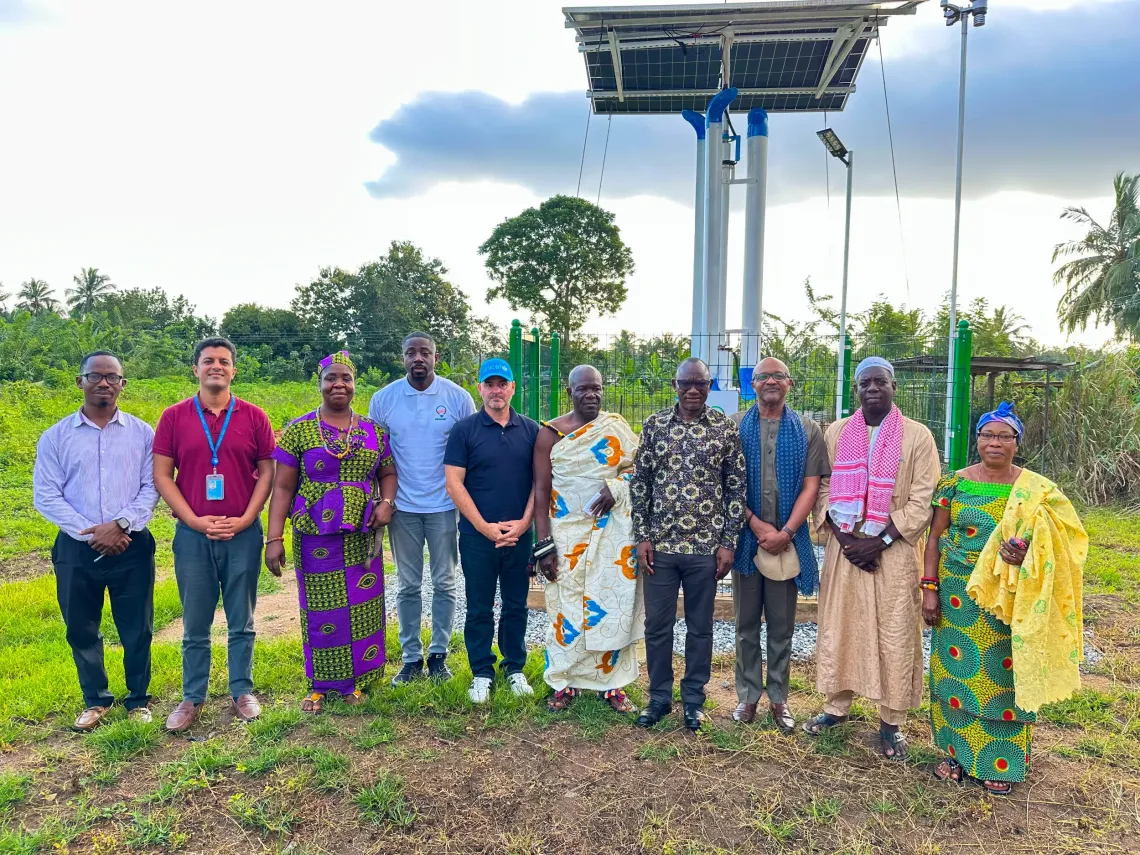
The story of Minagie Energy is about what becomes possible when local innovation is connected to public purpose. UNICEF Ghana’s Startup Lab helped connect a promising startup to the public institutions and frontline workers who understand community needs best. Together, they showed that stronger services for children are built through trust, partnership and solutions designed close to the people they serve.
For Abigail, the change is more than clean energy. It is light above a maternity bed, a vaccine kept safe for a child and the relief of knowing an emergency will not be met by darkness. When innovation reaches the frontline, more children in Ghana can begin life in safety, dignity and hope.