One of the responsibilities of a teacher is to ensure that all students in their class, regardless of their abilities or learning styles, benefit from any lesson taught. This need is at the heart of the Differentiated Learning Plus (DL+) approach, which empowers teachers to tailor instruction to meet learners where they are, at their current level of understanding. Teachers play a vital role as the primary facilitators of learning, making daily decisions that shape how children engage with lessons. This responsibility places teachers in an important position to foster child-centred learning environments.
The Importance of DL+
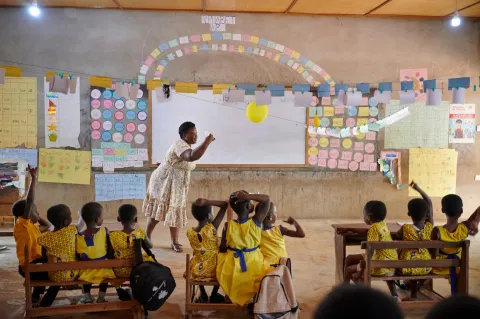
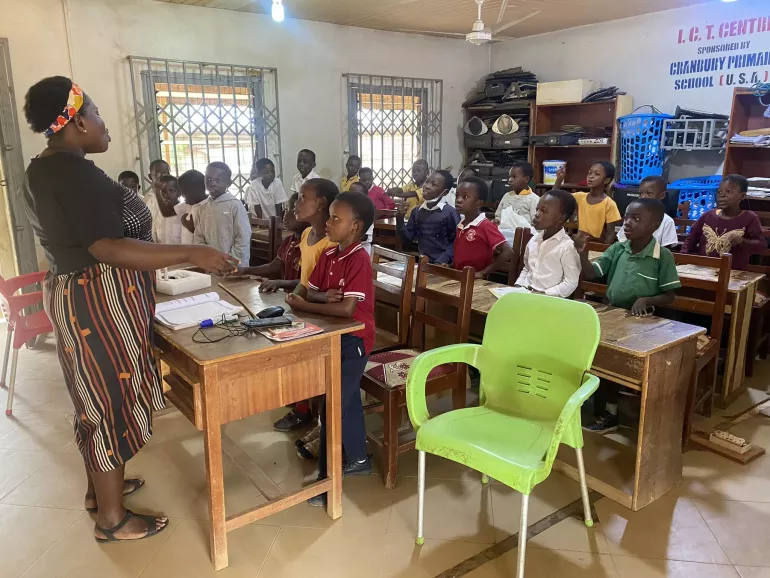
The Differentiated Learning Plus (DL+) programme is helping children in Ghana strengthen their reading, writing, and math skills by meeting each learner where they are. Instead of teaching strictly by grade or age, DL+ groups students from grades 2–6 according to their ability level for one hour a day, four days a week. This way, children can learn at a pace that works for them and build confidence step by step. Lessons are playful and hands-on, using games and activities to make learning fun, while regular, simple assessments help teachers track progress and adjust support.
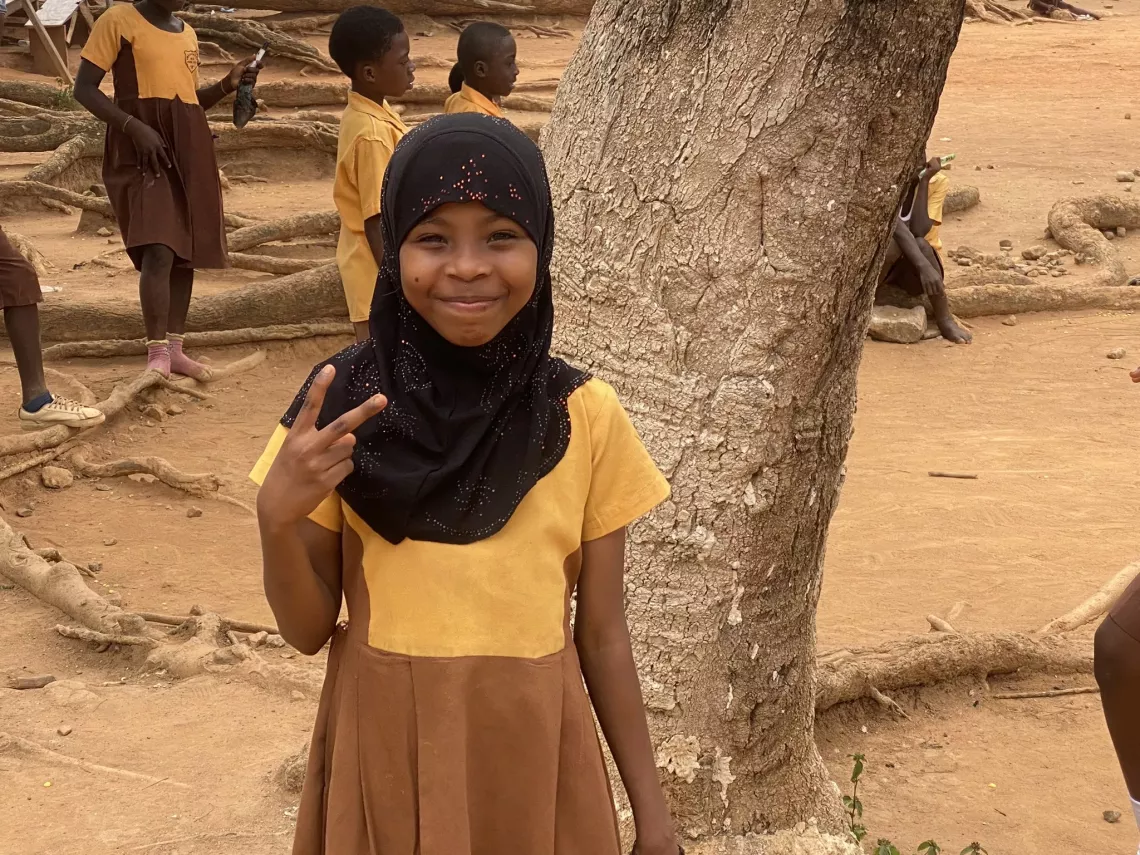
“I also feel very proud of how far my students have progressed to the different levels”, Liberty said. “For instance, one of my students, Zenab, a 9-year-old who started the year without recognising numbers, is now at the most advanced level and she can do multiplication. I watched Zenab grow from one level to another in my class, and I feel fulfilled,” she shared.
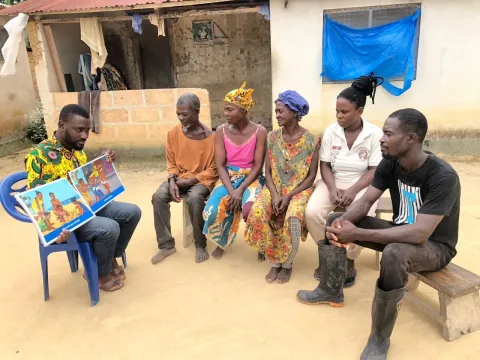
DL+ is not just about helping individual children—it also strengthens the education system as a whole. By using DL+ methods, teachers become more accountable to the learning progress of their class, students feel more engaged and confident, and schools see fewer dropouts. The programme also builds stronger connections between teachers, families, and communities, creating a more supportive environment for every child to succeed.
Teachers are at the heart of DL+
As the daily facilitators of learning, teachers turn the programme’s principles into effective classroom practice. They assess where each child is starting from, deliver lessons targeted to learners' ability levels, and guide them step by step. To support them, DL+ provides focused teacher training not only in literacy and numeracy, but also in softer skills like how to help children build relationships, express themselves, and manage their emotions. With these tools and confidence, teachers can move away from one-size-fits-all lessons and create a classroom where every child’s needs are met.
“Before DL+, I was teaching the same way to every child. Now, I teach in a way that ensures every child feels seen and supported,”
Making DL+ work despite challenges
The DL+ approach encourages teachers to be flexible and resourceful, using their judgment and creativity to meet the needs of every learner. When teaching and learning resources are limited, the quality of lessons depends on the teacher’s ability to adapt and innovate. Instead of relying solely on printed visuals or pre-made charts, teachers are trained to turn low-cost or no-cost materials – such as everyday objects, recyclables, and natural items – into practical learning tools.

During literacy and numeracy lessons, for instance, teachers often take children outside to engage with words, numbers, and objects in their environment. This makes learning real and relatable: children may practice phonics by blending letters into words, associate colours with familiar items like mangoes, or count using stones and sticks. These hands-on activities not only make up for the lack of formal materials but also spark curiosity and participation.
What a successful DL+ classroom looks like
It is one where no learner is left behind: instead of grouping students by age or grade, teachers group them by ability and design lessons that are active, flexible, and paced to each learner. Teachers use playful, resourceful techniques, checking progress regularly and adjusting lessons on the spot. In this way, children participate with confidence, develop a growth mindset, and steadily move up the learning levels set by DL+ benchmarks.
Low-cost teaching aids—often created from everyday items—help bring lessons to life and keep students engaged, even when resources are scarce. Schools and communities also collaborate through shared data systems, such as the DL+ Dashboard, ensuring that support reaches learners quickly and is informed by evidence.
Quantifying Results for Ghana
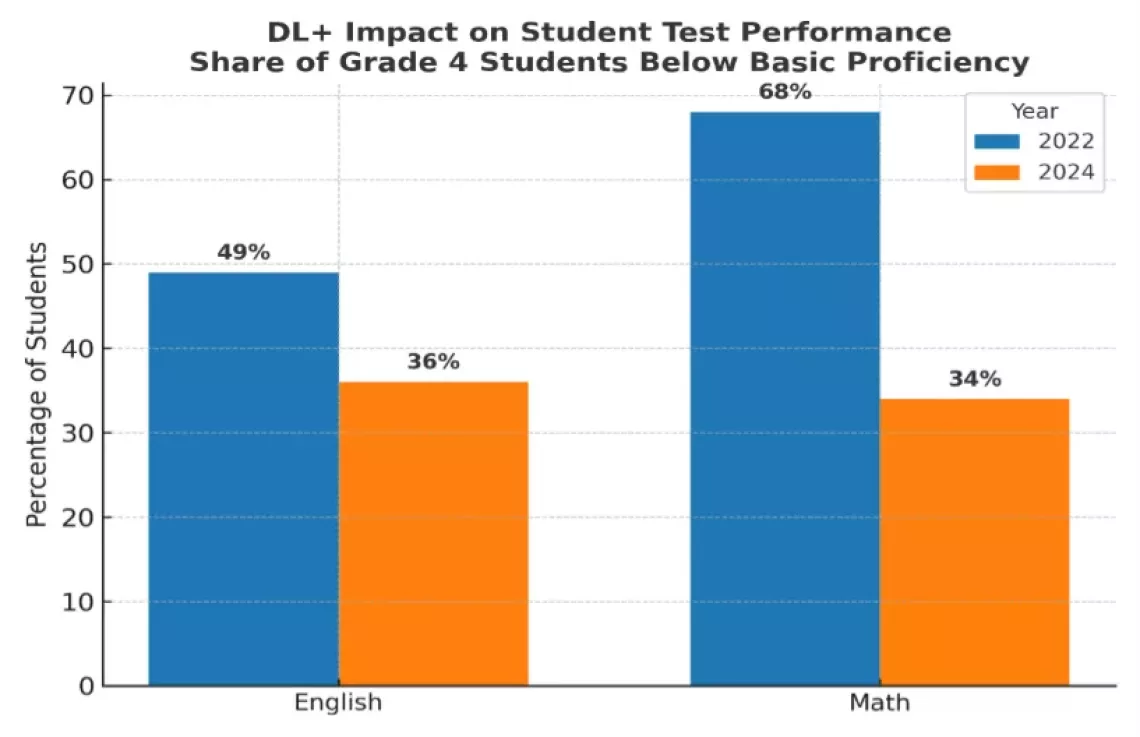
Since DL+ was introduced, more than 500 schools across 50 districts have seen noticeable improvements in children’s reading (in English) and mathematics. National Standardised Test data—covering all Grade 4 learners in Ghana—makes it possible to compare how DL+ schools performed at the start of the programme and after just one year.
The greatest gains have been among the children who were furthest behind. At the beginning, about half of the Grade 4 students in DL+ schools were below basic proficiency in reading. After a year of learning, that number dropped to just one-third. In mathematics, results followed the same pattern, with the share of learners below proficiency cut in half—from 67 per cent to 33 per cent.
A recent evaluation also showed strong support from communities. Parents and teachers reported that children are more eager to attend class because lessons now feel relevant, interactive, and tailored to their needs.
More analysis is underway to capture the full impact of DL+ after two years of implementation in the 2024–25 school year. But even now, the results have been so promising that the programme is being scaled up to every public primary school in Ghana, with support from the Global Partnership for Education and private foundations.
This scale-up presents an opportunity for primary school teachers like Liberty to be more empowered in their teaching methods and for learners like Zenab to catch up on their reading and mathematics skills, ultimately thriving at school and beyond.