“I feel hopeless. Everybody is choosing that they want to be a nurse or a teacher, and I have already dropped out of school,” 16-year-old Abena recalls. “I did not know what I could do with my future.”
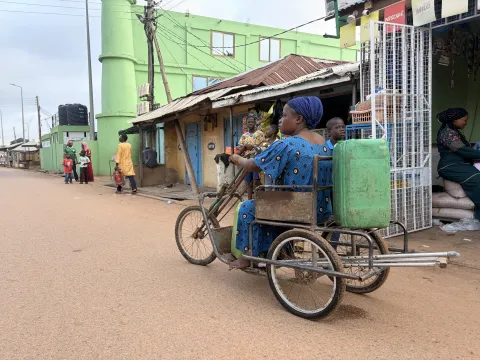
Abena’s childhood was marked by absence and labor. After her mother left their community, Abena dropped out of school at age 11 to support her elderly grandmother on the farm. Desperate for a better life, she migrated to Kumasi to work as a kayayei (female head porter). But the city was unforgiving. For four years, she carried heavy loads for pennies, barely earning enough to survive, let alone save.
When she finally returned home to her home town, she felt defeated. With no education and no job, her family suggested the only path they saw left for her: marriage.
Finding a Safe Space
Abena’s story is common in some parts of Ghana, where poverty and limited opportunities often push adolescent girls into early marriage or exploitative labor. However, Abena’s trajectory changed when she was invited to join the Promoting Adolescent Safe Spaces (PASS) initiative.
With support from the UNFPA-UNICEF Global Programme to End Child Marriage, the initiative provides a sanctuary for girls to learn about their rights to education, sexual and reproductive health, and skill trainings for better future.
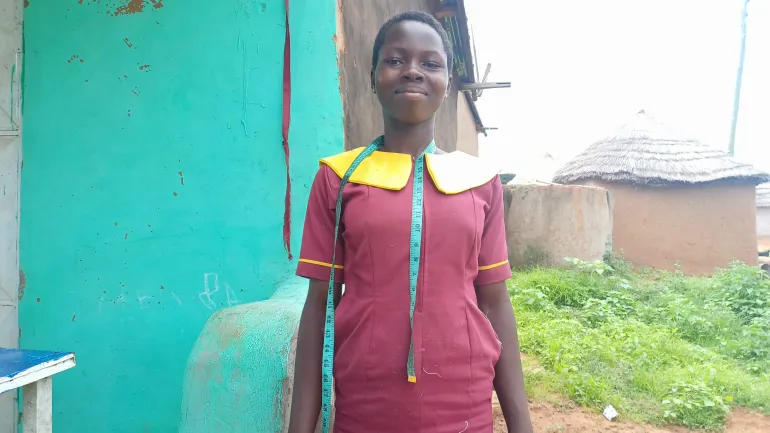
Initially shy, Abena began attending weekly sessions. While other girls spoke of becoming doctors or nurses, Abena struggled to find her voice. "I felt like my future was already lost because I wasn't in school," she says. But through the guidance of her mentors, she realized that formal classrooms are not the only path to success. She discovered a passion for dressmaking.

Stitching a New Future
With her newfound confidence, Abena did something bold: she negotiated with her family. She advocated for her right to delay marriage, reaching an agreement that she would first complete a three-year dressmaking apprenticeship.
“This programme helped me to see that even if school is not an option for me now, I still have choices. I can build a future,” Abena says, her face lighting up with a smile.
Today, Abena is a dedicated apprentice. She is no longer a "hopeless" dropout; she is a budding entrepreneur. She continues to attend Safe Space sessions, not just as a participant, but as a rising leader among her peers.
The Power of Agency
Abena’s transformation is a testament to the impact of creating "safe spaces." Since 2019, the Promoting Adolescent Safe Spaces initiative has reached approximately 28,000 adolescent girls across Ghana, providing them with the agency to make life-altering decisions.
Abena’s vision now extends far beyond her own sewing machine. “I want to own my own shop, train other girls to establish their own businesses, and support their families,” she explains. “I want to become a mentor for other girls when they reach a crossroads like I did.”
Looking Ahead
UNICEF and UNFPA remain committed to ensuring that no girl is left behind. For those who cannot return to formal education, the Promoting Adolescent Safe Spaces initiative is strengthening pathways into brighter future without compromising their rights to protection from child marriage.
By investing in girls like Abena, the program is not just preventing child marriage—it is cultivating a new generation of independent, resilient women who are stitching together a stronger Ghana.