This year, World Children’s Day in Ghana was more than a calendar event, it was a strategic turning point.
Hosted by the Ministry of Gender, Children and Social Protection (MoGCSP), the national celebrations were held under the banner of The Seventh Sitting of the National Children's Parliament, the key event the Ministry uses to mark this global occasion.
Driven by the specific national theme, "My Day, My Right: Investing in Early Childhood, a National Priority," Ghana moved beyond traditional steps to secure commitments.
By opening the doors of the Presidency to children, locking in fiscal transparency with the Ministry of Finance and breaking into the digital playgrounds of Gen Z, we demonstrated a unified purpose. It was a day where policy met pop culture and where the voices of children echoed in the halls of power and across social media timelines alike.
Here is how UNICEF Ghana and its partners turned a global moment into a momentum.

1. The Seventh Sitting of the National Children's Parliament
The flagship event for the MoGCSP the National Children’s Parliament was convened, this sitting provided a formal legislative environment for children to debate the issues affecting their future.
Centered on the theme of investing in early childhood, the "parliamentarians" did not just speak; they governed. They highlighted that the foundation of a prosperous nation begins with its youngest citizens, setting the tone for every other engagement that took place throughout the week.

2. A Seat at the Highest Table: The Jubilee House Dialogue
The week continued with a powerful shift in protocol. Ten young delegates, representing the diverse realities of Ghanaian children, were welcomed into Jubilee House, the seat of the Presidency.
Led by UNICEF Representative Mr. Osama Makkawi Khogali and Chief of Advocacy and Communication Fatma Naib, this was a working dialogue, not just a photo opportunity. The children, including delegates from the recent West and Central Africa Adolescent Girls Summit in Dakar presented specific recommendations on education, safety, and health directly to national leadership.
Received by Deputy Chief of Staff Hon Ms. Nana Oye Bampoe Addo, Minister for Gender, Children and Social Protection Hon Dr. Agnes Naa Momo Lartey, and Deputy Presidential Spokesperson Hon Ms. Shamima Muslim, the visit yielded a historic result: The commitment to establish an Annual Presidential National Children’s Dialogue.
This ensures that consulting children will no longer be an exception, but a standard feature of Ghanaian governance.

3. Following the Money: A New Standard for Fiscal Transparency
While political will is essential, resources are what drive change. In a major step for accountability, the Ministry of Finance, together with UNICEF Ghana's Social Policy and Inclusion section, published the Sustainable Development Goals (SDG) Budget and Expenditure Report.
This report demonstrates a strong commitment to transparently reporting on spending related to the SDGs that benefit children. It creates a clear line of sight into how national funds are being utilized.
The Strategic Next Step: Building on this success, the Ministry is moving toward a dedicated child-specific expenditure report. This data will allow advocates and policymakers to see exactly where money is going and where it isn't ensuring resources reach the most vulnerable.

4. Breaking the Echo Chamber: The Gen Z and Digital Strategy
Traditionally, development work speaks to adults, policymakers, partners and donors. This year, we decided to speak directly to the future by joining them on their platforms.
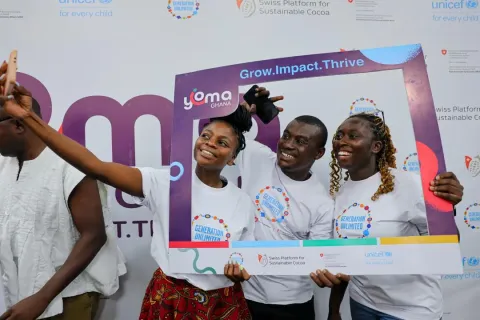
The UNICEF Ghana Advocacy and Communication section engaged Gen Z by officially launching our presence on TikTok. To mark this expansion, we partnered with multi-award-winning artist Kuami Eugene to release "Let Them Shine," a new anthem for child rights.
Why this matters: We didn't just launch a song; we launched a conversation. By inviting TikTok creators, bloggers and influencers to the launch event, we broke out of the traditional "UN-NGO bubble" and moved the conversation from conference rooms to social feeds.
Influencers translated the message of child rights into content that resonated with their peers, creating genuine curiosity about the UNICEF mandate. We successfully engaged a younger audience that rarely interacts with traditional reports and content, sparking awareness among the very demographic we aim to serve and breaking the business-as-usualmotto.

5. Policy in Action: The Adolescent Girls Declaration
Amidst the music and media, the focus remained tight on policy. A cornerstone of the events was the presentation of the Adolescent Girls Summit Declaration to the Minister for Gender, Children and Social Protection, Hon Dr. Agnes Naa Momo Lartey.
Drafted by the adolescents themselves, this document outlines the urgent needs of girls in Ghana and the region. The Minister’s formal receipt of the declaration on behalf of the Government of Ghana acts as a pledge: a promise that the government will review these recommendations and integrate them into national programmes.

6. A Nation Aligned: Monuments and Media
The Visuals: The message of child rights echoed online and offline. As night fell, the iconic Black Star Square and UNICEF House were lit in Blue, a powerful visual reminder that Ghana, the first country to ratify the Convention on the Rights of the Child (CRC), stands firm in its obligations.
The Legislature: Parliament joined the chorus, with Hon. Rev. Helen Ntoso, Chairperson of the Gender Committee, issuing a statement of solidarity from the floor of the House and ensuring child rights remained central to the legislative agenda.
The Airwaves: Through Op-Eds on nutrition and televised interviews on child deprivation, we ensured traditional media were engaged, and child rights remained at the heart of every conversation.
From the detailed spreadsheets of the Ministry of Finance to the dance challenges on TikTok, World Children’s Day 2025 proved that everyone has a role to play.
As we move forward, the upcoming Presidential Annual National Children’s Dialogue and our new digital strategy ensure that we are listening to children every day, not just on November 20th.
The message is clear: The future is not just something we build for children; it is something we must build with them.