There is a kind of health work that does not always make noise.
It does not always happen in big conference rooms or in front of cameras. Sometimes, it happens in a small counselling corner at a health facility. Sometimes, it happens during a home visit that must be planned carefully because confidentiality matters. Sometimes, it happens when a nurse checks a register and asks, “Has this baby completed the test?” Sometimes, it happens when a community supporter picks up the phone to remind a mother not to miss her appointment.
This is the quiet work of preventing HIV transmission from mother to child.
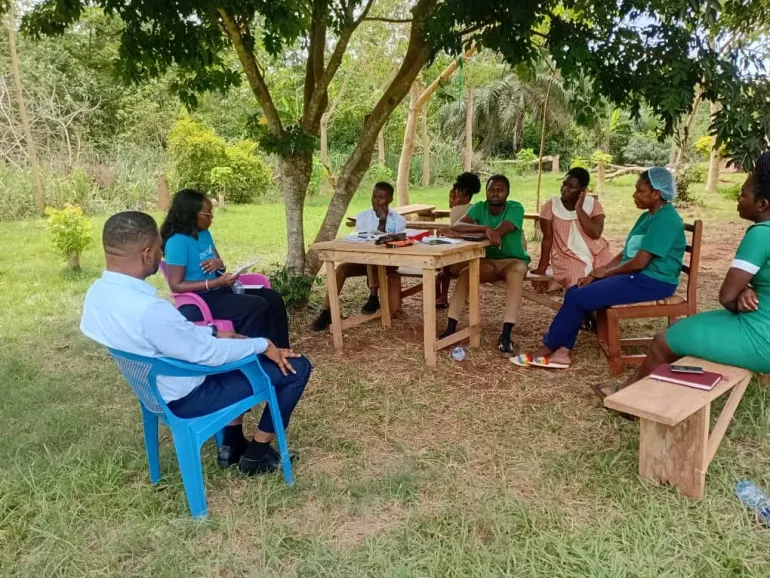
During a recent programmatic monitoring visit in the Ahafo Region, I had the opportunity to listen to health workers, community health nurses, district teams and community supporters reflect on UNICEF-supported activities to strengthen the Elimination of Mother-to-Child Transmission of HIV and Early Infant Diagnosis.
The work is deeply technical, yes. There are testing algorithms, dried blood spot samples, registers, reporting forms, viral load monitoring, early infant diagnosis schedules and referral pathways. But underneath all the technical language is something very human: a mother trying to protect her baby, a health worker trying to provide the right care, and a system trying to make sure no one falls through the cracks.
What stood out most was how much of this work depends on trust.
A pregnant woman who tests positive for HIV needs more than a test result. She needs counselling that is kind, clear and non-judgmental. She needs to understand that treatment can protect her health and reduce the risk of transmission to her baby. She may need support to bring her partner in for testing, or she may need time and safety to make that decision. She needs health workers who understand confidentiality not as a slogan, but as a lifeline.
The trainings supported in the region appear to be helping. Health workers spoke about improved confidence in counselling, testing, documentation and follow-up. Some facilities shared that they are now paying closer attention to HIV-exposed infants and whether they have completed the required tests. Community supporters described how they help trace mothers, remind them about appointments, support adherence and link families back to care.
That last mile matters.
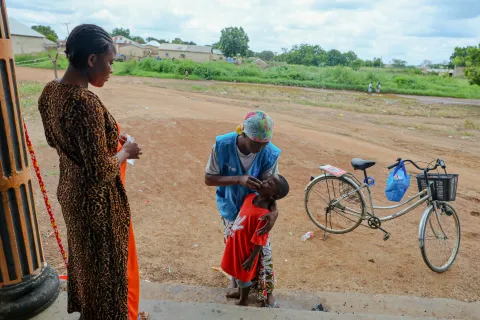
It is one thing for a service to exist at a facility. It is another thing for a mother to reach it, understand it, trust it, return to it, and continue through the full pathway of care until her baby’s final outcome is known. This is where community supporters, community health nurses and district teams become essential. They are the bridge between the health system and the household.
But the visit also reminded me that good intentions need strong systems behind them.
EID result delays remain a real challenge. When testing commodities are not available or samples must be sent outside the region, results take longer. This affects follow-up, reporting and the ability of health workers to close the loop for mothers and babies. Staff movement also affects continuity; when trained staff are transferred or moved to other units, the knowledge must not leave with them. Facilities need simple systems for sharing learning internally so that capacity is institutional, not individual.
Privacy is another quiet but important issue. In some facilities, several services are delivered in the same space. For HIV-related services, space is not only about comfort. It is about dignity, confidentiality and trust.
Still, there is a lot to build on.
The region has committed teams. Districts are monitoring activities. Community cadres are submitting reports. Health workers are applying what they learned. Mothers are being followed up. Babies are being tracked. The work is not perfect, but it is moving.
And that matters.
Preventing mother-to-child transmission of HIV is not one action. It is a chain of actions that must hold together: testing, counselling, treatment, delivery care, infant prophylaxis, early infant diagnosis, follow-up, documentationand support. If one link breaks, a mother or baby can be lost in the system.
UNICEF’s support to Ahafo Region is helping strengthen those links. The next step is to keep tightening the system: faster EID results, stronger follow-up, better tracking, continued mentorship, and sustained support for the community actors who help carry this work into homes and communities.
Because sometimes the most powerful work in public health is quiet.
It is the reminder call.
The carefully completed register.
The discreet home visit.
The nurse who listens without judgement.
The baby whose test is followed up.
The mother who stays in care.
And in that quiet work, futures are protected.