Putting children at the heart of climate action and supporting Africa’s development
Second regular session of 2024
NEW YORK, United States of America, 9 September 2024 ─ The UNICEF Executive Board wrapped up its second regular session for 2024 last Thursday. Meetings during the session highlighted the UNICEF contribution to Africa’s development agenda; the centrality of early childhood development to a child’s proper growth and well-being; the disproportionate impact of climate change on children and UNICEF’s efforts to address the issue; and first-hand learnings from the Board’s recent field visit to Madagascar, among other topics.
Advancing Africa’s development by investing in the continent’s greatest asset
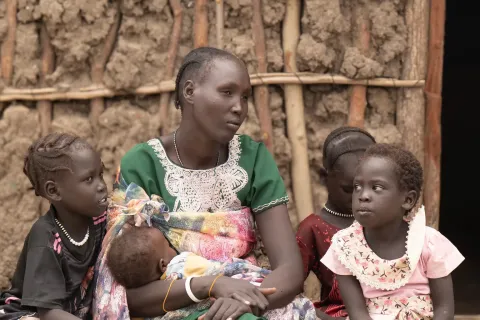
The continued growth of Africa’s child population presents a timely opportunity for UNICEF and its partners to do things differently and accelerate progress for every child – on the African continent and beyond.
“Providing a better future for children and youth in Africa is a key priority for UNICEF. Given the continent’s size and complexity – and the presence of 689 million children, a number that is projected to increase to 754 million by 2030 and 930 million by 2050 – a stronger partnership for Africa’s child-related targets in its development agendas is imperative to create further opportunities for children and young people,” said UNICEF Executive Board President, H.E. Mr. Ernest Rwamucyo, Permanent Representative of Rwanda to the United Nations, as he opened the session.
Echoing his remarks, Executive Director Ms. Catherine Russell, said “by the year 2100, there will be more children in Africa than anywhere else in the world”. She added, “the African Union has set bold goals for its children and young people in its development plans” and that UNICEF “aims to work with African Governments to seize the opportunity of demographic change across the continent”. “We must match these plans with action, investment and partnership” she said.
Over 1 billion children – nearly half of the world’s children – live in countries that are at extremely high risk of the impacts of climate change. Many of them are in Africa, where 39 out of 49 countries for which the UNICEF Children’s Climate Risk Index data are available, fall under 'extremely high' or 'high' risk categories.
Climate change is undermining, and even reversing, development. This is why UNICEF is calling for pressing investments in resilience and climate action, as well as human capital, to achieve and accelerate progress for all children on the African continent.
“Ensuring children’s rights to survive and thrive…intersects with many critical twenty-first century challenges that are prominent for the continent, including the impacts of climate change, conflict, rapid urbanization, heavy debt servicing burdens and barriers to international finance and technology”, said Mr. Omar Abdi, Deputy Executive Director for Programmes, as he introduced the strategy document on the UNICEF contribution to Africa’s development agendas.
Faced with both recurring shocks and dynamic opportunities, Africa presents a mixed picture of gains and persistent deprivations. For example, since 2000, child mortality has fallen by 53 per cent. However, the prevalence of child marriage has failed to improve across the continent, while more than 30 million young people are not in education, training or employment.
Not only does the UNICEF strategy re-examine the next generation of partnerships needed to drive action for scalable and sustainable impact for children across Africa, but it also highlights the areas where the African Union and its member States have requested greater support to accelerate results – e.g. education; employable skills for young people; community health and nutrition; access to safely managed water and sanitation; and protection against violence, exploitation, abuse and neglect.
Several delegations commended the three areas of action outlined in the strategy: the development of human capital; resilience, humanitarian action and climate action; and intensified implementation of the African Charter on the Rights and Welfare of the Child, as well as its comprehensive approach to partnerships. Some delegations called for additional commitments – financial and human – to achieve the strategy’s impact areas.

Special focus session: Children and climate change
Putting children at the heart of climate action means not only including their needs and voices, but also investing in the climate resilience of basic essential services on which children depend to survive and thrive – e.g. food and nutrition systems, schools and hospitals, health services, water, sanitation and hygiene infrastructure, and child protection. Aligned with its Sustainability and Climate Change Action Plan, 2023–2030, UNICEF is implementing initiatives to respond to the planetary crisis of climate change, environmental pollution and biodiversity loss.
The Executive Board’s first-ever special focus session on climate change and children last Thursday brought together government ministers and youth advocates to present and exchange on this issue, which is not just changing the planet; it is changing children. Yet children’s specific needs are almost always absent in climate policy, action and investment. Speakers made the case for putting children at the heart of climate action.
With a unique but fragile biodiversity coupled with rapid environmental degradation, Madagascar has been identified by UNICEF as one of the top 10 countries where children are most vulnerable to the effects of climate change. H.E. Mr. Max Fontaine, Minister of Environment and Sustainable Development of Madagascar – and former UNICEF youth climate advocate – shared his country’s experience of the changing climate, which over the past few years has brought frequent devastating cyclones to its shores.
“For us, climate change is not a threat. It is not something that we are talking about as if it was coming, something dangerous. We already live it in our daily lives and we live it every year,” said Mr. Fontaine.
He shared some of the efforts Madagascar is making to fight climate change, including an International Monetary Fund-supported sustainability and resilience fund that provides financial support based on the country’s environmental reforms; carbon credits reform; ensuring that children and youth have a strong place in the third nationally determined contribution; and the launch, with UNICEF, of the Today and Tomorrow Initiative, the first integrated climate and disaster risk finance mechanism.
“In the Dominican Republic, we recognize that children are not only the most vulnerable to the impacts of climate change, but they are also the most powerful agents of change”, said H.E. Mr. Carlos A. Batista, the country’s Vice Minister of Environment and Natural Resources.
Mr. Batista also shared examples of initiatives that his government has undertaken – with support from international and local organizations - to place children at the centre of its climate action agenda. Among others, these include giving priority to climate education in schools; creation of a platform to help children participate in climate activities; the establishment of a programme for young negotiators for climate; and the creation of youth climate ambassadors.
Mr. Francisco Vera, UNICEF Youth Advocate for Latin America and Ms. Adia Daniel, Climate Activist representing the Caribbean, both made passionate remarks about the critical importance of children being at the forefront of the dialogues and initiatives surrounding climate change and the need for them to be included, supported and empowered.
Adia spoke of the vulnerability of children in the small island developing States such as her own country, St. Vincent and the Grenadines. She called for investments in climate crisis recovery strategies that support the mental health of children who have experienced climate crises – such as the UNICEF-supported Young Caribbean Minds resources and the UNICEF Return to Happiness programme.
Francisco spoke of finance as being the necessary condition for climate action, and expressed dismay about the very low percentage of climate finance from key multilateral climate funds that support projects incorporating child-responsive activities. He reminded the audience that children need to be included in all climate-related discussions not just because they are at the frontlines of the climate crisis, but because they have the right to participate in matters that affect them.
Delegations expressed their appreciation to UNICEF for organizing the special focus session, commended the organization on its Sustainability and Climate Change Action Plan and ongoing efforts to address the climate crisis, and shared their own commitments to address the urgent challenges of climate change, particularly as it impacts children.
Early childhood development and new country programmes
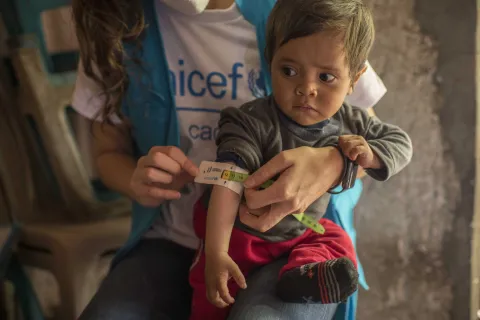
The effects of climate change are particularly harmful to young children. To their health, to their development and to their school readiness. Yet, protecting and nurturing children in the early years is the first step to enable them to thrive.
Early childhood development and the urgency of investing in the early years took centre stage last Wednesday during a thematic discussion accompanying the five new country programme documents for the Democratic Republic of the Congo, Djibouti, Namibia, Sierra Leone and Ukraine that were presented to the Board for no-objection adoption.
Ms. Erinna Dia, Associate Director, Early Childhood Development, highlighted the importance of the early years of life for healthy brain development. Not only is early childhood development a fundamental right of every child, it also has a profound impact on children’s growth at all levels – physical, cognitive, emotional and social.

Importantly, investments in the early years have the potential to offer brighter futures to our youngest children – and to whole societies. With a return of $13 for every $1 Governments spend, they are one of the most cost-effective ways to achieve sustainable growth and shared prosperity. Failing to give children the best start in life perpetuates cycles of poverty and disadvantage that can span generations, undermining the strength and stability of societies.
Delegations welcomed the discussions on the importance of the early years and the alignment of the new country programmes with national priorities. On the inclusion of components in the programmes to address the climate crisis, delegations comments ranged from mention of the erratic weather patterns and recurrent drought that affect the ability to produce sufficient food and lead to cases of malnutrition in Namibia; to the acknowledgement by Sierra Leone of the commitment by UNICEF to mainstreaming child-responsive climate adaption across sectors and programmes as being a critical and timely priority.
Field visit to Madagascar
At the convergence of climate change and Africa, Madagascar was the destination of the Board’s field visit in early July. (See the report and video).
Climate change programming has emerged as a key strategic shift in the work of UNICEF in the country – due to looming climate uncertainty coupled with the country’s under-preparation. This is reflected in the new country programme for Madagascar, 2024–2028 that the Board endorsed earlier this year.
While meeting and engaging with Government, civil society, youth and UN partners in Antananarivo and two regions in the south-eastern part of the country during the field visit, the delegation had the opportunity to witness first-hand the impact of a changing climate – including widespread devastation due to the tropical cyclones in 2022 and 2023 that killed, displaced and/or impacted hundreds of thousands of people and damaged or destroyed homes and communities. The delegation also discussed the strong partnerships between UNICEF and local authorities and partners engaged in recovery.
“We commend UNICEF for swiftly adapting its programme to mitigate the impact of climate-related challenges and disaster into all of its work and across all its sectors, and to respond better to the specific needs of children in climate-affected areas and communities”, said Executive Board Vice-President H.E. Mr. Jonibek Ismoil Hikmat, Permanent Representative of Tajikistan to the United Nations, who presented the report of the visit on behalf of the delegation.
Key decisions
By the end of the session, the Board had adopted seven decisions: on the new country programmes; the extensions of ongoing programmes; the UNICEF contribution to Africa’s development agendas; the structured dialogue on financing the results of the UNICEF Strategic Plan, 2022–2025; the update on the implementation of decision 2024/15: assessment of how the Executive Board executes its governance and oversight functions; the UNICEF Strategic Plan: updated financial estimates, 2024–2027; and the comprehensive review of the joint cost-recovery policy and its implementation.
In her closing remarks, Executive Director Russell thanked the Board for putting the issue of the climate crisis and children at the forefront of the discussions. Referring to the child advocates who addressed the Board during the special focus session, she said “they are an important reminder of what is at stake, why we are all doing the work that we are trying to do, [and of] the critical role that young people can play in the future.”
Ambassador Rwamucyo concluded the session, stating “we learned about the unique vulnerabilities that children face as a result of the impact of climate change and the importance of putting children at the forefront and the centre as we work on the pathways towards solutions to address this crisis.”
“The voices of the young people in this room were quite eloquent, loud, clear, calling us all to pay attention, to listen but to take really decisive action and to involve children along the way.”
****
The Executive Board will meet for its first regular session of 2025 from 4 to 7 February.