Treating Zero-dose and Malnourished Children
Children in drought prone communities receive lifesaving health and nutrition support

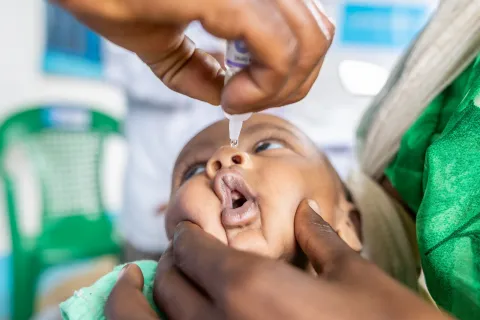
It’s a warm, sunny morning at Arda Kelo health post in Rayitu, a small town in eastern Oromia that has endured dry spells causing drought triggered by worsening climate change. Food insecurity is a major challenge in the lowlands of Oromia, with 6.6 million people,[1] including children, in need of humanitarian support. The health centre is filled with playful infants and their mothers as they have gathered to wait in line for child vaccinations and nutrition services.
Most mothers experience long walks to the health centre, some as far as 10 kilometres in unfavourable weather conditions. This journey can sometimes be daunting for mothers, but Asmah Shemamut knows the importance of vaccinations for her two-year-old baby Imraan.
“I walk over an hour to the health centre with my child. I was encouraged by the community health volunteer not to miss monthly vaccinations for my children. I know that when Imraan receives his vital vaccines, it will protect him from diseases and help him to grow up healthy,” says the mother of six.
Mothers and children under five-years-old are receiving medical consultation services which include routine immunization (BCG, polio, Penta, PCV, IPV, Rota, and MCV vaccines) as part of the UK government funded Ethiopia Crises to Resilience Programme (EC2R), implemented by UNICEF, the World Food Programme (WFP), the Ethiopian Red Cross (ERCS), the British Red Cross (BRC) and REACH.
“About 50 per cent of measles cases in Ethiopia are in Oromia, and 1.78 million children are under-vaccinated,” explains Tesfaye Ayalew, UNICEF Health Specialist. “This is why we are emphasizing community mobilization with community health volunteers to conduct mass door-to-door sensitization in their areas to identify zero-dose children and encourage mothers to vaccinate them at the health centre.”
[1] OCHA situation report October

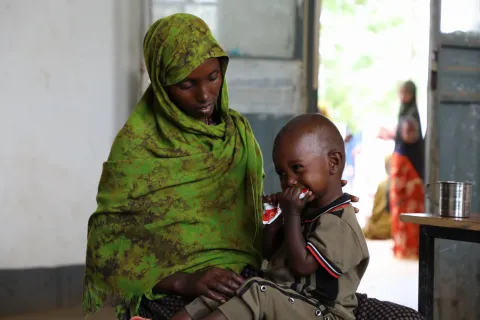
These vaccination services are even more critical in drought-prone areas like Rayitu, where children can be prone to malnutrition. Another mother, Mariam Ibro, whose family has been hit hard by the drought, joined dozens of mothers at the health post to get her son vaccinated and receive Super Cereal Plus (SCP) since he is malnourished. The SCP is a porridge that helps with the treatment of malnutrition.
“We are pastoralists and lost most of our livestock due to the drought,” says Mariam. “My husband is now collecting and selling firewood to make money for the family, but it is not enough.”
In Ethiopia, 85 per cent of the population is dependent on rain-fed subsistence agriculture and livestock farming, resulting in an increased number of children with acute malnutrition.
Through the EC2R programme, WFP working alongside UNICEF is also supporting the treatment of acute malnutrition in children and pregnant and breastfeeding women.

Though her son is recovering well thanks to the SCP, Mariam’s family depend daily on corn bread and milk . Often children in the pastoralist community lack other nutritious foods which ensure a healthy growth and help prevent malnutrition.
Mariam remains optimistic about her son’s future. “I want to see my child grow healthy, educated and succeed in life,” she says.