One egg a day, a brighter future
In Ethiopia, a nutritious school meal is changing how children learn and grow
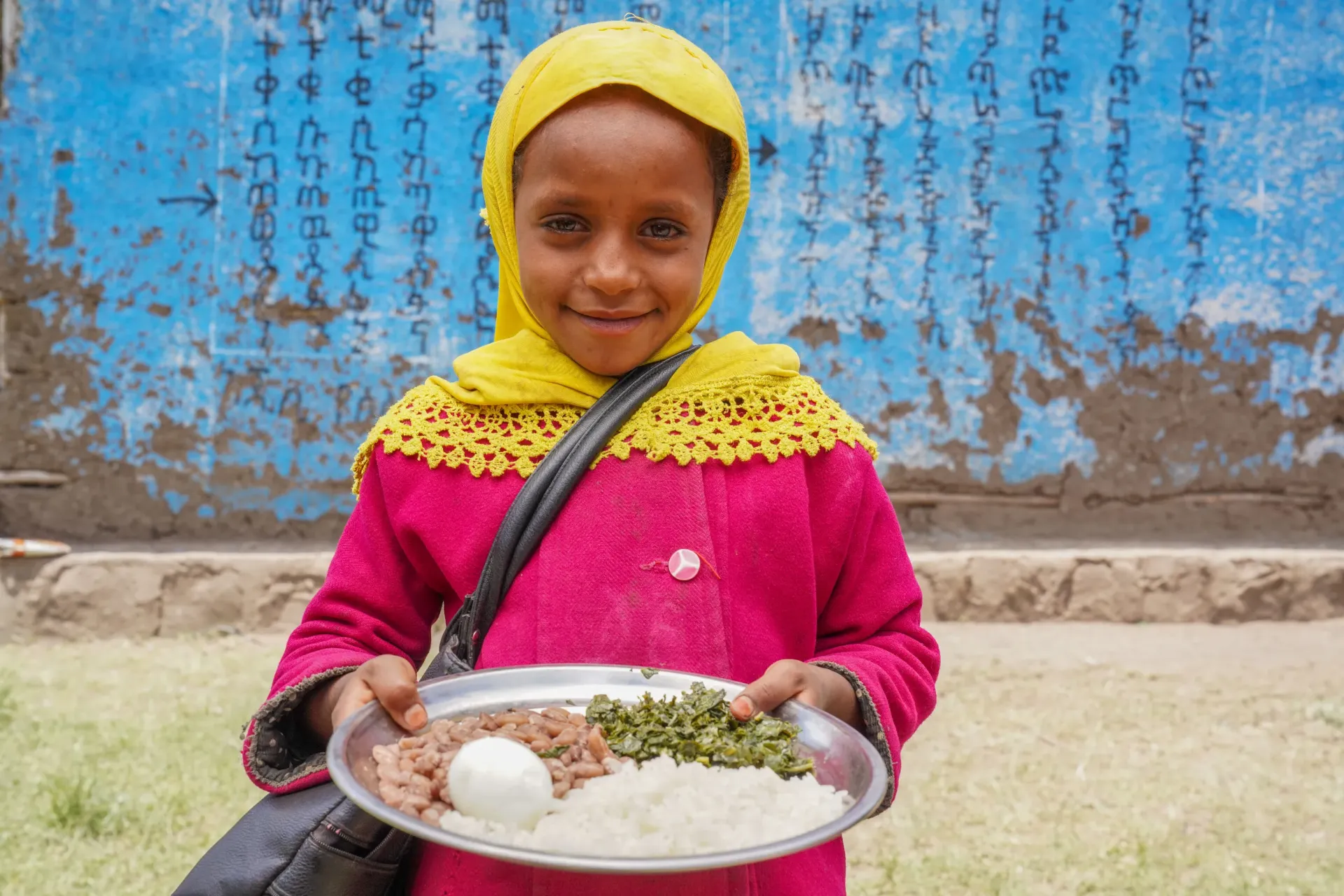
Good nutrition shapes how children develop, both physically and mentally. But for many children from low-income families, access to nutritious food remains limited. Without it, their health and school performance can suffer early on.
UNICEF is supporting locally led solutions to change this. In the Central Ethiopia Region, the Feeding the Future programme is helping children stay healthy, learn better, and build stronger futures.
Here’s how…
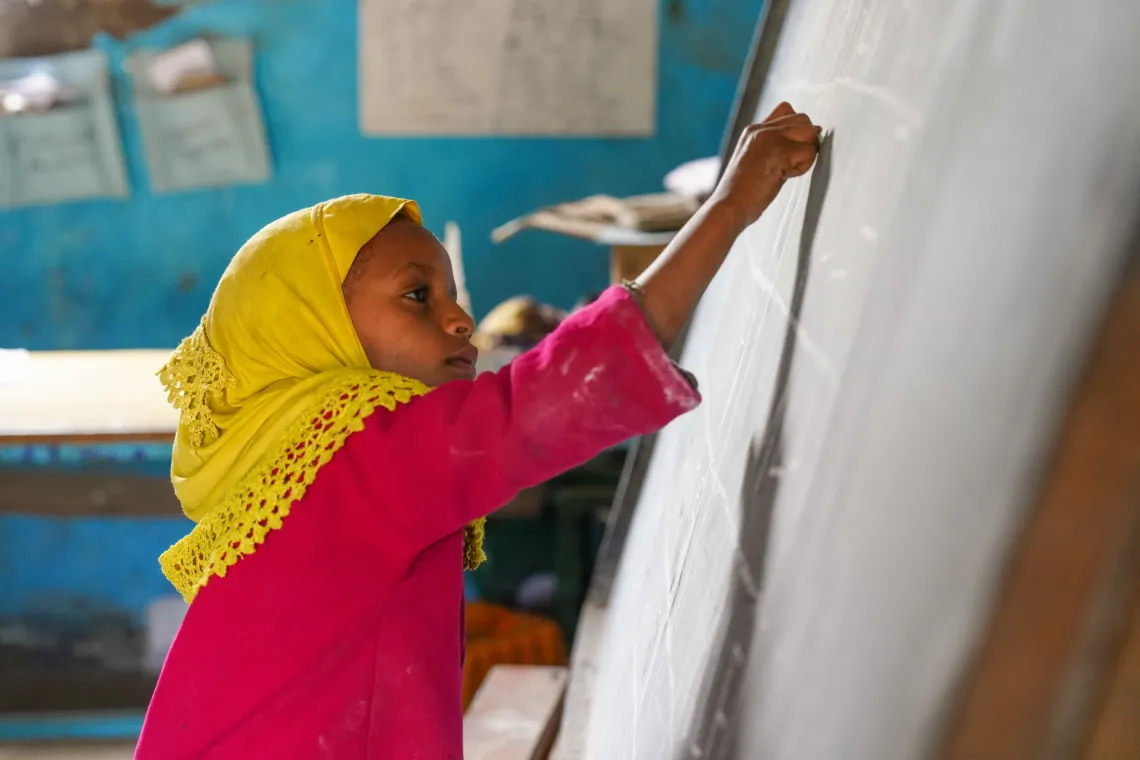
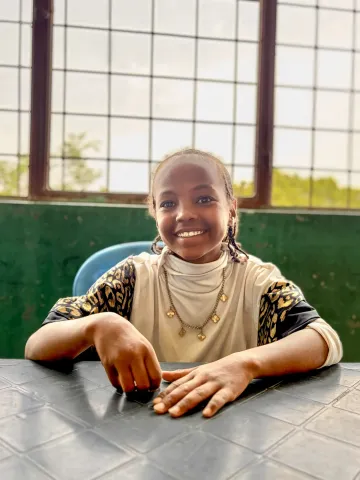
Six-year-old Nasim Jemal is thriving at Wente Sositro Primary School in the Central Ethiopia Region. She can read and write the alphabet and is quickly building her skills in basic arithmetic. In class, she confidently steps up to the blackboard to demonstrate what she has learned.
Learning continues beyond lessons, with songs and games that keep the children engaged. Their teacher, Mohammed, encourages every child to participate.
“I like coming to school because we learn and play together,” says Nasim. The classroom is vibrant and full of life.
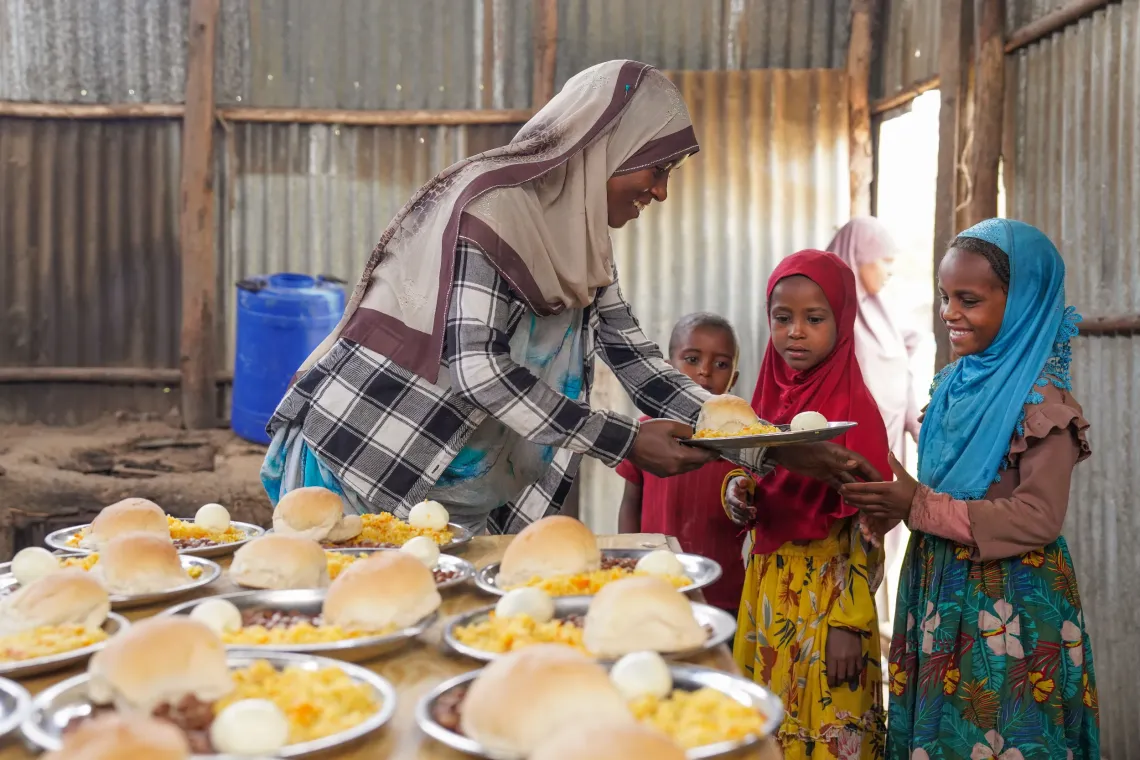
After break, excitement builds as mealtime begins. Children are served rice with vegetables, boiled eggs, and haricot beans, a nutritious meal that supports healthy growth and learning.

This was not always the case. School feeding programmes in the past were inconsistent and often lacked the nutrients children needed. Eggs were not part of the meals, and the impact on students’ health and wellbeing was limited.

Learning from past experience and partnering with communities, UNICEF introduced the Feeding the Future programme in the Central, Sidama, and South Ethiopia regions. Its goal is to improve children’s nutrition by increasing access to healthy meals both at school and at home.
Schools establish poultry farms on allocated land, while local youth are employed to manage daily operations, linking nutrition support with livelihood opportunities.

The eggs are used in school meals, and any surplus is sold through egg hubs at district level, creating income that helps sustain the programme. District authorities oversee implementation, while agriculture offices support farmers with training on poultry care, feed, and animal health.

The poultry farm at Wente Sositro Primary School is already showing results. Every day, more than 1,600 eggs are harvested, a promising sign of the programme’s success.
“For children to perform well, they need proper nutrition,” says school director Kamil Geleto. “Since we started including eggs in school meals, attendance has increased, and students are more focused. We want other schools to learn from this example.”


“The results so far are very promising,” says Israel Alemayehu, UNICEF Nutrition Officer. “Schools with poultry farms are producing more eggs and strengthening their feeding programmes. Others are also diversifying meals by growing crops such as haricot beans. Community ownership is driving this success.”
The focus now is on expanding the model, using lessons from Wente Sositro Primary School to scale up poultry farming and strengthen egg hubs in other areas.

Nasim is happier, healthier, and learning with confidence. Her story shows how a small daily change can make a big difference. Sometimes, it starts with just one egg a day.