Rebuilding schools, restoring learning
Children in conflict-affected areas of Ethiopia are returning to safe learning environments as UNICEF continues to restore education
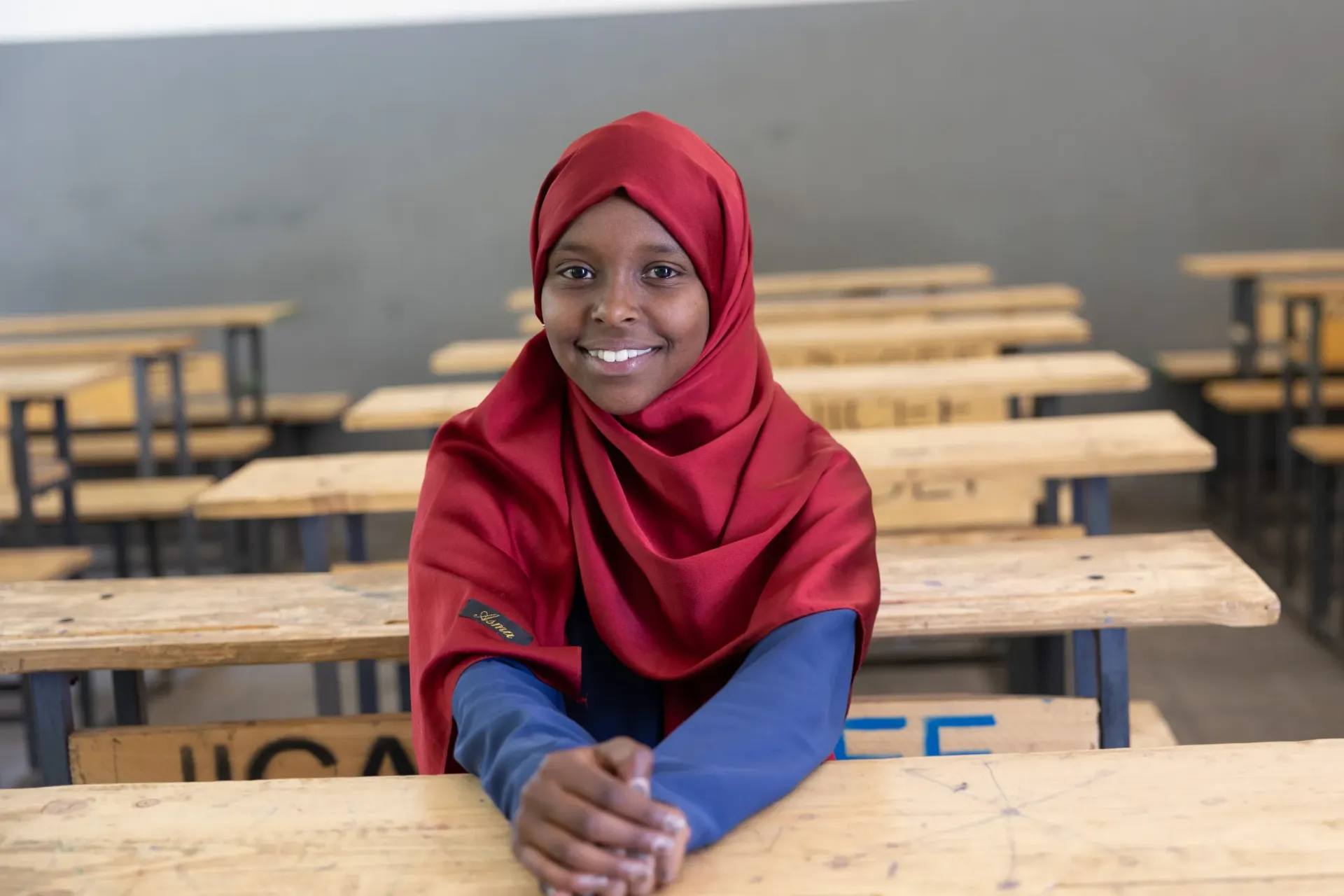
Children deserve the best. In the conflict-affected Amhara region, UNICEF, with support from the Japan International Cooperation Agency (JICA), is rehabilitating schools to help children return to safe learning environments. New classroom blocks, boys' and girls' latrines, and girls' safe spaces are giving children the opportunity to learn, grow and thrive.
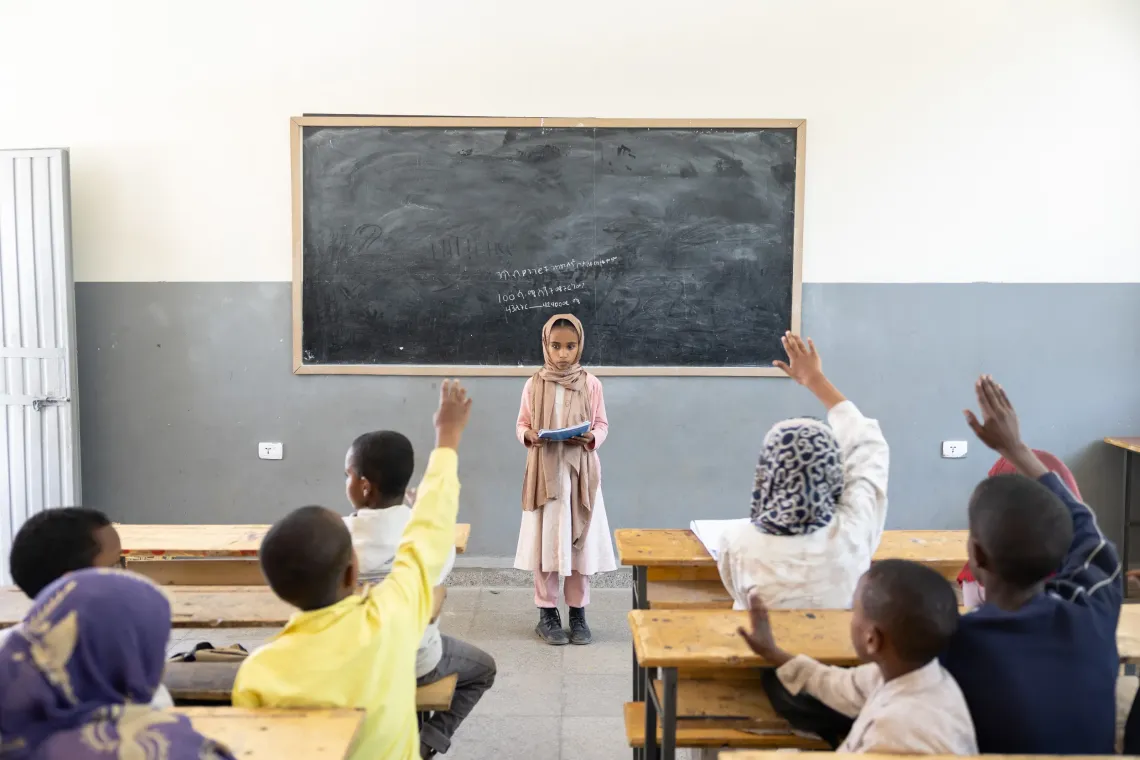
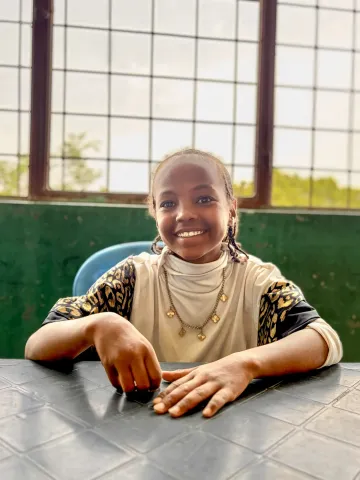
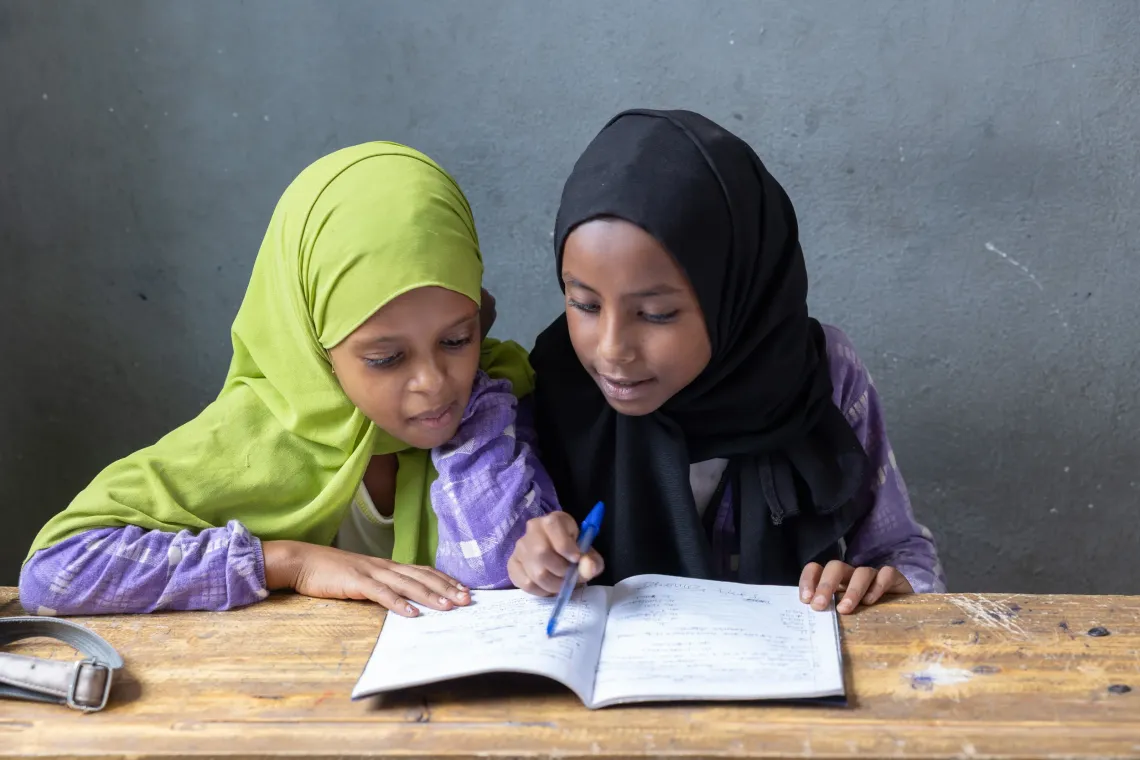
Sitting in her newly rehabilitated classroom at Bistima Primary School, 12-year-old Hania Oumer appreciates the difference it has made to her learning. “It is comfortable to learn in this classroom. It is neat and bright,” she says.
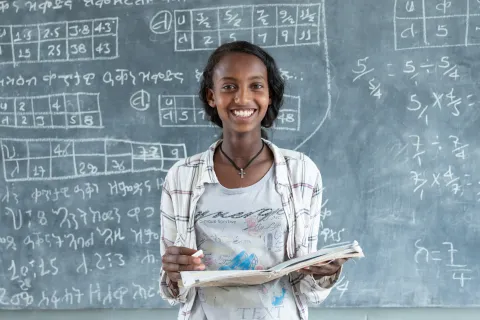
As the academic year draws to a close, Hania stands before her classmates leading a mathematics revision session, confidently guiding them through model exam questions.
“I love mathematics because of my elder sister. She helps me at home, and I am good at it,” says Hania.
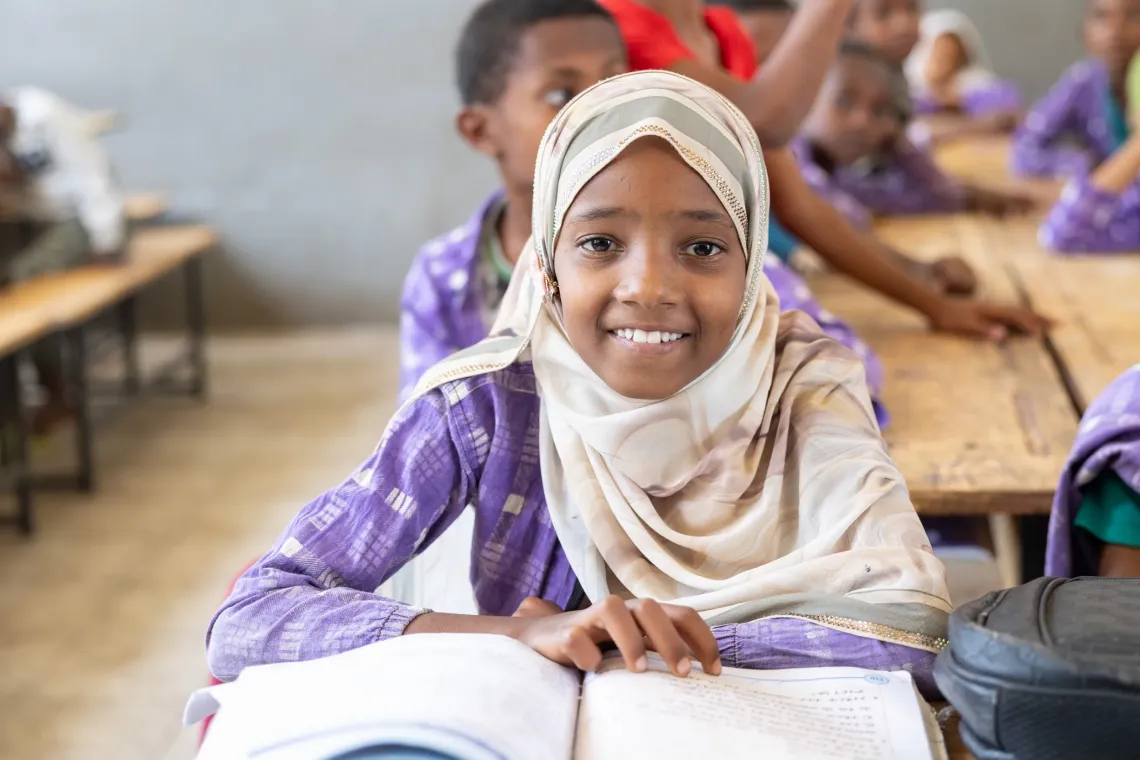
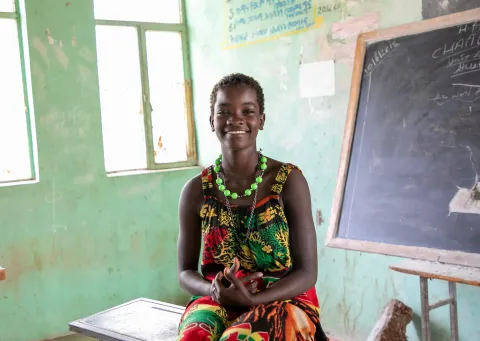
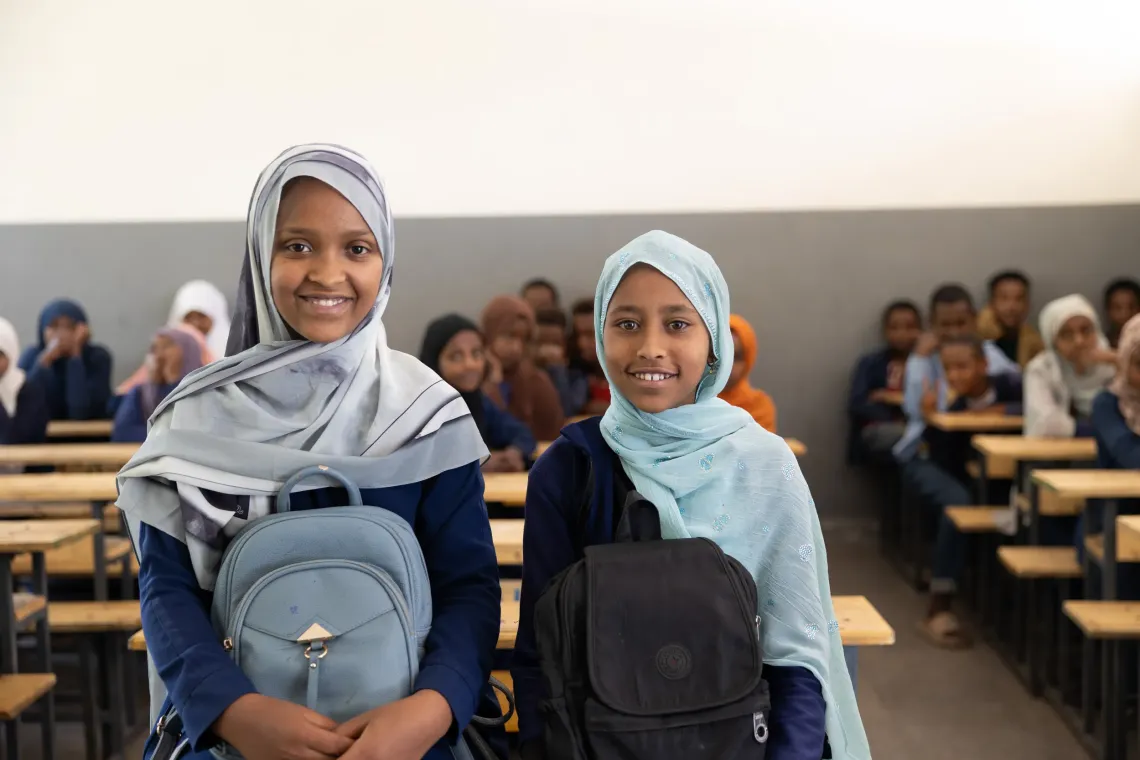
Like Hania, Hayat Endirs is thriving in a newly rehabilitated school environment. Studying at Harbu Primary School, many kilometres away from Bistima, she says her new classroom has transformed the way she experiences school.
“The new classrooms help us learn better,” says Hayat. She remembers studying in overcrowded mud-built classrooms, a stark contrast to the bright and comfortable spaces where she and her classmates learn today.
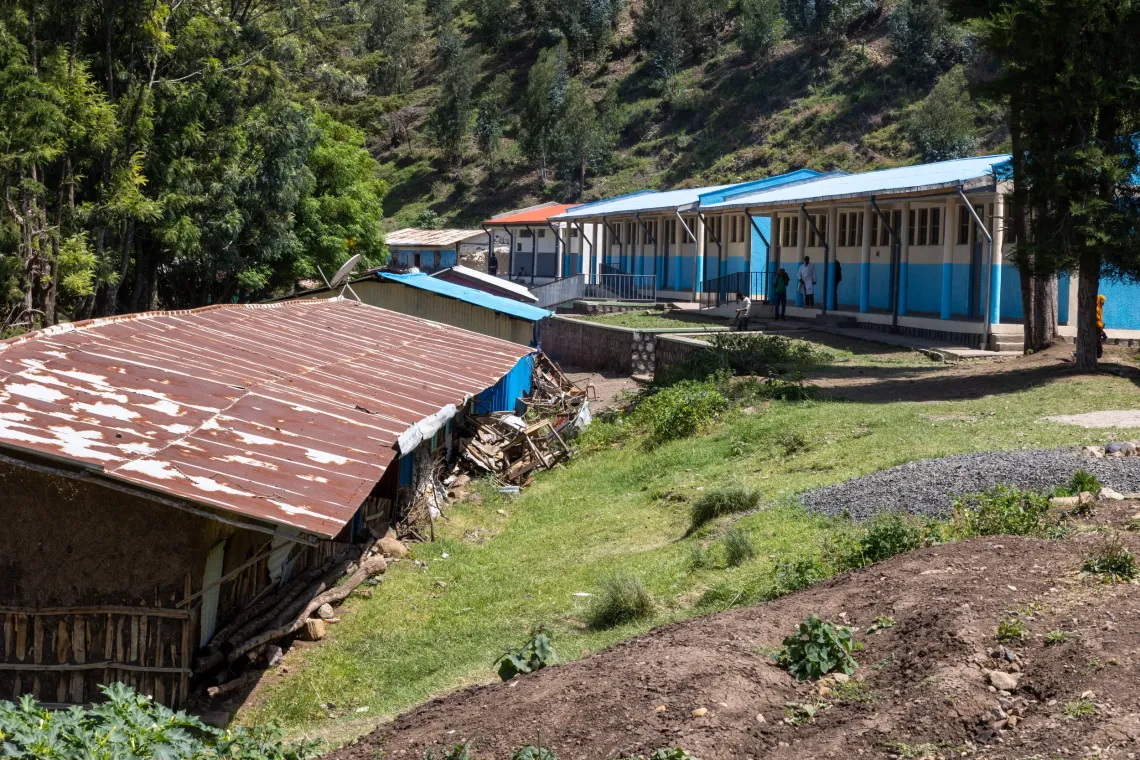
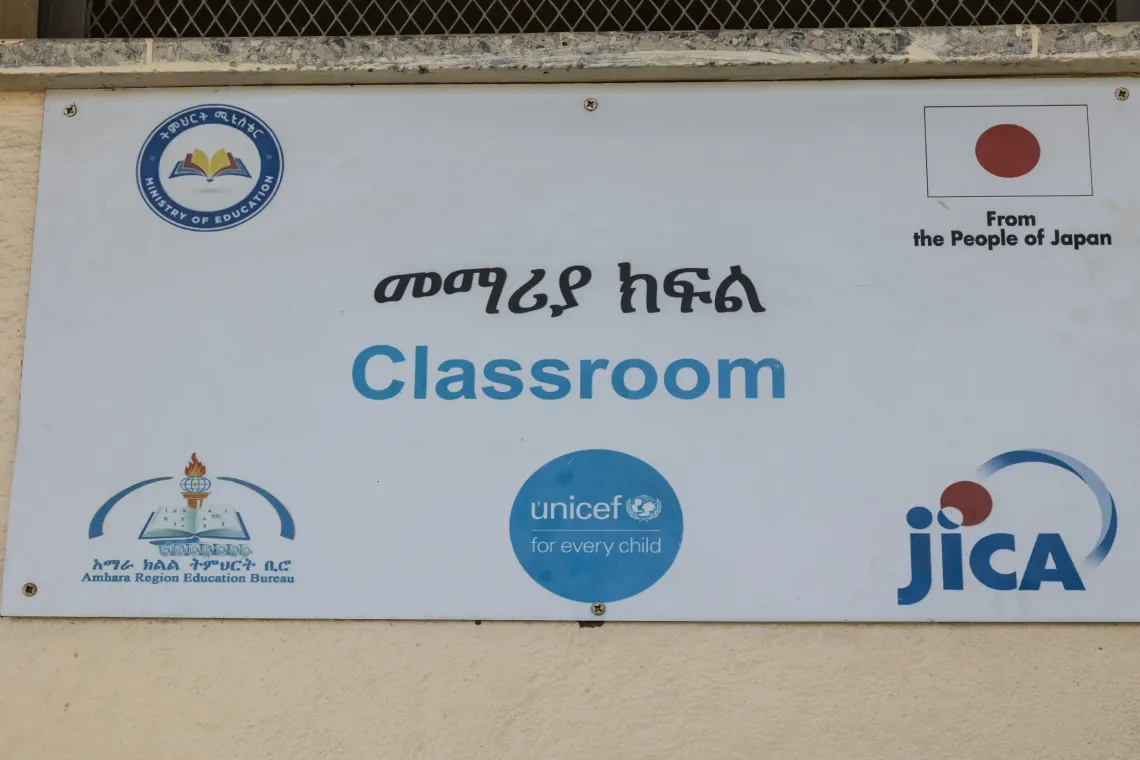
The conflict in northern Ethiopia left many schools across the Amhara region damaged or occupied as shelters for displaced families, interrupting children's education. With support from the Japan International Cooperation Agency (JICA) and matching funding from the Global Partnership for Education, UNICEF has been rehabilitating schools, restoring classrooms and providing desks so children can safely return to learning.
To date, 13 schools across the region have been rehabilitated. New classroom blocks, boys' and girls' latrines, girls' safe spaces and other essential facilities are helping create safer, more inclusive environments where children can learn and thrive.
The rehabilitation effort has been driven not only by partners but also by local communities. Across the region, community members have contributed labour, participated in school planning and helped ensure that children can attend school. In Bistima, they even raised funds and provided in-kind support to complete additional work, including fencing the school compound.
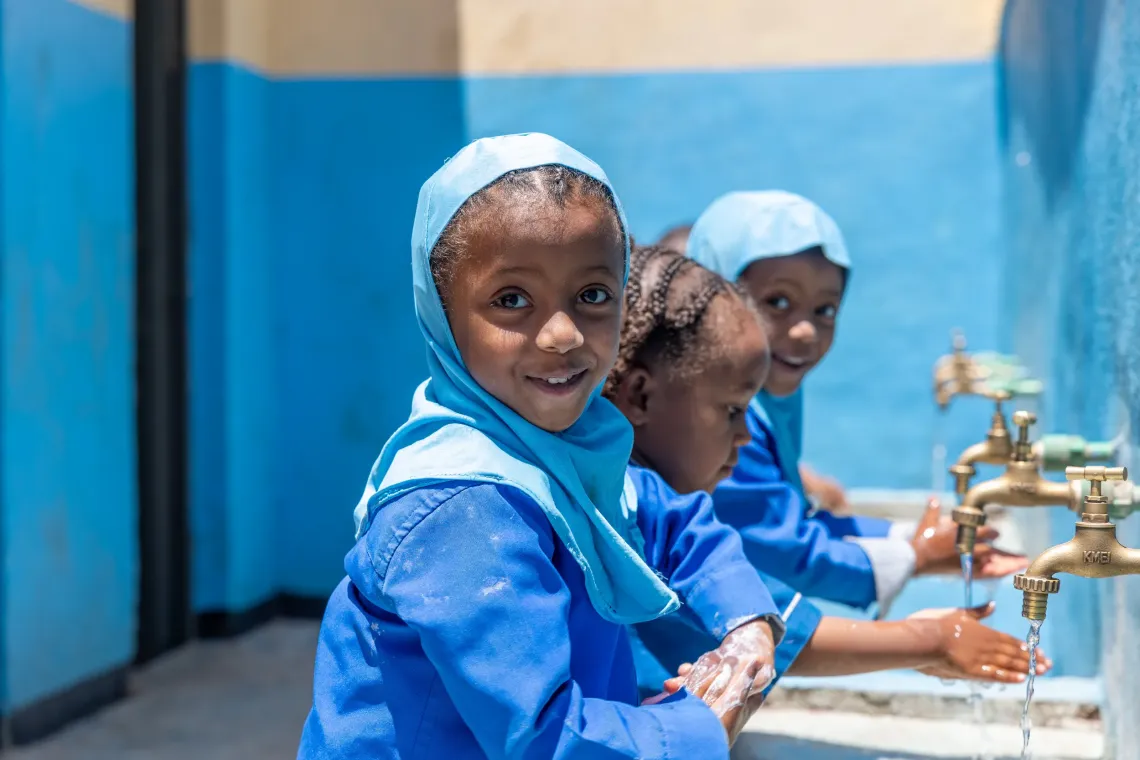
The benefits of the new facilities extend beyond the classroom, helping to protect children's health and well-being.
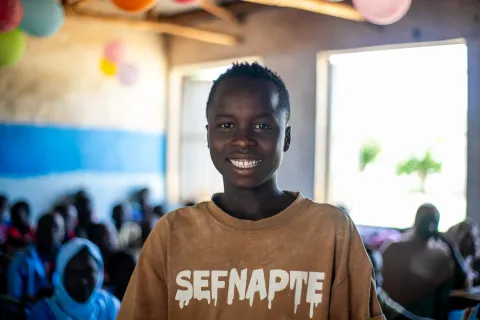
Six-year-old Selian Omer is among the children benefiting from clean, child-friendly latrines designed specifically for pre-primary learners. Equipped with running water, the facilities help children develop good hygiene habits from an early age and reduce their risk of disease.
In communities recovering from conflict, restoring education is as vital as any lifesaving emergency response. Rebuilding classrooms, latrines and hygiene facilities helps create safe spaces where children can learn, recover and thrive.
Education is more than a pathway to the future. For children affected by conflict, it restores a sense of normalcy, hope and stability, helping them rebuild their lives one lesson at a time.