Meskerem and Bethlehem
Sewing their way to regular attendance
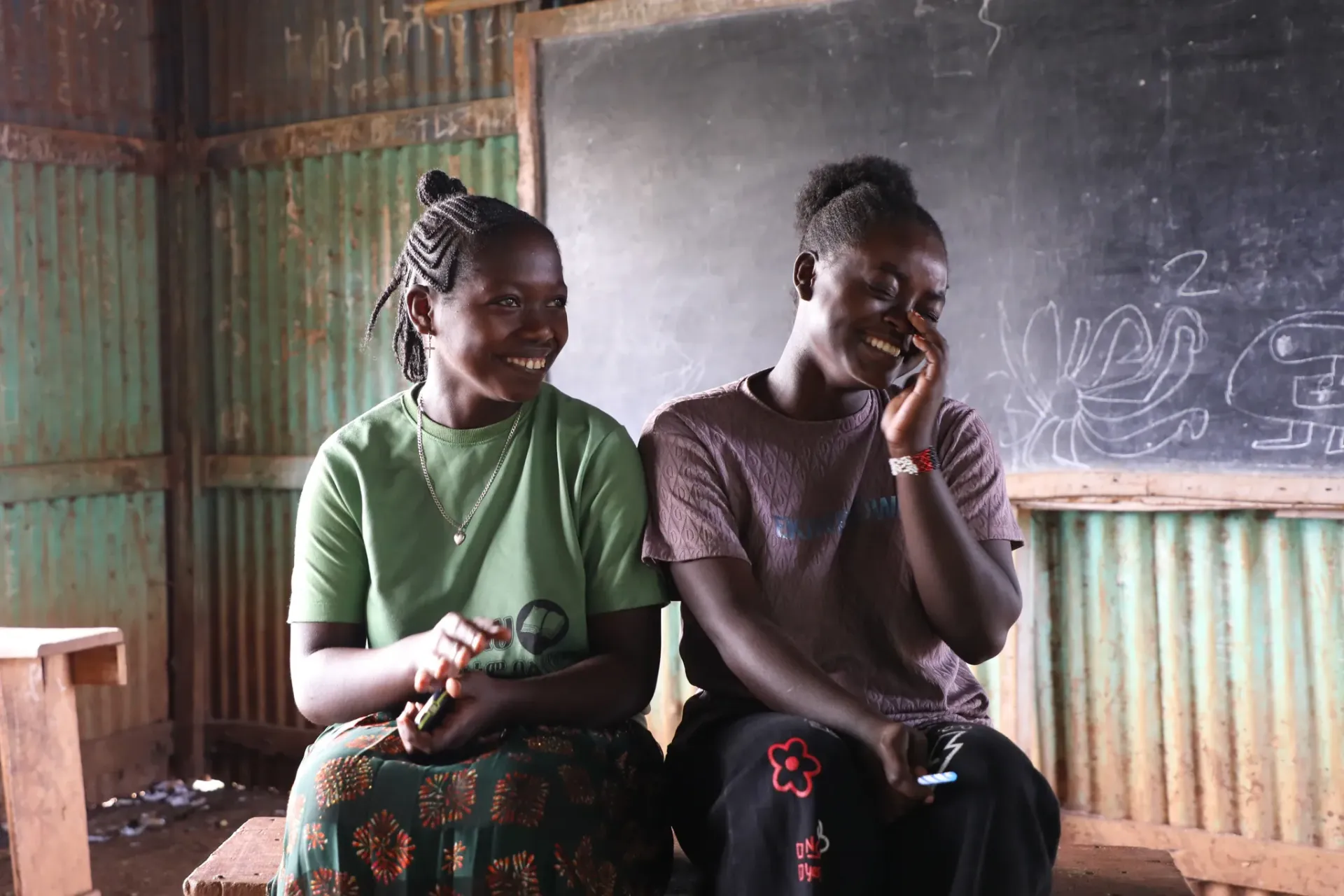
At Tolta Primary School in South Ari, Southern Ethiopia Region, 7th graders Meskerem and Bethlehem are managing their periods with new confidence. Through UNICEF-supported Menstrual Health and Hygiene (MHH) skills training under the System Transformation of Education Programme (STEP), funded by the Global Partnership for Education (GPE) and implemented with the Ministry of Education and the South Ethiopia Regional Education Bureau, they learned how to sew reusable sanitary pads. The training reduced their dependence on costly disposable pads that had previously been difficult for their families to afford.
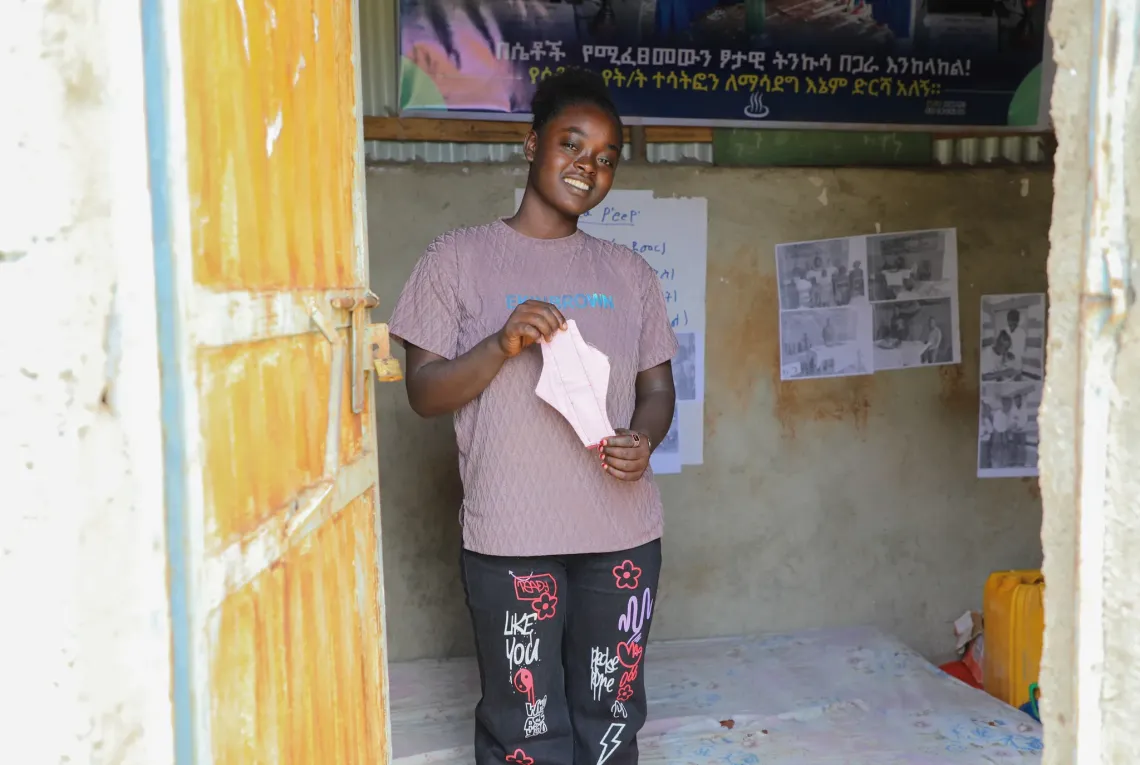
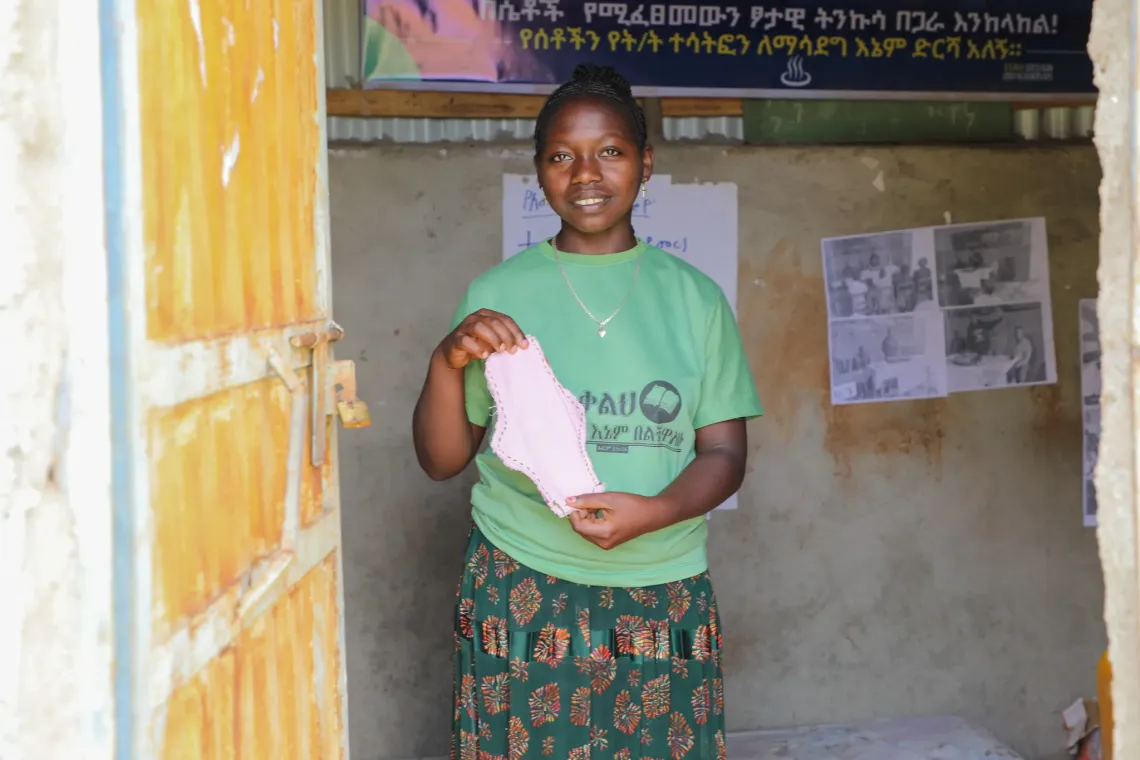
Meskerem still remembers the fear she felt when she got her first period. “I was scared, I didn’t know what it was,” she says. “My mom saw it on my clothes and explained it to me.” Like many girls at the school, she and Bethlehem often left class early because they could not afford sanitary pads. Bethlehem even sold injera on the streets to buy disposable products. In their single‑parent household, money was often scarce. “I’d buy pads when I could,” Meskerem’s mother, Asegedech, says, “but if money was short, Meskerem would miss school.”
The situation began to shift when their teacher selected Meskerem and Bethlehem for UNICEF-supported Menstrual Health and Hygiene (MHH) training, where they learned how to produce reusable sanitary pads.
“At first it was difficult, but we got the hang of it,” Meskerem says. “We didn’t know we could sew our own sanitary pads,” Bethlehem adds. “Disposable pads are expensive, but these are affordable.” Today, Bethlehem no longer misses school to sell injera to afford menstrual supplies. Instead, both girls are sharing what they have learned, training classmates who face the same struggles and helping them remain in school during their periods.
Now a gender club leader, Bethlehem supports younger girls encountering menstruation for the first time. She recalls helping a classmate who was frightened after getting her first period and wanted to quit school. “I explained what menstruation was and told her that we have resources here to manage it,” Bethlehem says. “After that, she stayed in school.”
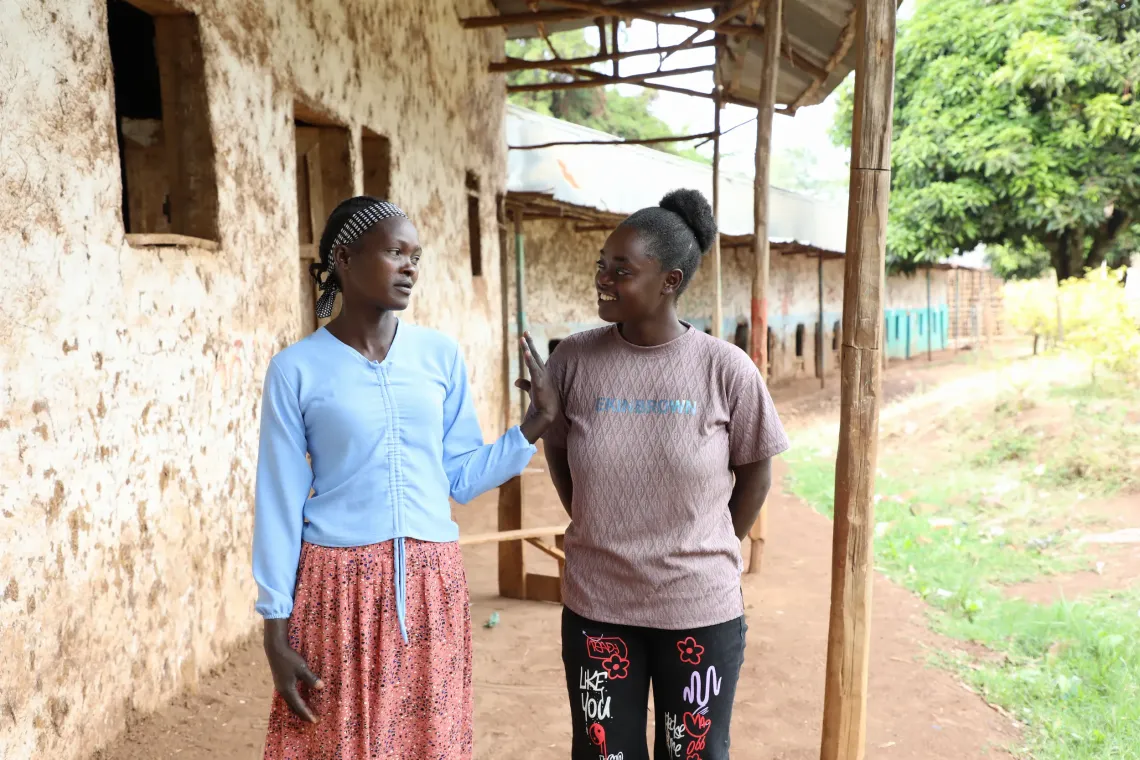
Meskerem’s mother, Asegedech, speaks with pride about the change she has seen. “I’m happy she took this training,” she says. “She even taught me how to sew the reusable sanitary materials.” Reflecting on her own life, she adds, “I didn’t go to school because I married early, and I didn’t want that for her.”
The programme has provided MHH rooms in 584 schools, skills training for 39,000 girls, and training for thousands of educators, reducing barriers to girls’ attendance and participation.