“That’s Our School, and We Love It!”
Children in conflict-affected areas of the Oromia region get a second chance at education as damaged schools get reconstructed and learning resumes

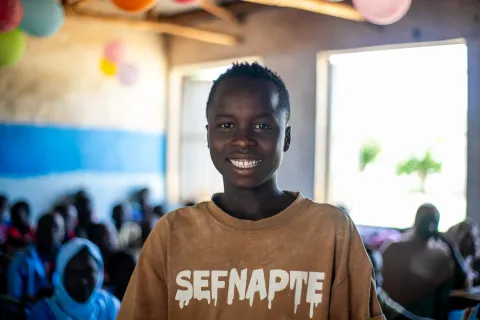
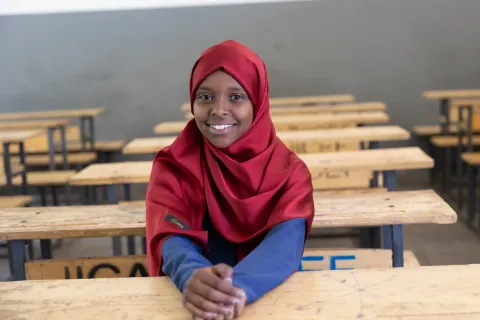
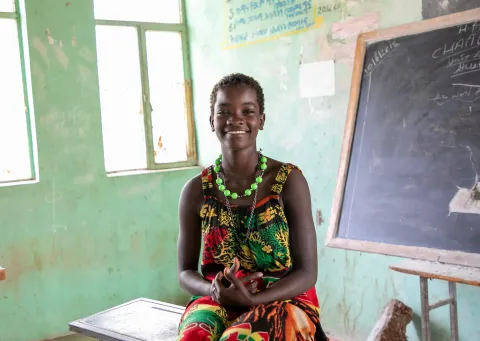
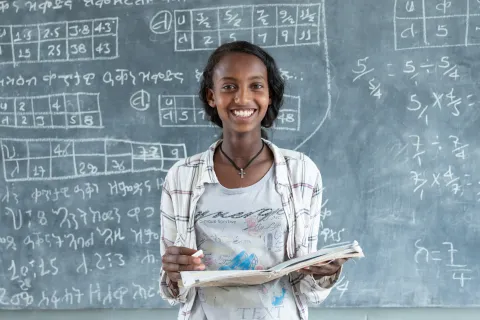
In conflict-affected areas of the Oromia region, UNICEF with support from the European Union, is working to restore essential education services. In Liben woreda (district), three damaged schools have been reconstructed. Students are also provided with school materials while their teachers receive refresher training that focuses on inclusive education and improving classroom instruction. Children also receive mental health and psychosocial support. As children resumed class in the newly constructed schools, we met a few of the students to see their reactions.
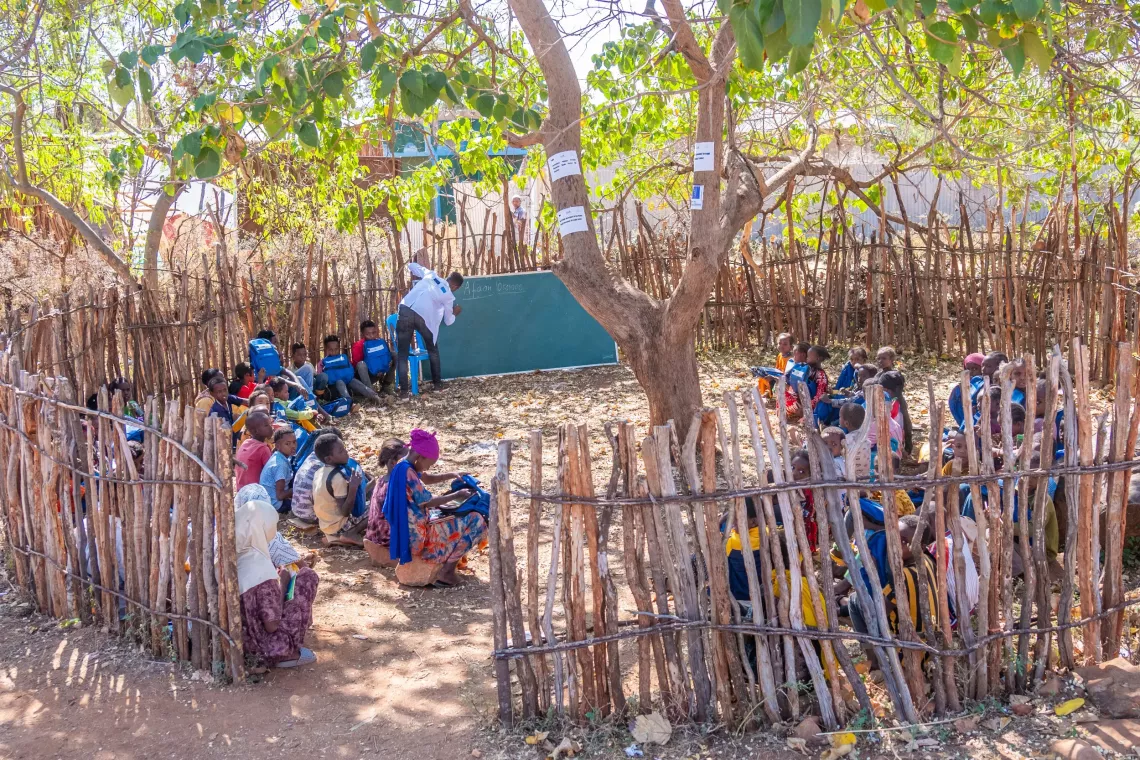
Gone are days of learning under a tree for 8-year-old Jalene Goshu and her friends in the rural village of Mugayo where conflict significantly damaged their school infrastructure. For the past three years, children were not able to attend school properly. Sporadic conflict disrupted children’s learning and the livelihoods of the rural community. Some children fled with their families for safety while others were separated from their loved ones. Mugayo had seen a lot, but it is getting better now.

“That’s our school and we love it,” says Jalene pointing at the new classroom blocks built in the school compound. Mugayo Primary School looks different now. New classroom blocks, a library, boys’ and girls’ latrines, and a separate block for adolescent girls to rest and manage menstruation have been built nicely.

Jalene loves to learn about numbers. She is happy to demonstrate her arithmetic skills using marble pebbles to her classmates. “When we were attending class under a tree, it was hard to write on our laps, and it was even harder to sit [squatting on a stone] for longer hours,” she says.

The construction of the new classroom blocks gives more meaning to 12-year-old Amibo Keraro. She is attending school for the first time. “I walk seven kilometers to get to school. But that is not a problem. I am glad that I am learning here. I used to feel sad when I saw other children going to school carrying bags.”

Amibo and Jalene are learning through the accelerated learning programme. This programme is specially designed with condensed curricula and flexible learning time so that disadvantaged and out-of-school children at the age of Jalene and Amibo can catch up with missed learning opportunities using effective teaching and learning approaches that match their level of cognitive maturity.

Play-based pre-primary learning is also helping younger children aged 5 and 6 to acquire critical social skills, creativity, and a basic understanding of concepts such as reading, writing, and counting through fun activities.

Jalene believes that learning is good for children because it ‘helps them become a smart person’. The young girl loves to come to school, and every day learning is leading her towards her dreams of becoming a teacher.