Six Kilometres to School
Hawa's Journey Back to Learning in Afar

AMIBARA DISTRICT, AFAR REGION, 30 August 2026 – Every school day, 12-year-old Hawa Ya Sim Ali walks six kilometres for an opportunity that once seemed beyond her reach: an education.
Today, Hawa is making up for lost years through an Accelerated Learning Programme that gives children in rural communities another chance to learn. Supported by KfW German Development Cooperation, UNICEF implements the programme with Imagine 1 Day.
The Voice of a Dedicated Student
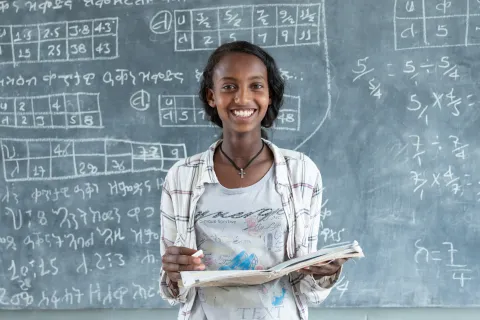
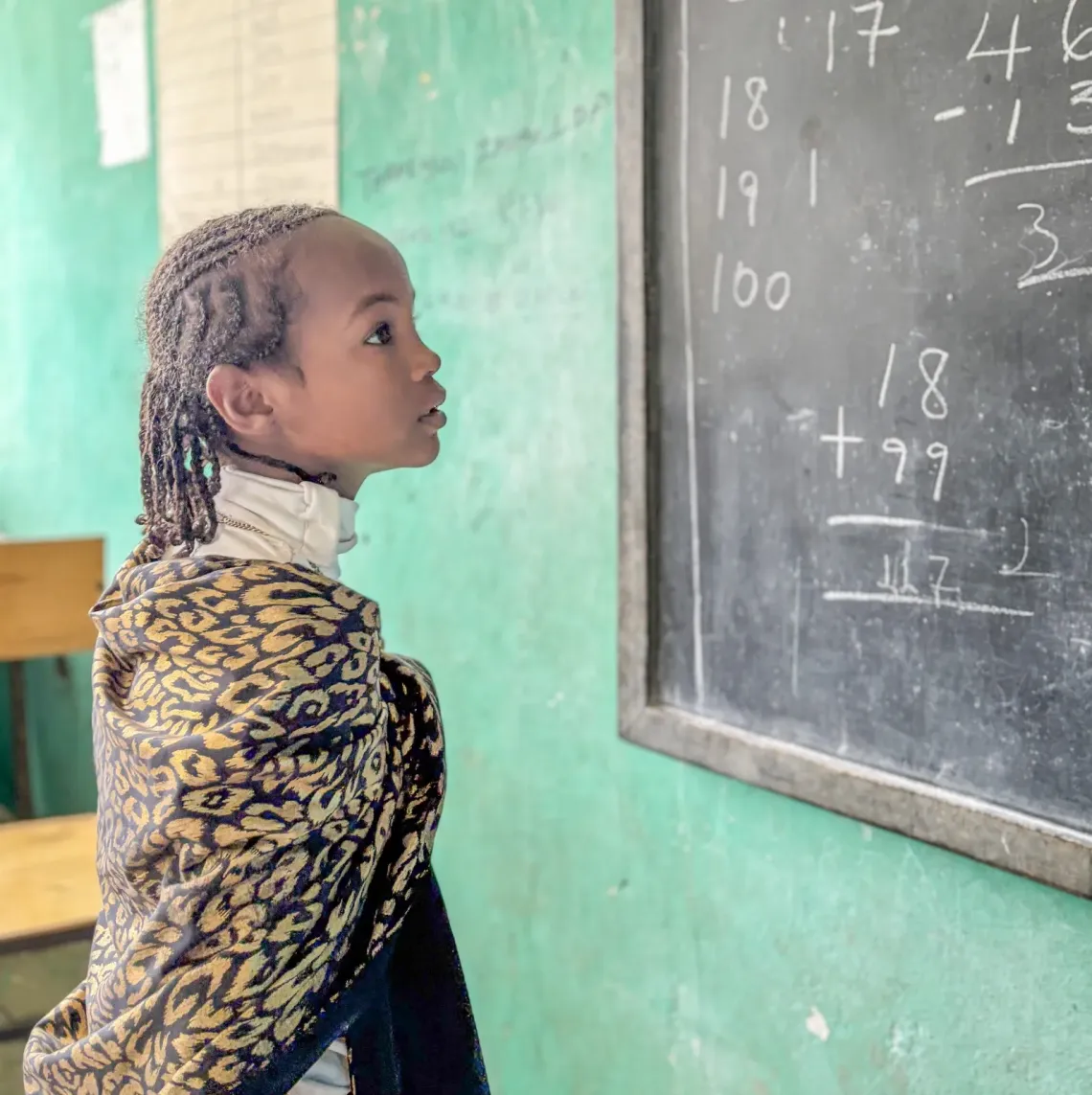
At Badihamo Primary School, Hawa smiles as she works through a series of mathematics exercises. Her confidence reflects how far she has come. Now in Level 2 of the Accelerated Learning Programme, she is achieving strong results in English reading, writing and mathematics.
Getting to school requires determination. Hawa lives three kilometres away and makes the journey on foot each morning, returning the same way after class. At home, her family also faces financial pressures. Her father can no longer work following a car accident, while her mother supports Hawa and her two siblings by selling goods at the market and caring for the family’s goats.
Hawa proudly shows her school bag, textbooks and exercise books, all provided through the programme. These simple supplies make an important difference, giving her the materials she needs to participate in class and continue learning.
“I am very happy to have these supplies because they help me continue studying,” says Hawa. “Without UNICEF’s support, my parents could not afford to buy them.”
Hawa’s hard work is paying off. She ranked first among her 30 classmates and is eager to continue learning. Mathematics and English are the subjects she enjoys most. “Those are my favourites!” she says.
Hawa is one of many children benefiting from the programme. In 2024/25, almost 98 per cent of enrolled learners graduated, nearly nine in ten transitioned to formal school, and the dropout rate fell to just 2.4 per cent.
Life Skills, Nutrition and Recreation
Learning is not the only reason Hawa enjoys school. “I love playing football,” she says. She also takes part in life-skills activities that help children build teamwork, solve problems and manage disagreements.
"We learn how to solve problems, work as a team and resolve disagreements,” Hawa says. “If there is bullying or fighting, I know whom to tell. I am glad to know what to do.”
The support Hawa receives extends beyond the classroom. Through a partnership between UNICEF and WFP, students at the school receive nutritious meals. “I like the food we are served,” Hawa says.
The programme has also brought water and sanitation facilities to Hawa’s school. Students now have water for washing and three toilet blocks, including separate facilities for girls and boys.
“I am happy because we now have water and separate latrines for girls and boys,” says Hawa.
Gender-Based Violence (GBV) and Mental Health Support (MHPSS)
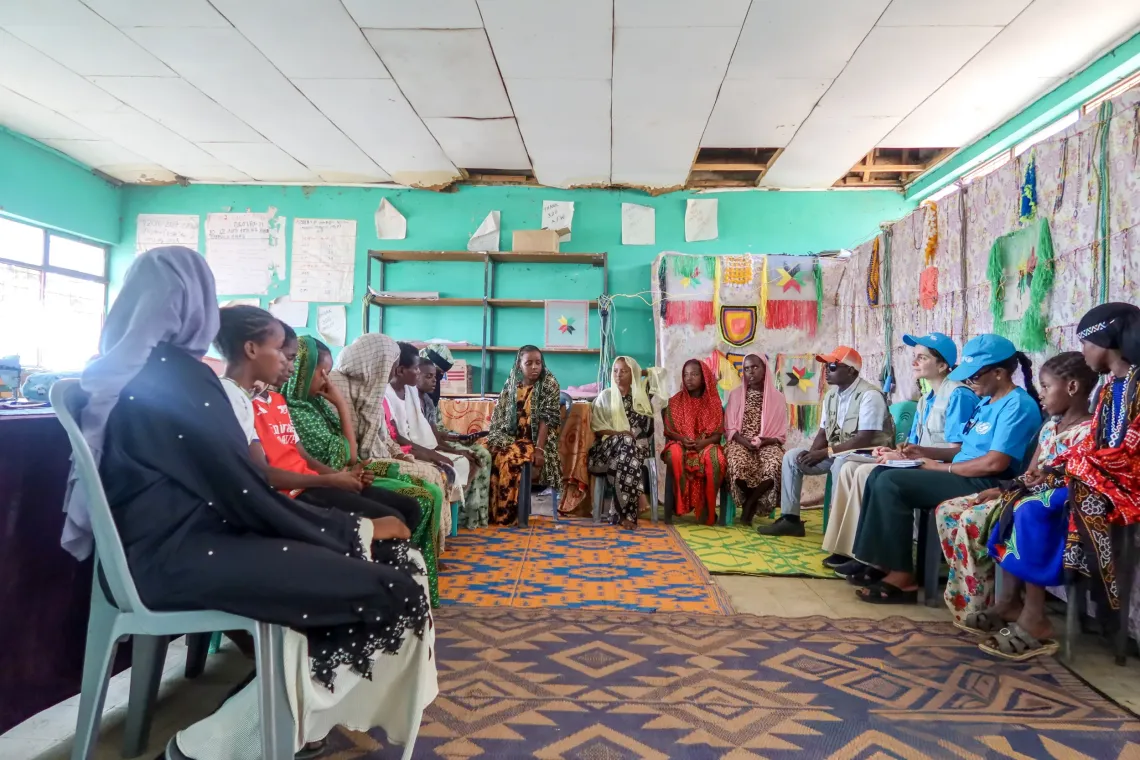
Hawa is also interested in joining the school’s Gender Club, where girls and boys can learn about gender equality and growing up. She knows that girls who are menstruating can use a dedicated room at the school to rest, change their pads safely and seek support when needed.
Hawa has also learned where to seek help if she or another student experiences violence. “When a girl experiences violence, it is not fair, but I know what to do and whom to tell,” she says.
When Hawa has questions or concerns, she usually turns to her parents for guidance. She also knows that a designated teacher at school is available whenever she needs additional support. “I feel free to talk to the teachers about personal issues,” Hawa says.
Funded by KfW German Development Cooperation and implemented by UNICEF and Imagine 1 Day under the guidance of the Regional Education Bureau, the programme is helping children in this community access education and pursue their ambitions.
Education Is Essential at Any Age
For Hawa, education is opening the door to new possibilities and a future she can shape for herself.
“I want to become a doctor because many people in my community need treatment,” Hawa said. “When I grow up, I want to help them.”
With access to education and the opportunity to learn, Hawa is taking her first steps towards that goal.
Her story is a reminder that it is never too late for children to learn, grow and fulfil their potential.
For every child, education.