From Survival to Strength
How SIDA-supported Cash Transfers are Reshaping Lives of Mothers in Afar region

In a region like Afar, where harsh climate conditions and chronic poverty converge, cash transfers are a critical tool for survival and resilience, especially for mothers and their children. The fragile pastoralist economy is repeatedly devastated by drought, stripping families off their livestock and livelihood. A concerted push is needed; one that uses cash assistance as a catalyst to build communities’ resilience.
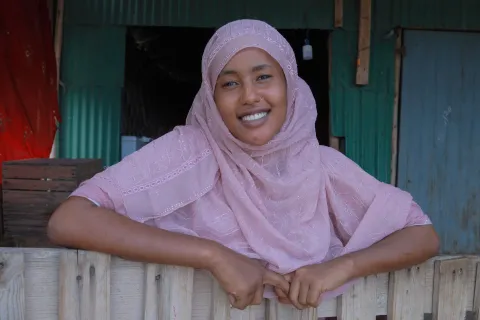
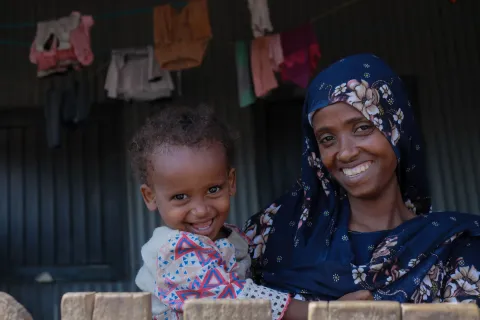
Halima Abubakir, a 20-year-old mother, gently bounces her seven-month-old son, Ali Mohammed, on her knee. For the first time in months, she feels a sense of calm and relief when she looks at him.
"Before the cash assistance, I struggled to give him milk and other supplementary food," she says. "It was so expensive, I often couldn’t afford it."
Just like other mothers who are struggling to survive in the Afar region, Halima and her family struggled for daily survival.
Halima recalls the first time she heard about the Child Grant from a source of authority in their community. "The Head of the Kebele told my husband about it," Halima explains. "He told us to register, and we did."

With generous funding from SIDA, the UNICEF Child Grant Programme supports over 500 households across the Afar region. The Galafi kebele was specifically selected due to high malnutrition rates, severe drought vulnerability, and limited access to essential services. For families like Halima's, cash assistance offers a dignified and flexible way to survive hardships and begin rebuilding for the future.
“I received a total of 8,000 Birr; 7,000 in cash and 1,000 transferred to my account,” says Halima.
The decision has proven to be a turning point for her young family. Now, in the second month of receiving support, Halima has been able to do what was once impossible: feed her child nutritious food.
"I can buy supplementary food for my child," she says. The most immediate and visible impact has been on baby Ali. “I have already seen progress in my child's weight and his overall health. He is bigger and stronger."

But Halima didn't stop just meeting her family's immediate needs. With the cash transfer providing a small safety net, she took a risk and invested in her future. She used 2,000 Birr from the funds to start a small business selling tea and coffee.
Even though it’s a short time since she started the business, it’s showing success. From her small stall, Halima sells each cup of coffee for 30 Birr. The daily earnings are substantial; she now makes around 400 Birr per day. By the end of the month, after covering her costs, her profit reaches 1,200 Birr.
"It has changed everything," she says with a proud smile. The income from her coffee business now supplements the cash transfer, allowing her to save a little and plan for the future. She is now an entrepreneur, a provider, and a mother whose child is now thriving.

Doro Yassin (20) is also a beneficiary of the Child Grant programme supported by SIDA, receiving the same amount as Halima. Holding her six-month-old baby, Humda Ali, she has started making a traditional handmade grass mat called 'Unga'. It takes her between 30 and 45 minutes to collect the material in the nearby forest and prepare it for use.
“It takes me six days to produce one Unga,” says Doro.
Before receiving the cash transfer and starting the Unga business, Doro used to sell her goats to feed her family. Now she can keep her goats, feed her Humda Ali with milk, accumulate livestock, and build her family’s resilience.
Thanks to the cash transfer programme, both Halima and Kedija are now on a steady path toward rebuilding their lives and securing a better future for their families.
“I am happy with the support provided. I am just lost for words,” says Halima.
“I am so grateful for the support. Thanks to those who made it possible,” said Doro.