SIDA Funded Cash Transfers
A Lifeline for Mothers in the Afar region

In a region like Afar, where harsh climate conditions and chronic poverty converge, cash transfers are a critical means of survival and resilience. The fragile pastoralist economy is repeatedly devastated by drought, stripping families off their livestock, livelihoods, and access to essential services.
Cash transfers not only allow mothers like Kedija to meet their family's most urgent needs and prioritize their children's nutrition, but also empower them to invest in small businesses, creating a path towards sustainable livelihoods.
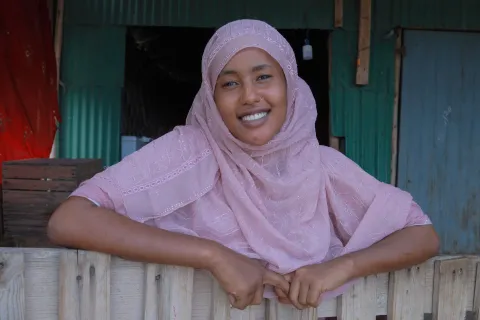
Kedija Abdu, a 25-year-old mother, resides in Galafi Kebele, in the northeastern Afar region in Ethiopia, where poverty is entrenched due to a fragile pastoral economy, recurrent climate shocks, and limited opportunities for economic growth.
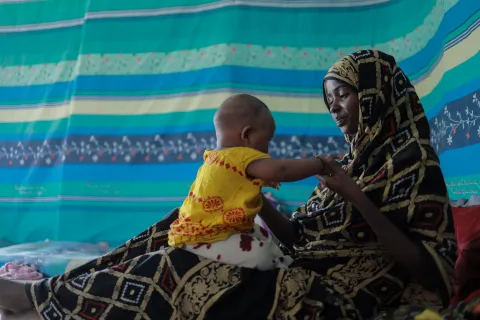
Surviving on the arid plains of Afar has always been a struggle for Kedija, who is four months pregnant and caring for her two young children, five-year-old Abdella and two-year-old Furdos, alongside her husband.
For years, Kedija's husband, Ahmed, worked as a daily laborer, taking whatever sporadic work he could find. His income was unpredictable, ranging between 600 and 800 Birr per month on the weeks he found regular work. When he could not engage in daily labor, he resorted to selling small paper cones of peanuts - a small income that was never enough to sustain the family.

“His income was not enough to meet our needs,” Kedija recalls. “Sometimes we didn’t have anything to eat, sometimes we ate only once a day.”
The constant uncertainty left the family vulnerable and unable to plan for the future.
Everything changed when Kedija heard about Child Grant and did not waste any time registering.
“I was so excited when I heard about the cash transfer programme from one of my neighbours. It was like a dream come true,” she recalls.
Implemented by the Afar Regional Women and Social Affairs Bureau, Kedija was one of the beneficiaries to receive a bi-monthly cash transfer of 8,000 ETB (US$50) to improve food security, access to essential services, and resilience.
Through the generous funding from SIDA, the UNICEF Child Grant Programme supports over 500 households in the Afar region. Galafi kebele, where Kedija resides, was selected for its high level of malnutrition, drought vulnerability, and poor access to services. For communities living on the edge, cash transfers provide a dignified and adaptable way to survive the present drought and begin rebuilding for the future.
In the second month of receiving support, her family received a total of 8,000 ETB; 7,000 in cash and 1,000 transferred directly to her account. This infusion of cash has been a lifeline.

“Now that I have received the money, I’m able to buy proper food for my children. It was not affordable before,” Kedija shares, her voice filled with relief. For the first time, she can regularly
buy nutritious food like eggs and wheat flour, ensuring her children and her unborn baby are getting the sustenance they need. She credits the programme's holistic approach for her cautious use of the funds.
Kedija has taken that advice to heart, using a portion of the cash not just for consumption, but for investment. She has launched a small business selling injera, the staple Ethiopian flatbread. From her home, she now produces and sells each injera for 40 Birr. Though small in scale, the business is already showing promise of a profit.
“This is a great beginning for myself and my family,” she says with a sense of pride. This small income provides a cushion and a sense of relief she never had before.
Looking at Abdella and Furdos by her side, her aspirations for them are clear.
“I can already see my life changing,” she says. “I want my children to become doctors. Their lives have to be much better than mine has been.”
Kedija’s story is a testament to how targeted support, paired with guidance, can help families move from a cycle of crisis to a path of inclusion, stability and self-reliance.
“I am so happy with this support. May Allah bless those who have supported us,” said Kedija.