Social Workers Supporting and Empowering Mothers in the Afar region
Connecting families with essential services

In the vast, arid Afar region of northeastern Ethiopia, roughly 2 million people, mostly pastoralists, survive in one of the hottest places on earth, where livelihoods are tied directly to the climate and communities are extremely vulnerable to drought. Prolonged, recurring drought severely disrupt health and education services and force communities to relocate, driving acute food insecurity and hunger, with women and children facing the greatest risks.
It is here that UNICEF’s Child Grant Programme, funded by SIDA, is supporting over 500 of the most vulnerable households. In the two targeted kebeles of Elida’ar, Dobi, and Galafi, families receive bi-monthly cash transfers of 8,000 ETB to improve food security, access to essential services, and build resilience.
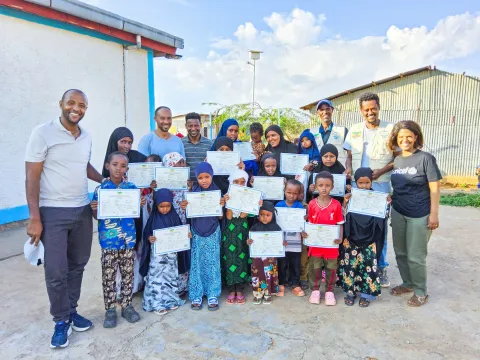
At the heart of this response are the social workers. Deployed at the kebele level and trained by the Afar Region Women and Social Affairs Bureau (BoWSA), they are the bridge between the cash assistance and lasting change. They conduct home visits, monitor child well-being, and link families to essential health, nutrition, and birth registration services, turning a financial lifeline into a pathway of resilience.

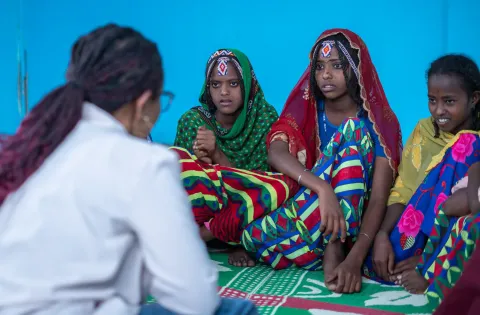
Aysha Ahmed (23) embodies this role. Trained as a social worker in Semera, the capital of the Afar region, she supports her community as part of a programme that is delivering high impact in a remarkably short time. Selected for this vital role based on her deep knowledge of the local context and language, Aysha and her fellow social workers have been trained to provide linkage and referral services, connecting families with health care, nutrition, education, birth registration, and protection.
“I am very passionate about my work as a social worker. I love going around the communities, listening to them, understanding their challenges, and finding solutions together. I have also learned so much from them as a mother myself."
Visiting households two to three days a week, Aysha offers consistent guidance and support. Thanks to the dedication of social workers like her, over 30 mothers in the area have obtained birth certificates for their children, a significant achievement.
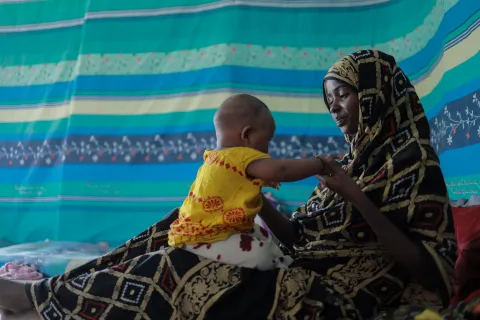
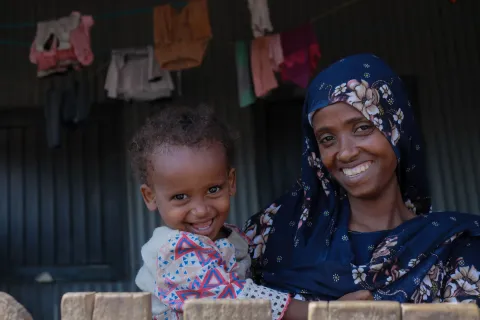
“The mothers are really brave, but they also need that extra push and guidance. They know how to use the money, it’s mostly to feed their children. In the short time since the programme started, most of them are already engaged in small businesses. I’m so proud of them."
Currently, two social workers are assigned to the village, but the spirit of support extends beyond the individual level. The entire community uplifts one another.

“We also work closely with health extension workers to ensure these service linkages are effective, with everything coordinated at different levels. So far, everything seems to be working fine, and the beneficiaries are happy with our support.”
For social workers like Aysha, the work has only just begun. Demand from communities is high, and as they undergo further training in case management, their impact will only grow. Case management equips them to coordinate support for each child and family, ensuring needs are met in a timely, holistic way, with all services working together toward sustained outcomes.