Refugee children’s access to birth registration services in Ethiopia
Carrying proof of identity wherever life leads
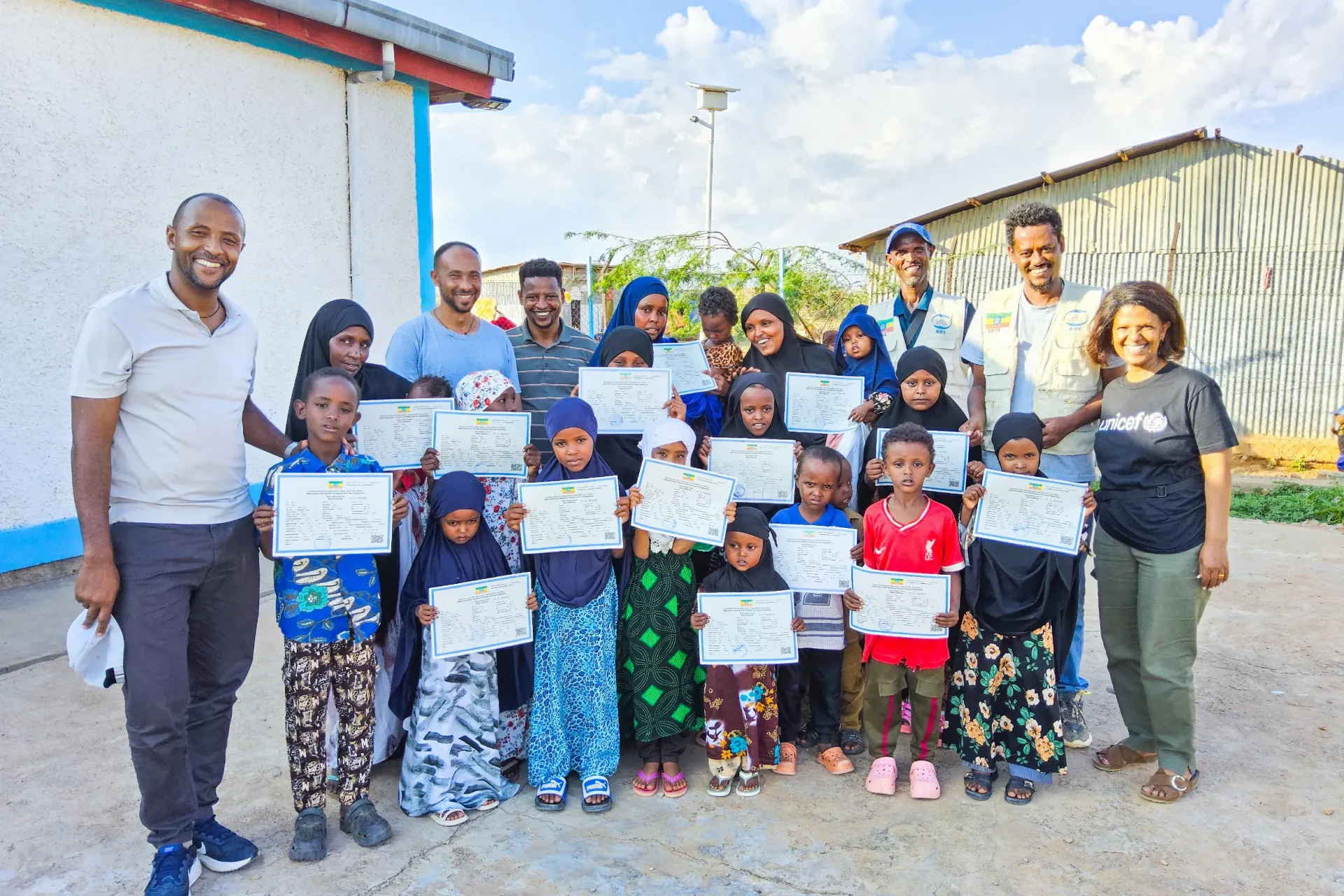
Melkadida Refugee Camp, Ethiopia - On the hot plains of Melkadida in Ethiopia's Somali Region, where the Genale River cuts through an otherwise harsh landscape, a quiet transformation is taking place. For refugee families rebuilding their lives, it begins with a single piece of paper: a birth certificate that gives children proof of identity and a place in society.
Ubah Hussein Ibrahim speaks softly but with quiet determination. Forced to flee violence in neighbouring Somalia, she arrived in Melkadida carrying little more than her children and the hope of a safer future. Today, as a mother of three, she is focused not on what she left behind, but on building a new life for her family.
"I gave birth to my children at home," says Ubah. "At the time, I didn't think much about birth registration. I didn't realize how important it would become for my children's future."
For children, a birth certificate is far more than a piece of paper. It is proof of identity and often the first step toward accessing the rights, protections, and opportunities that every child deserves. Without it, access to education, healthcare, justice, and other essential services can become uncertain, placing children at greater risk of exclusion.
To ensure more refugee children receive legal recognition, the PROSPECTS programme, funded by the Government of the Netherlands, is supporting birth registration efforts across refugee-hosting areas. Working with UNICEF, UNHCR, and Ethiopia's refugee and immigration authorities, the initiative is helping register children, strengthen local capacity, raise awareness among families, and address a longstanding backlog of unregistered births.
The need for birth registration services is significant. Melkadida hosts one of Ethiopia's largest refugee populations, with more than 200,000 refugees living across five camps after fleeing conflict in neighbouring Somalia.[1] For many families, obtaining legal documentation for their children has long remained out of reach.
Although civil registration services for refugees were introduced in Ethiopia in 2017, many children remained unregistered for years. Their births were never formally recorded, leaving them without the documentation needed to prove who they are and access the rights and services available to them.
As a result, many children have grown up without birth certificates documenting who they are, their name, parentage, age, or nationality. Without legal proof of identity, they can face barriers to accessing essential services and protections, making it harder to fully participate in society and plan for the future.
At the civil registration facilities in Melkadida, families arrive carrying documents, answering questions, and waiting patiently for their turn. As officials record names, dates, and places of birth, each entry brings a child one step closer to legal recognition and the rights that come with it.
For many families, the journey to registration begins with a conversation. Community outreach workers visit households, explain the importance of birth registration, and help identify children who have yet to be registered. Families are then guided through the process, with support every step of the way, helping turn what can seem like a complex procedure into an achievable step toward securing a child's future.
Holding her son close, Kedija smiles as she waits for his registration to be completed.
"I arrived early this morning," she says. "I want him to have what I never had: a recognized identity."
The process is human-centred. It begins with raising awareness by helping communities understand the importance of birth registration, house-to-house head counting of unregistered children, documentation, and certification. Families are guided through each step, reassured that this document is not merely for today but an investment for their child’s future.
"When they handed me the certificates, I felt immense relief. Now, my children are recognized. They finally have proof of who they are."
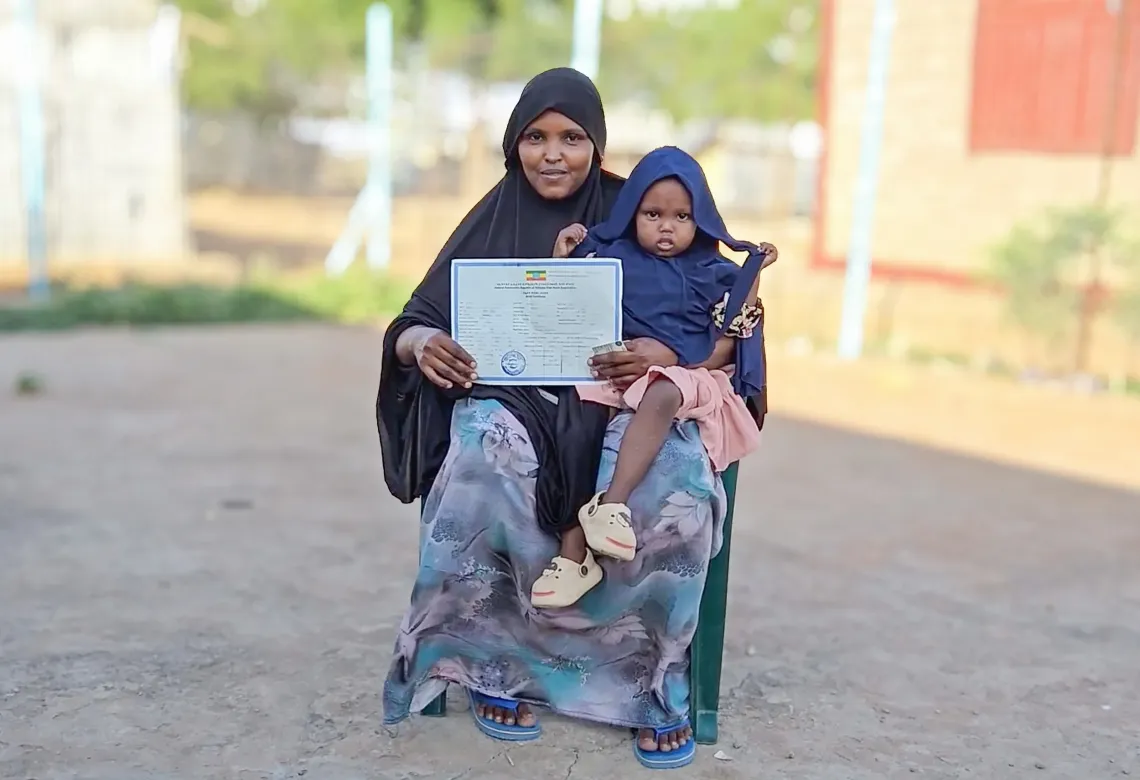
For many children, registration comes later than the legally prescribed 90-day period. Yet the value of the certificate remains unchanged. Each one formally recognizes a child's existence, identity, and rights, providing documentation that can support them throughout their lives.
For Ubah, the moment was deeply personal. After years of uncertainty, her three children had finally been registered, giving them official recognition and documentation for the future.
"When they handed me the certificates, I felt immense relief," says Ubah. "Now, my children are recognized. They finally have proof of who they are."
For refugee families, legal identity provides more than documentation. In the midst of displacement and uncertainty, it offers a sense of security, helping ensure that children's rights are recognized and protected. It also lays the foundation for their future, giving them a documented identity that can support access to education, healthcare, and other essential services throughout their lives.
Despite the progress, significant challenges remain. Distance, limited infrastructure, and low awareness continue to prevent some families from accessing registration services. Yet each certificate issued represents another child gaining legal recognition and a stronger foundation for the future.
As dusk falls over Melkadida, families walk home carrying more than paper. They carry proof that their children are recognized, protected, and part of a system that acknowledges their rights. For Ubah and thousands of other refugee parents, a birth certificate represents more than a document. It is a foundation for the future, rooted in identity, dignity, and hope. Because every child deserves more than a name, they deserve to be recognized.
[1] Melkadida Branch Office – Refugees and Returnees Service (RRS). The refugee camps in Melkadida are Boqolmayo, Melkadida, Kobe, Hilaweyn and Buramino.