A reason to smile
Access to clean water brings joy and relief to rural communities in Ethiopia

Water is a basic human need essential for health and well-being. Yet, many people in rural areas of Ethiopia still struggle to obtain it. Water scarcity not only affects daily life but also limits education and economic opportunities, as women and girls spend many hours looking for it. Halimo, a mother of 11 in Fedis Woreda (district) of the Oromia region, Ethiopia, knows this challenge all too well. Each morning, she loaded her donkey with jerry cans, walked long distances to collect water for her family and livestock. But now, things have changed for good, and Halimo has a reason to smile.

“We used to walk for up to 11 hours to fetch water,” Halimo recalls. “Sometimes we encountered hyenas and elephants along the way. It was very frightening, but we had no other choice.”
What seems like a simple task for many people remains a daily struggle for women and children in Fedis. The generator that pumps water from the village borehole often breaks down, and rising fuel costs also challenged the community. This makes Halimo and fellow villagers get up early and look for water far from their homes. The search for water also brought serious risks. Pregnant women often fell ill, and children frequently missed school.
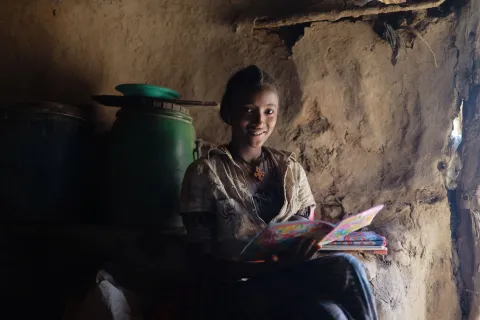
“The hardest part,” Halimo explains, “was watching my children miss school because they had to help me fetch water.”

After hours of walking, Halimo and her children would return home exhausted. Yet, the water they managed to collect is not enough for drinking, cooking and cleaning. It is a challenging dilemma Halimo has to choose every day between meeting her family’s immediate water needs and sending her children to school.

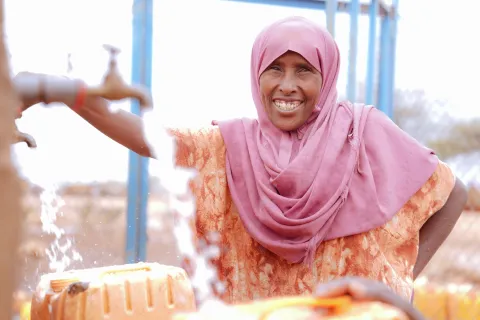
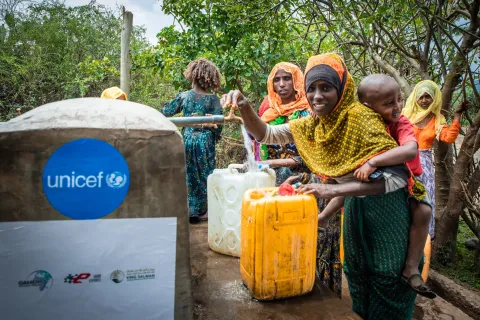
Today, things have changed for the better. With the generous support of the Swedish International Development Cooperation Agency (sida), UNICEF has installed a solar-powered water supply system near her community. Clean water is now within reach for Halimo and more than 7,500 families.
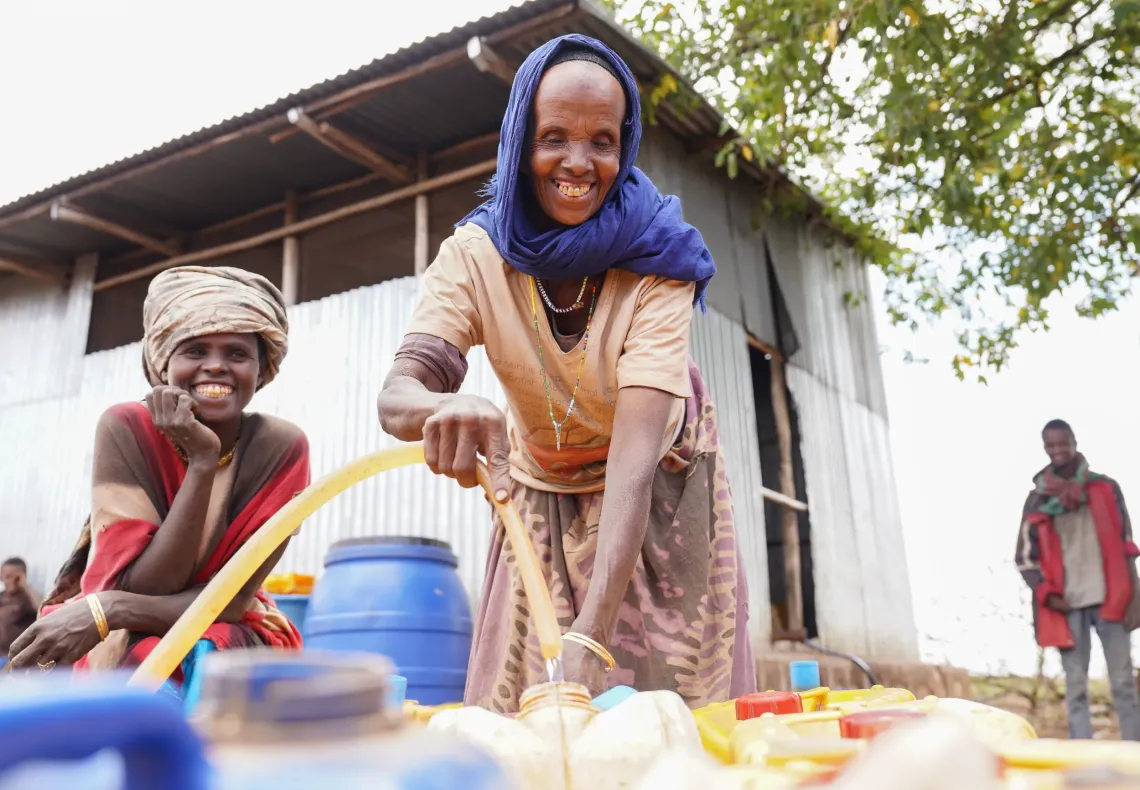
“Now water is close to us,” she says with relief. “Our lives are much better.”
Halimo no longer walks long distances to fetch water. Her children attend school every day, and the constant fear she once lived with has been replaced by dignity and hope.