Water is time, education and safety for girls
When clean water is close to home, girls are safer and free to learn

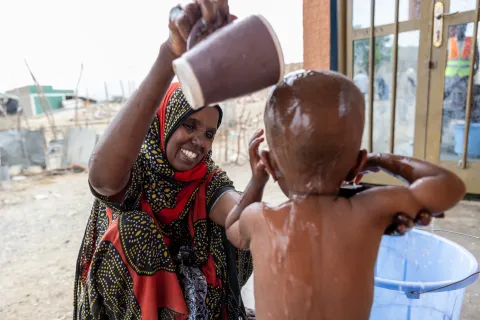
Water may seem abundant and easy to access, yet for millions of women and girls, especially in remote rural communities, it remains a daily struggle. For them, water is more than a basic necessity; it is time, education and safety. When clean water is available nearby, girls are freed from long and exhausting journeys to collect it. They can attend school regularly and focus on their studies. When water is available in schools, it is even better because girls can learn with dignity.
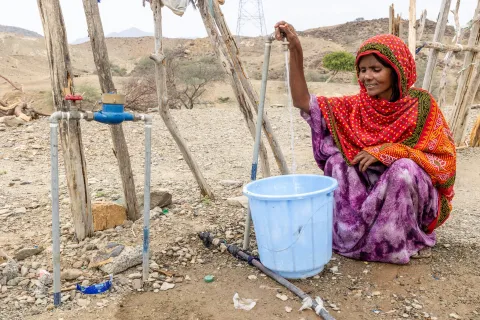
In the North Wello Zone of the Amhara region, UNICEF, with critical support from the UK Government, has built a solar-powered water system that is transforming lives. Girls like 16-year-old Abebech Destaw are now able to attend school regularly.

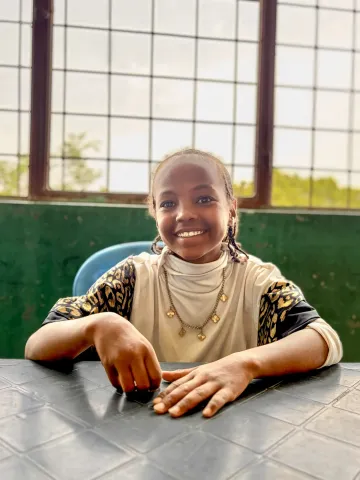
Abebech Destaw, 16, looks up from her book and responds to her mother with a smile. Earlier that morning, she collected water from a nearby water point, only a short walk from her home. The new water system has lifted a heavy burden from her shoulders and from many girls in her village.
“I used to spend hours every day looking for water, walking far from here,” she says. “But that is in the past now. We have water right here.”
“I used to spend hours every day looking for water, walking far from here, but that is in the past now. We have water right here.”

Abebech is in sixth grade and preparing for her primary school assessment, which will allow her to transition to junior secondary school. Every morning at 6 am, the water point opens in the mountainous village of Sorba, where Abebech and many other women and girls collect water. The queue grows as the day progresses, and the four water taps work continuously to fill yellow jerrycans.

The water that serves Abebech’s village travels 11 kilometres across rugged terrain. It begins at a borehole drilled in the lowlands of Segno Gebeya village. From there, it is pumped using solar power into an uphill reservoir and then distributed to surrounding communities.
For years, villages like Sorba and Segno Gebeya struggled to access safe drinking water. The solar-powered scheme has provided a sustainable solution. Community members have established water committees that manage the water points and carry out minor maintenance. Today, the system benefits more than 28,000 people.

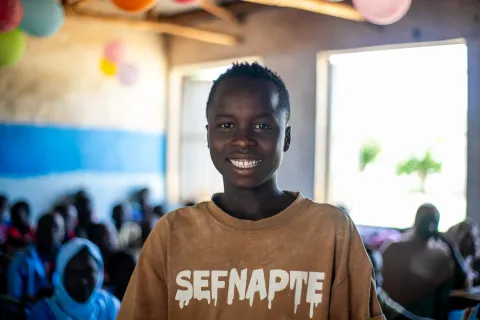
Further down the hills in Segno Gebeya village, where the solar panels are installed, students like Kalkidan, Meseret and Hana have another reason to celebrate because their school is now connected to the water supply. Adolescent girls also have a safe space where they can bathe and rest while menstruating.
“Water runs in our school, and we are happy about it,” says Hana. “Girls do not have to worry about water during their period.”

During break time at Segno Gebeya Primary School, students drink clean water and cool off, something that was not possible before.
Access to clean water is also critical for health. It helps prevent waterborne diseases such as diarrhoea, improves nutrition and reduces the risk of violence against women and girls during their long journeys through isolated areas to collect water.

Abebech no longer faces the daily struggle of walking long distances for water. Although she is 16 and in sixth grade, she remains determined to continue her education. With clean water closer to her doorstep, the time she saves each day brings her closer to achieving her dreams.