Providing sanitary pads in schools helps to increase class attendance of girls
The Impact of providing sanitary pads in school

February 2, 2023, Southern Nations and Nationalities People’s region: When the bell rang at Doyo Gena Primary School to signal the beginning of the lunch recess, students rushed out of their classrooms, full of cheer and good spirit. They scattered in all directions within the school grounds. Many were engaged in activities including football, hide-and-seek, and group conversations. Among them, five of the girls didn't want to play and went to a room in the northwest corner of the school premise. A sign in the Amharic language read, ‘Girls Menstruation Management Room’.
The room is equipped with sanitary pads, soaps, and clean water for the girls to use during their menstrual cycle. It was a safe and private space for them to manage their periods without feeling ashamed or embarrassed.
Genet Birhanu, a female teacher, who serves as the club's central point of contact, was there to greet the girls. They banded together to create washable sanitary pads from scratch. After sitting down, they double-checked that all the materials needed to prepare the pad including cotton fabric sheets, linen sheets, thread, sewing needles, pencils, sharpeners, rubber, chart paper, chalk, rulers, shatter, rubber bands, scissors were at hand. They began delegating duties to one another right away.
Birtukan Desta and Asdenaki were in charge of drafting the pattern, Birtukan Tamere and Bethlehem were tasked with cutting out the pattern while Mintewab was responsible for all the stitching, sewing, and snap-installing.

"I have recently learned how to make inexpensive pads by preparing pads and underwear. In addition, my friends and I have prepared and distributed over a hundred pads and underwear to girls in need at their schools."
Reusable pad preparation
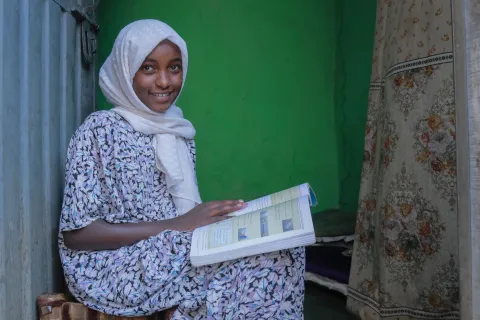
Mintewab Haile, a fourteen-year-old sixth grader, was one of the team members in charge of preparing the pad and underwear. Mintewab, her two teachers, and three students had spent one week learning how to make their own reusable underwear and sanitary pads through a training organized by UNICEF, in partnership with Population Media Centre (PMC) and the Woreda (District) Health Office.
The training aimed to empower girls and women with knowledge and skills to manage their menstrual hygiene in a sustainable way. The participants were also provided with the necessary materials and equipment to continue making their own products at home.
“Menstruation made it difficult for me and other female students to go to school because of a lack of adequate water, sanitation, and hygiene (WASH) facilities and sanitary pads. Therefore, we would rather stay at home and end up missing classes. Because of my family's financial situation, I am unable to regularly purchase disposable sanitary pads,” said Mintwab. “I frequently wear second-hand and old garments. These garments were not only uncomfortable but also unreliable. I have recently learned how to make inexpensive pads by preparing pads and underwear. In addition, my friends and I have prepared and distributed over a hundred pads and underwear to girls in need at their schools. Sewing up the pads always feels like I'm making up for the lost time in the classroom.”

Teshome Tamrat, the school's director, noticed a rise in absenteeism and late attendance to class among female students due to a lack of adequate sanitary facilities. The school was unable to provide sanitary pads for girls due to high costs. Three months after pad preparation began, over 100 pairs of underwear and reusable sanitary pads have been distributed to young women in schools. This initiative not only helped address the issue of menstrual hygiene but also empowered young women to continue their education without interruption. It is crucial that more schools and organizations prioritize providing access to sanitary pads for girls who do not have access.
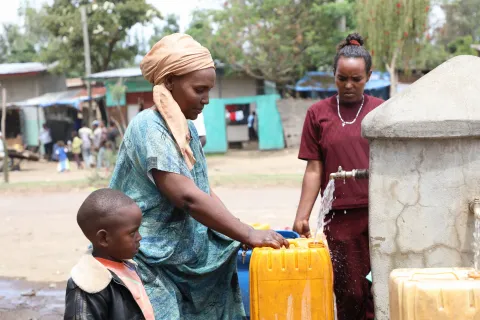
With funding from the Korean International Cooperation Agency (KOICA), UNICEF is working to address Menstrual Health and Hygiene (MHH) issues in the municipalities of Doyo Gena and Bule. In addition to funding these initiatives, the programme has helped improve community members' negative perceptions of menstruation by raising awareness, constructing safe spaces, extending the water supply system to schools, distributing MHH kits, and constructing safe spaces.
The programme has also provided training to teachers and school staff on how to manage MHH in schools and establish a monitoring and evaluation system to ensure the sustainability of the interventions. These efforts have contributed to an increase in school attendance and improved health outcomes for girls in the region.