When water is nearby, girls can go further in their studies
A UNICEF supported solar-powered water system brings joy and relief to rural communities in the Amhara region

For families in the rural town of Gerba, in the South Wello Zone of Ethiopia’s Amhara Region, daily life has changed in a way many once thought impossible: water now flows in their homes. Until recently, accessing clean water required long walks and long waits. A solar-powered water system installed by UNICEF, with support from the Danish government, has transformed that reality.
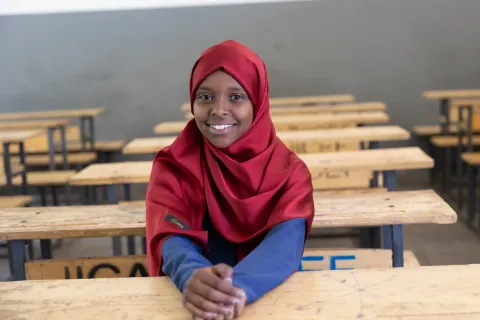
As the town’s water utility extends pipelines into surrounding villages, more families now have taps in their homes, replacing communal water points shared by many households. Among them is the family of 15-year-old Aswan Adem, for whom water at home has begun to change everyday life.

Aswan waters her family’s garden in the afternoon, connecting a hose to a tap in her compound. The small plot, where tomatoes and green peppers grow, is thriving. So is Aswan. In school, she is succeeding for the same reason the garden flourishes: water is now available nearby.

“I never imagined that water would be available in our compound. I used to wake up at four o’clock in the morning to fetch water, cook breakfast, wash the dishes, and rush to school. There were many days when I arrived late for class. And when we ran out of water, I had to go again, even in the afternoon.”

When water is not piped to homes, the responsibility for fetching it falls disproportionately on women and girls like Aswan. According to an in-depth global analysis of gender inequalities in drinking water, sanitation, and hygiene, women and girls are responsible for fetching water in seven out of ten households without on‑premises supply. As the firstborn daughter in her family, Aswan has long supported her mother and cared for her younger siblings, responsibilities that once stretched her days even further. The new solar-powered water system has brought relief and joy to women and girls in her hometown of Gerba.

More than 41,000 residents of Gerba now have consistent access to clean water thanks to the solar-powered system. Water is pumped into a 300 cubic meter reservoir installed on a mountaintop, supplying households, a school, and a health facility. Nearly 2,700 families, including Aswan’s, now have water piped directly into their homes. For Aswan, this means saving up to three hours each day that she once spent fetching water.
“Now we have water in our home, so I don’t have to wake up early anymore. It is a huge relief.”

Access to clean water is not only about saving time or supporting girls’ education, it is also about dignity. With the support of health extension workers, many families in Gerba are now using improved latrines and practicing better hygiene at home. Having water readily available is helping families live healthier, more dignified lives.

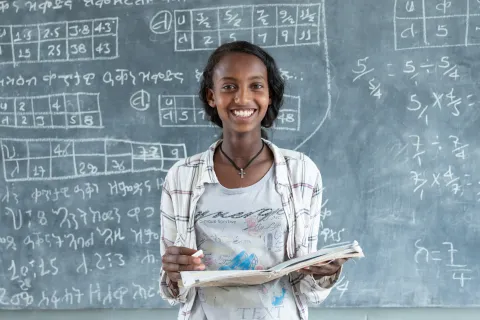
Aswan can now focus on her studies without worrying about fetching water or waking up before dawn. She works hard to progress in school and is grateful to have been relieved of such a heavy responsibility. Still, one question remains in her mind: why is it always women and girls who are expected to fetch water?