Improving sanitation in Central Ethiopia
An entrepreneur leading his community to a healthier future
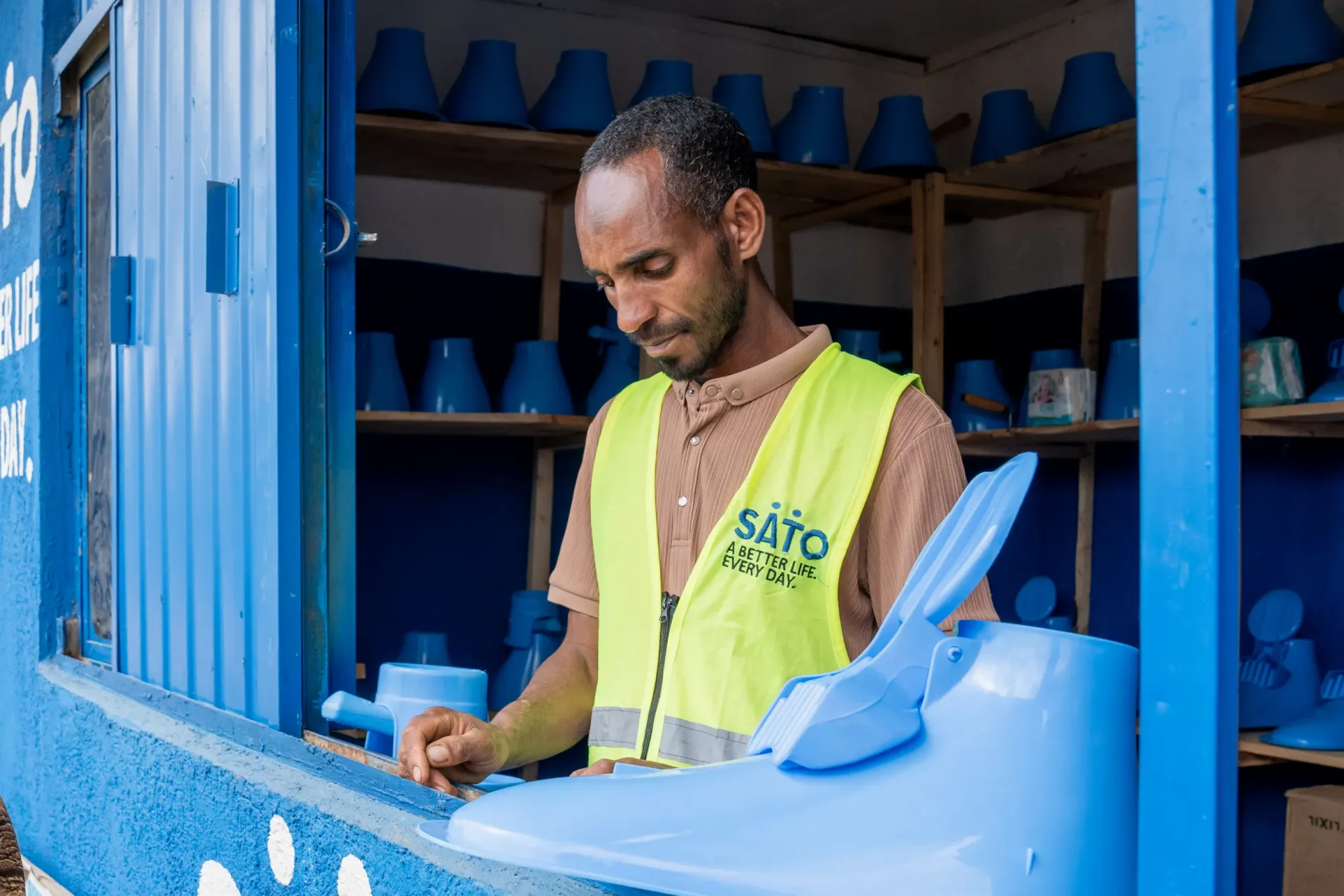
In Geta Woreda in Central Ethiopia, young father Menur Abas carried a simple but powerful dream. He wanted his children to grow up in a healthy home with clean surroundings. Yet many families in his community relied on unimproved latrine facilities that were difficult to manage. Menur knew things had to improve, although he did not know how to spark that change. Everything shifted when the Make a Splash project, a global partnership between UNICEF and LIXIL, arrived in the community. The project encouraged safe sanitation practices and uplifted local entrepreneurs, giving Menur the chance to reimagine his future. With new motivation, he began turning his small shop into one of the woreda’s most active sanitation businesses.
Menur’s shop began to take on a new purpose. After a coat of paint and a set of sturdy shelves, it became a clean and inviting sanitary shop for the community. The training he received strengthened this transformation, giving him practical skills in both sales and business management. Eager to put his learning into practice, Menur built a model household latrine at his home for others to see.
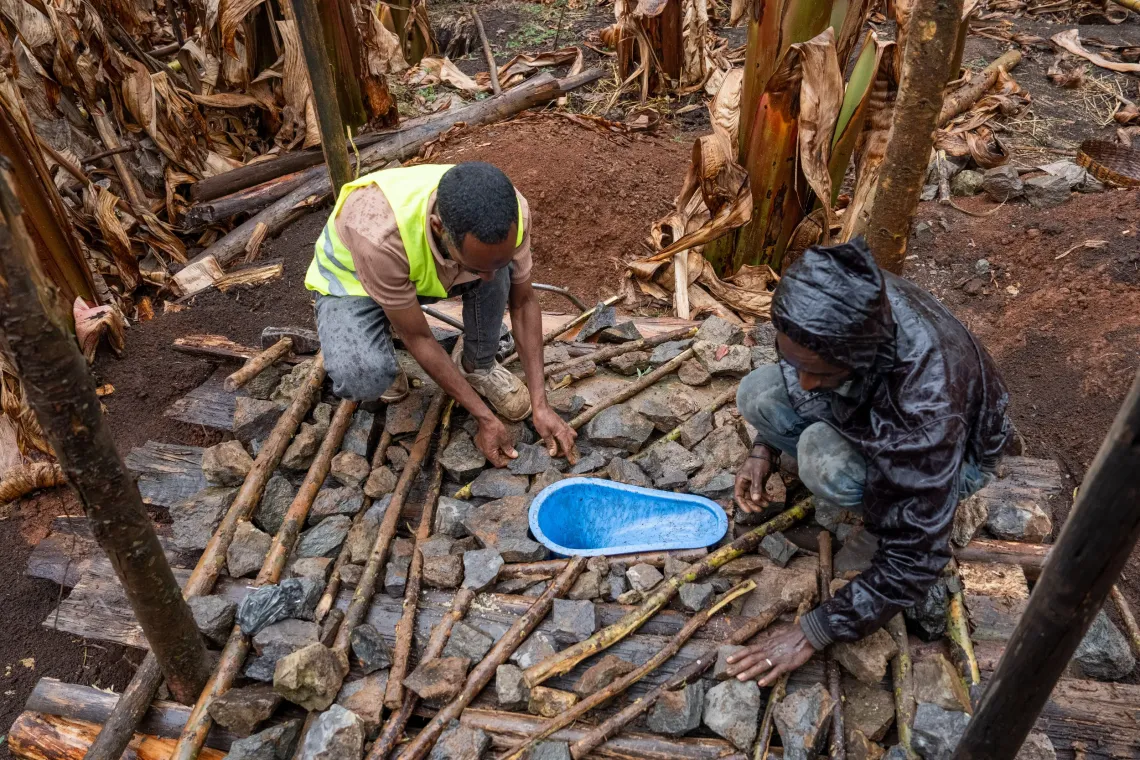
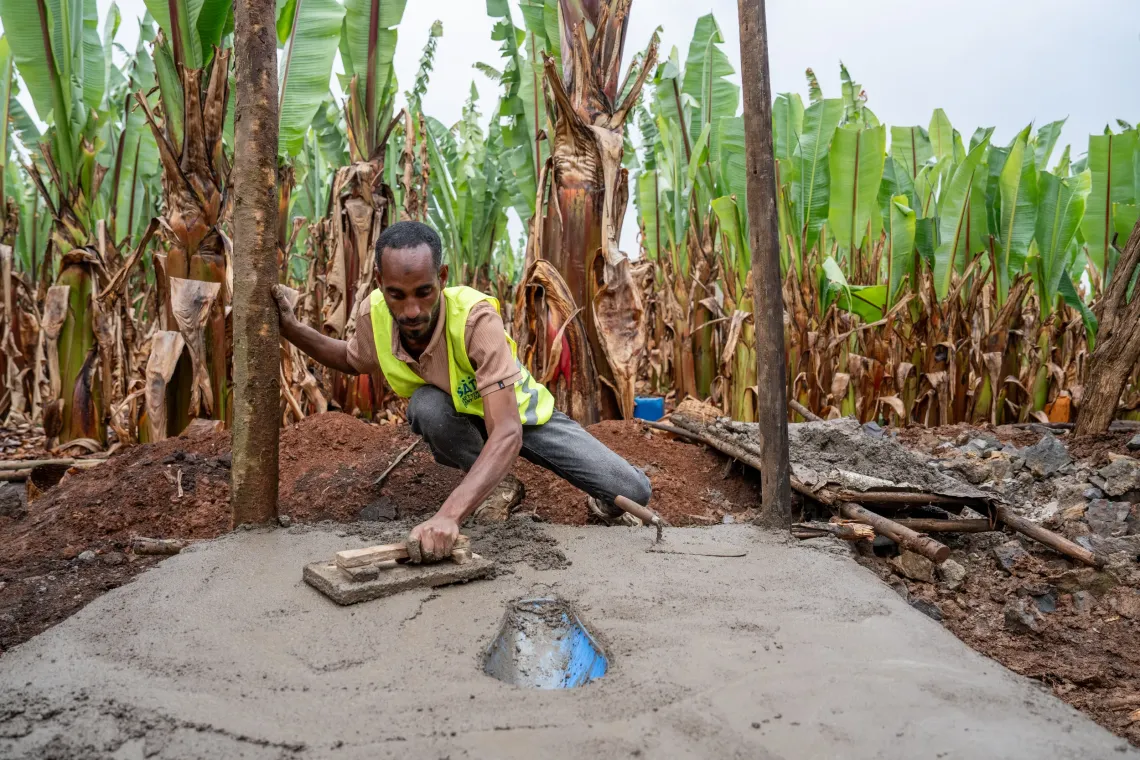
What started as a simple home improvement quickly became a powerful example. Menur’s latrine turned into a demonstration site where community members came to see, up close, how clean, practical, and affordable a proper latrine could be. Their visits helped build trust in his work and sparked early demand for his growing business.
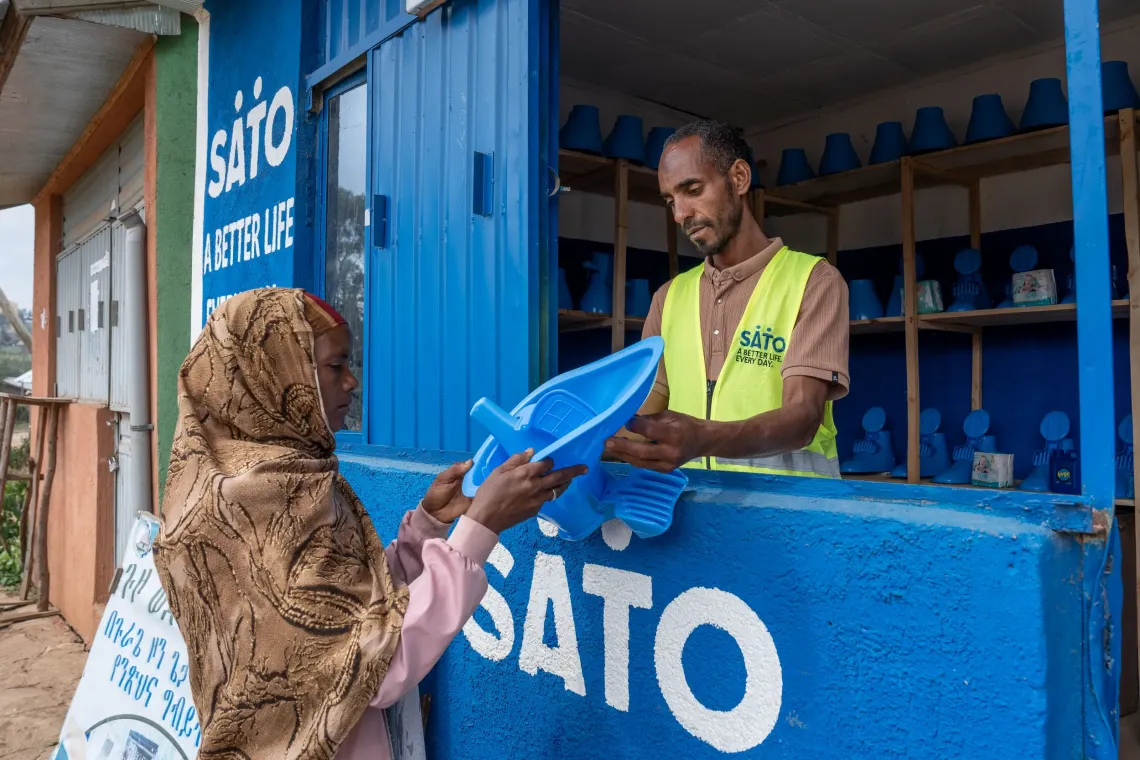
In the beginning, Menur stocked just a small range of SATO products like SATO pans, SATO Flexi, and SATO taps. As more people learned about his work, demand grew and his business grew with it. Now his shop provides a broad range of sanitation and hygiene items, from AIM plastic slabs to sanitary pads, soaps, diapers, brooms, and mops. What truly sets him apart is not only what he sells, but the way he supports families by helping them install each product properly.
Reflecting on his journey, Menur says, “Through the training I received, I gained valuable skills in latrine installation, which allows me to serve my community with pride.”
Word soon spread about Menur’s skill in installing SATO and other sanitation products. He made himself visible at market days, community events, and religious holidays, often setting up simple displays that showed people what was possible. His commitment turned him into a trusted sanitation ambassador, someone who helped make safe and reliable sanitation a real option for families across the community.
A major shift was driven by the women in the community. Many joined weekly savings groups where they pooled their money to upgrade their latrines and purchase hygiene supplies. Their collective effort became a powerful driver of demand, as they chose to invest in products like SATO pans, SATO taps, plastic slabs, and soap from Menur’s growing shop.
“By helping households improve their sanitation, I feel like I am helping to create the kind of environment I once dreamed of,” says Menur with confidence.
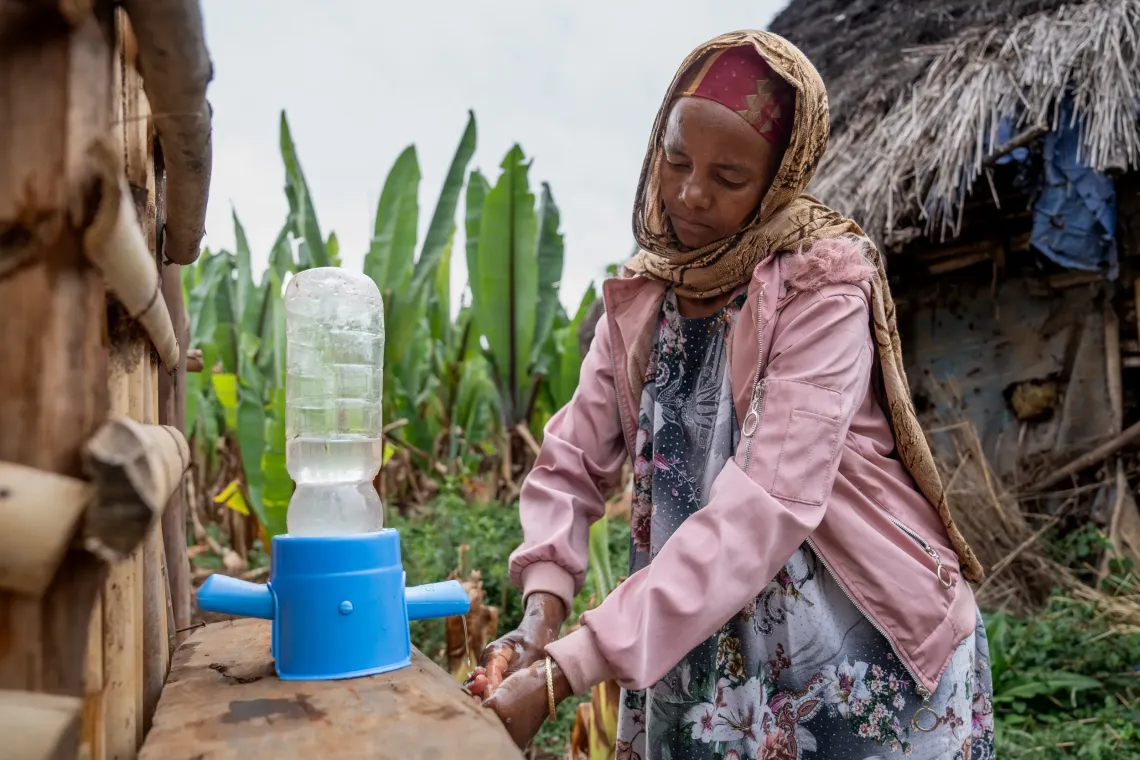
The progress continued to build. Health Extension Workers stepped in to connect Menur’s expanding enterprise with communities that were more difficult to reach. They made sure families received clear and reliable information, which helped transform interest into real change. Thanks in part to this collaboration, Geta Woreda was later recognized as a model Woreda in the area.

By 2024, the results of Menur’s work were unmistakable. He had supplied 5,520 SATO products, among them 3,420 SATO pans and 2,100 SATO taps, enabling 17,100 people to improve their household latrines. Each installation brought more than a practical upgrade. It gave families greater health, dignity, and a renewed sense of peace.
“This project has changed my life in many ways. I now have a steady income that supports my family and helps us build a better future,” says Menur.
Today, Menur Abas is seen as more than a shop owner. He has become a sanitation champion and an inspiration to many in his community.